Expanding Park, Expanding Life
LongiPark!, a project under Bangkok Design Week 2026, reimagines small neighborhood parks by transforming limited urban green spaces into places that feel larger, more connected, and more versatile for everyday activities and well-being. The project promotes parks as meaningful Third Places beyond home and work, fostering social connection, restoration, and community life while contributing to a more resilient, vibrant, and livable city.
Project Information ↘︎
Client & Developer
UNESCO Creative Cities Network,
Creative Economy Agency (CEA),
Thai Health Promotion Foundation (ThaiHealth)
Status
Completed
Landscape Area
Long Heal: 176.53 sq.m.
Long Plearn: 46.23 sq.m.
Long Share: 62.125 sq.m.
Long Pause: 3.24 sq.m.
Long Walk: 153 sq.m.
Year
2026
Award
-
Design Director
Yossapon Boonsom
Landscape Architect
Chayut Kawinkham
Warisa Chirapakachote
Praifah Tantipiboon
Parinya Suwan
Athipat Phengphala
Tanawan Tuamsee
Horticulturist
La-ongdao Intana
Akkarach Teewiang
Pattarawan Boonsu
Construction Manager
Jirayu Janjirasakul
Anongnard Jungmongkolsawat
Sarawut Phunkoed
Thitiwat Chintanavitch
Project Manager
Thanaphum Thongprasert
Sarawut Pensrichol
Krittapong Yongkiatpanich
Researcher
Jeerakarn Kawinthon
Linranin Siripanthaasakul
Computational Designer
Yuttana Tongkrajang
Paradorn Maneenil
Grpahic Designer
Pimlada Pongpisudtigoson
Photographer
Nawin Deangnul
Video Editor
Nawin Deangnul
Collaborator
Bangkok Metropolitan Administration (BMA)
Embassy of the Netherlands in Thailand
Metropolitan Electricity Authority (MEA)
Noble Development
Nue Riverest Ratburana
HAS design and research Company Limited
Faculty of Architecture, Silpakorn University
Faculty of Architecture and Planning, Thammasat University
Princess Galyani Vadhana Institute of Music
Urban Ally
Humans of Flower Market
Splendour Solis
DecideKit
Walk Wing
we!park
Today, the most serious health challenges are driven not by viruses or accidents, but by lifestyle—unhealthy diets, physical inactivity, and accumulated urban stress. As cities grow denser, environmental and social pressures intensify, while accessible green spaces become increasingly limited. Cities must respond in more holistic and human-centered ways.
Longevity is not only about living longer, but living well—maintaining physical, mental, and emotional health while preventing chronic disease. One of the most effective urban tools to support long-term well-being is green space. As one of the city’s essential third places—beyond home and work—green spaces play a critical role in supporting everyday life. Research shows that high-quality, accessible green areas help mitigate climate impacts and provide measurable health benefits. Even 20 minutes in nature can reduce stress and improve mood.
Transforming neighborhood green spaces into meaningful third places can significantly improve the quality of life. LongiPark explores how limited urban spaces can be expanded to create more room for rest, social interaction, play, work out, and healing. Presented during Bangkok Design Week 2026, the project invites people to experience green spaces in new ways.
Designing for Longevity:
Measuring How Space Supports Life
Throughout the project, human behavior is systematically examined using structured research methodologies, with particular emphasis on application-based surveys and user satisfaction assessments to understand better how people interact with the space. The study investigates how users move, pause, gather, and engage with different spatial elements, and how they perceive the overall environment.
The evaluation assesses key performance indicators of the design, including comfort, accessibility, safety, atmosphere, and opportunities for social interaction. By analyzing user satisfaction alongside observable behavioral patterns, the project aims to understand how spatial design influences physical activity, social connection, and overall well-being. The findings contribute to evidence-based design refinement, ensuring that urban spaces are shaped not solely by conceptual intention but also by lived experience and measurable user responses.
Long Heal
From Urban Heat to Urban Heal
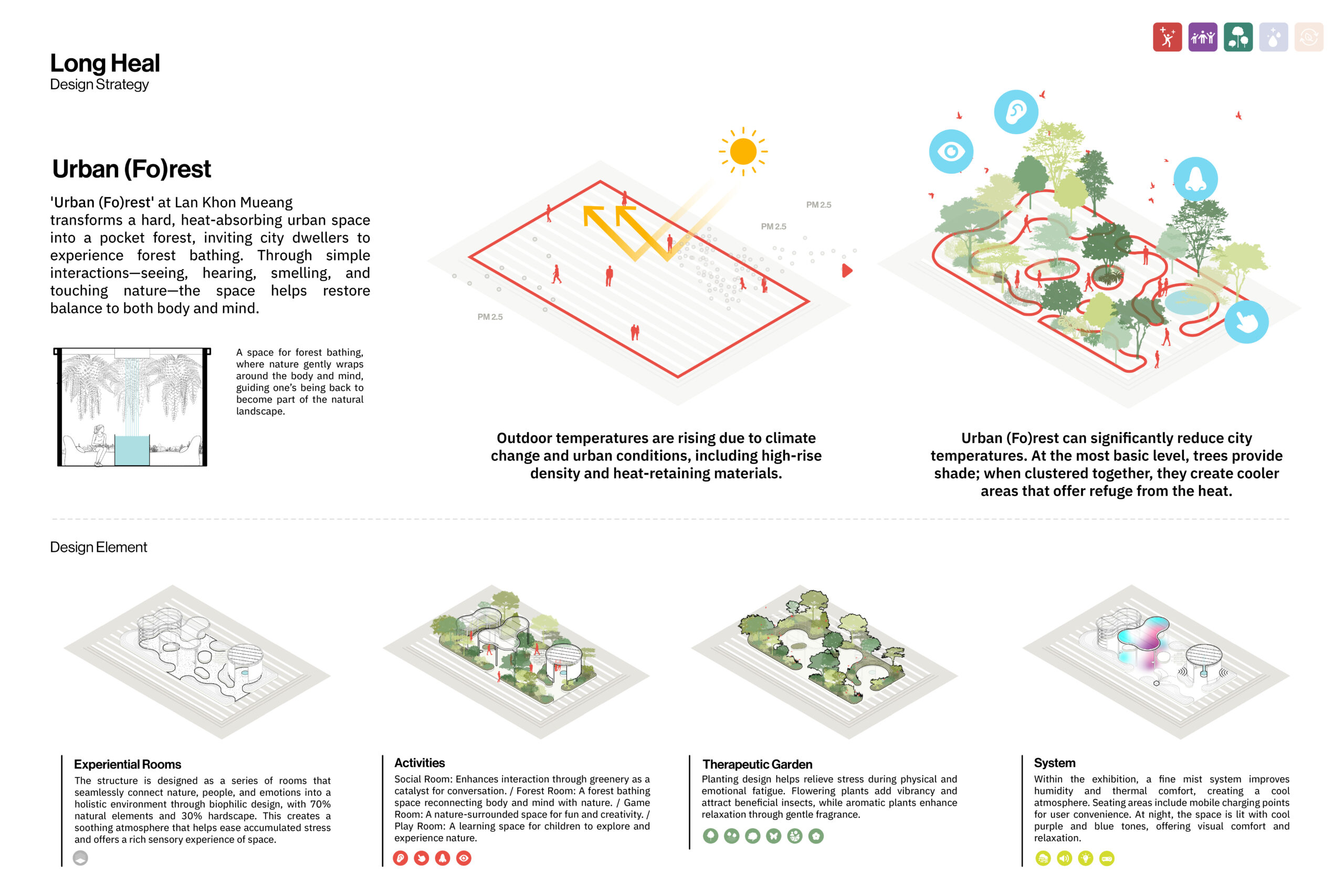
Outdoor temperatures are rising due to climate change and urban conditions such as high-rise buildings, heat-retaining materials, and the loss of trees and green spaces. These factors intensify the urban heat island effect, causing discomfort, health risks, and even economic impacts. Globally, we share a common goal: to limit temperature rise to 1.5°C by 2050.
One of the most effective strategies is expanding well-designed green space. According to Brian Stone Jr., Director of the Urban Climate Lab at Georgia Institute of Technology, urban greenery can significantly reduce city temperatures. Trees provide shade and, when clustered, create cooler microclimates. Strategic design—such as aligning green corridors with prevailing winds—can further enhance cooling effects. Beyond environmental benefits, nature also plays a crucial role in mental restoration, offering relief in fast-paced urban environments and supporting long-term well-being.


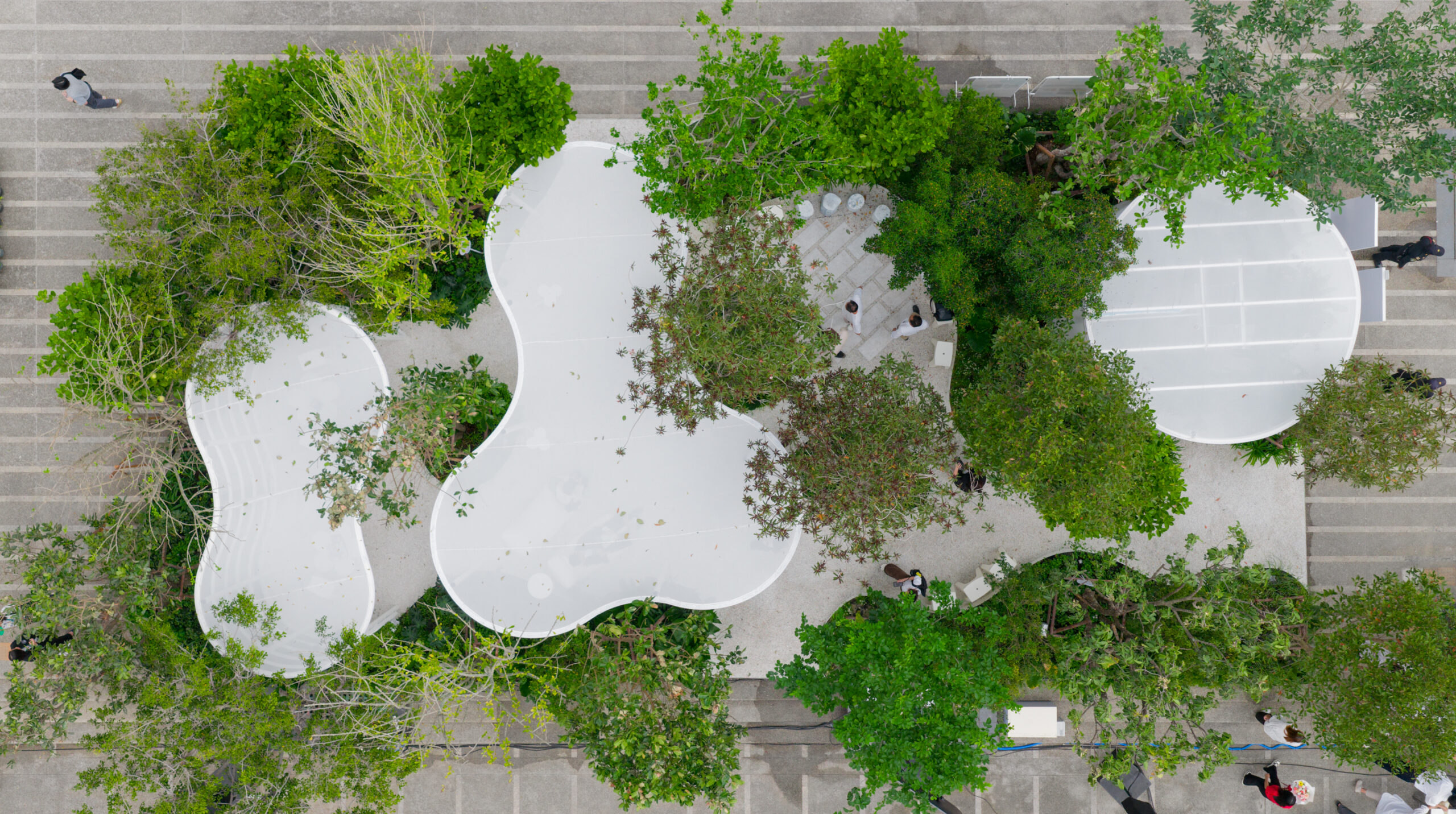
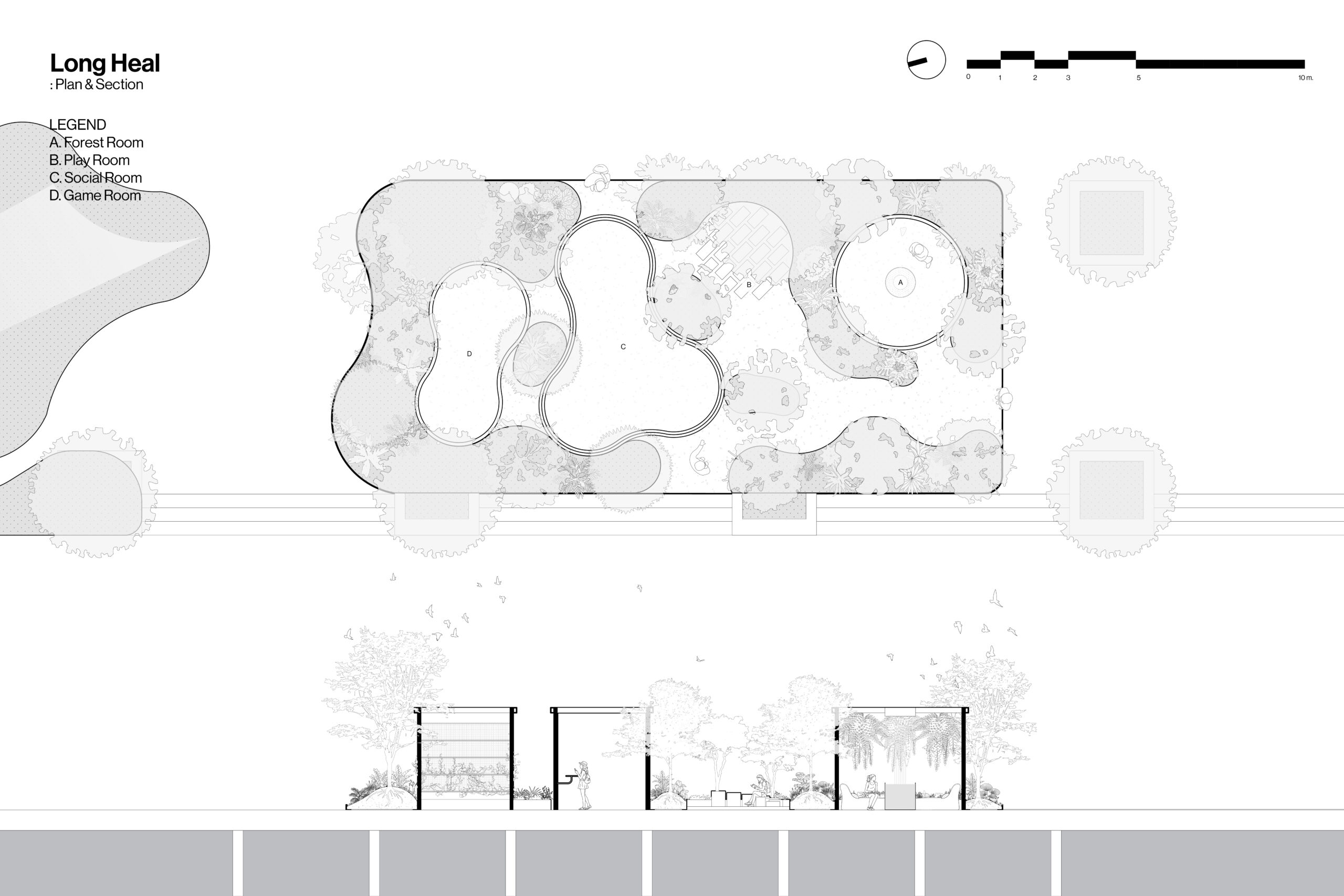
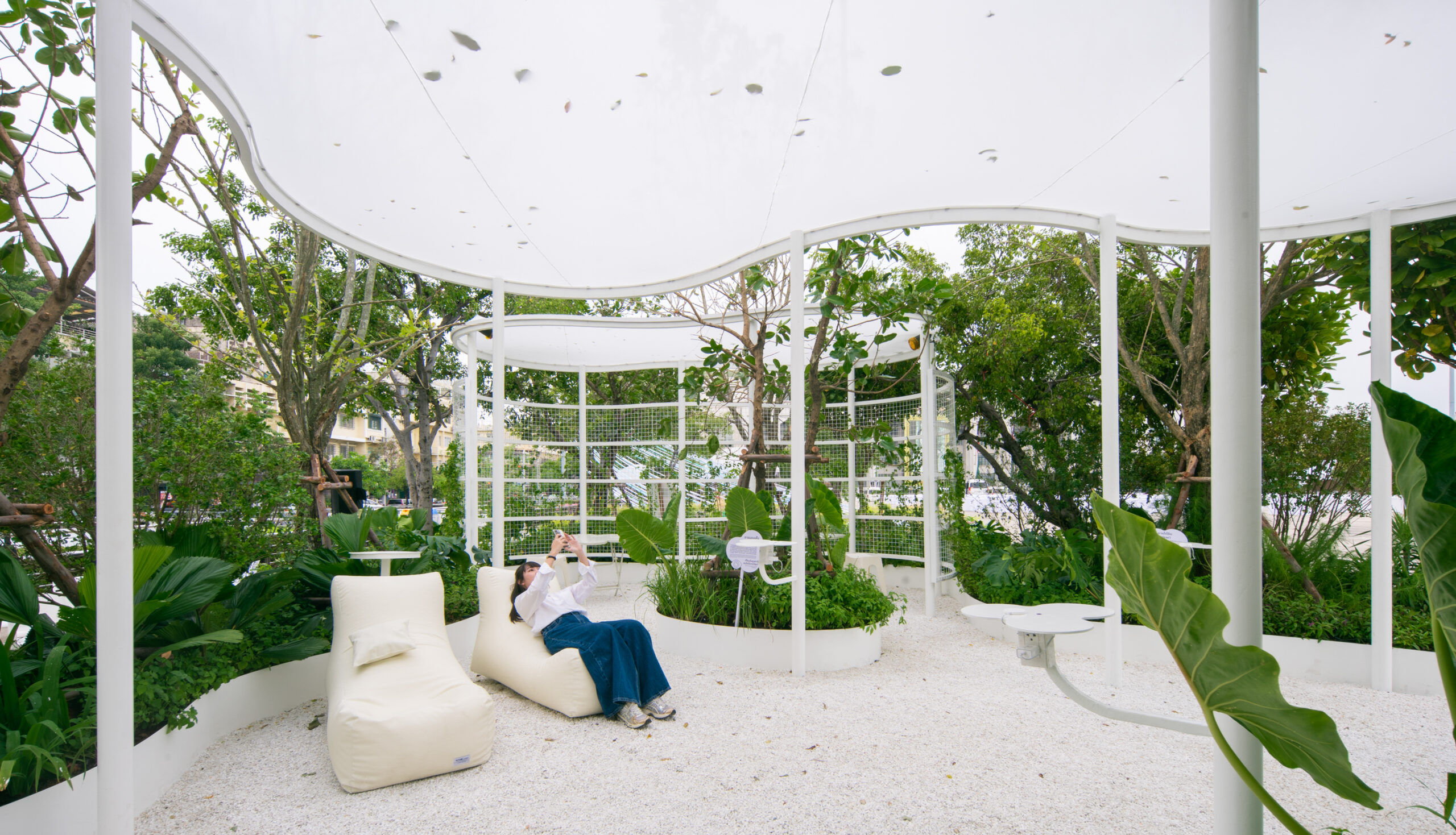
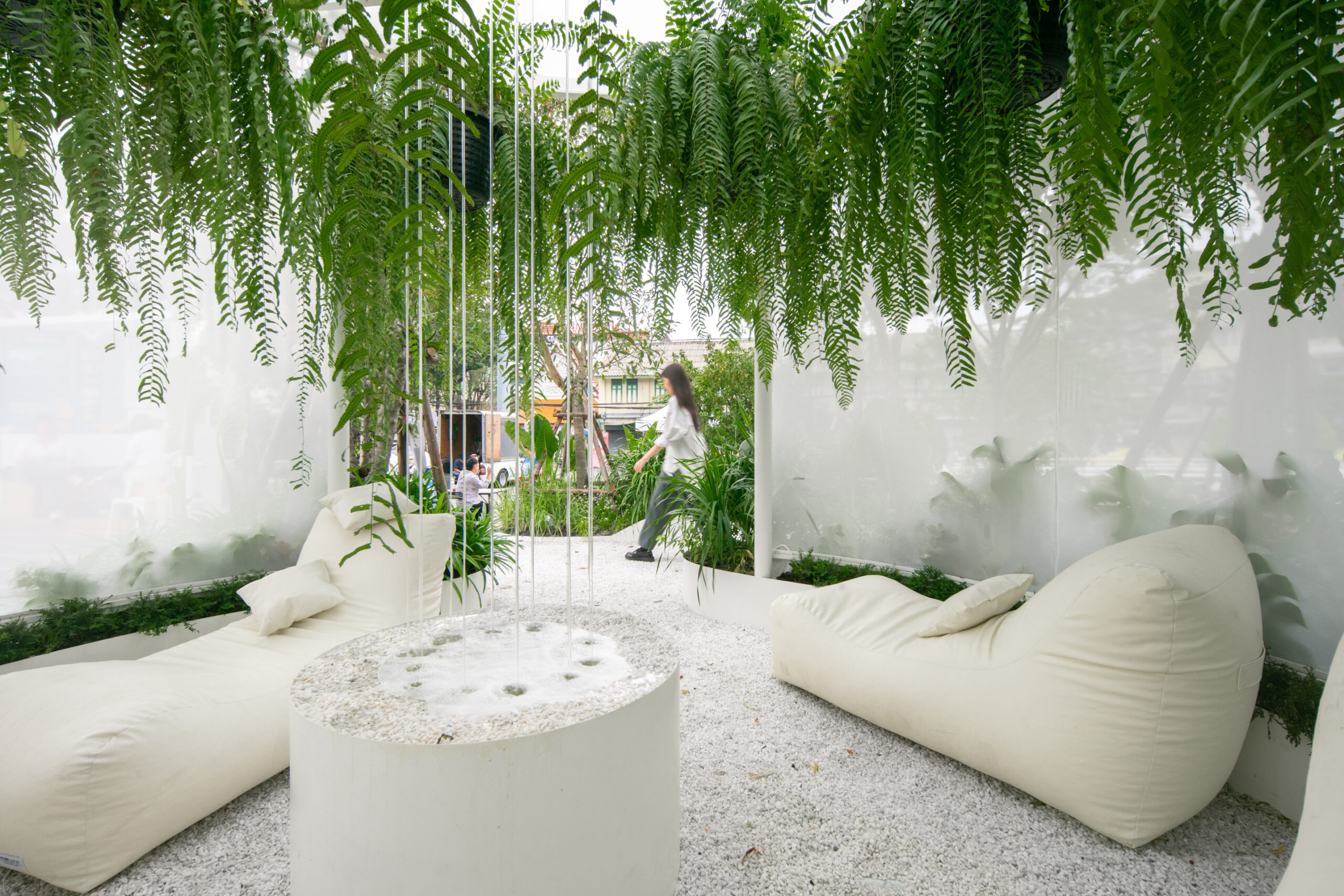
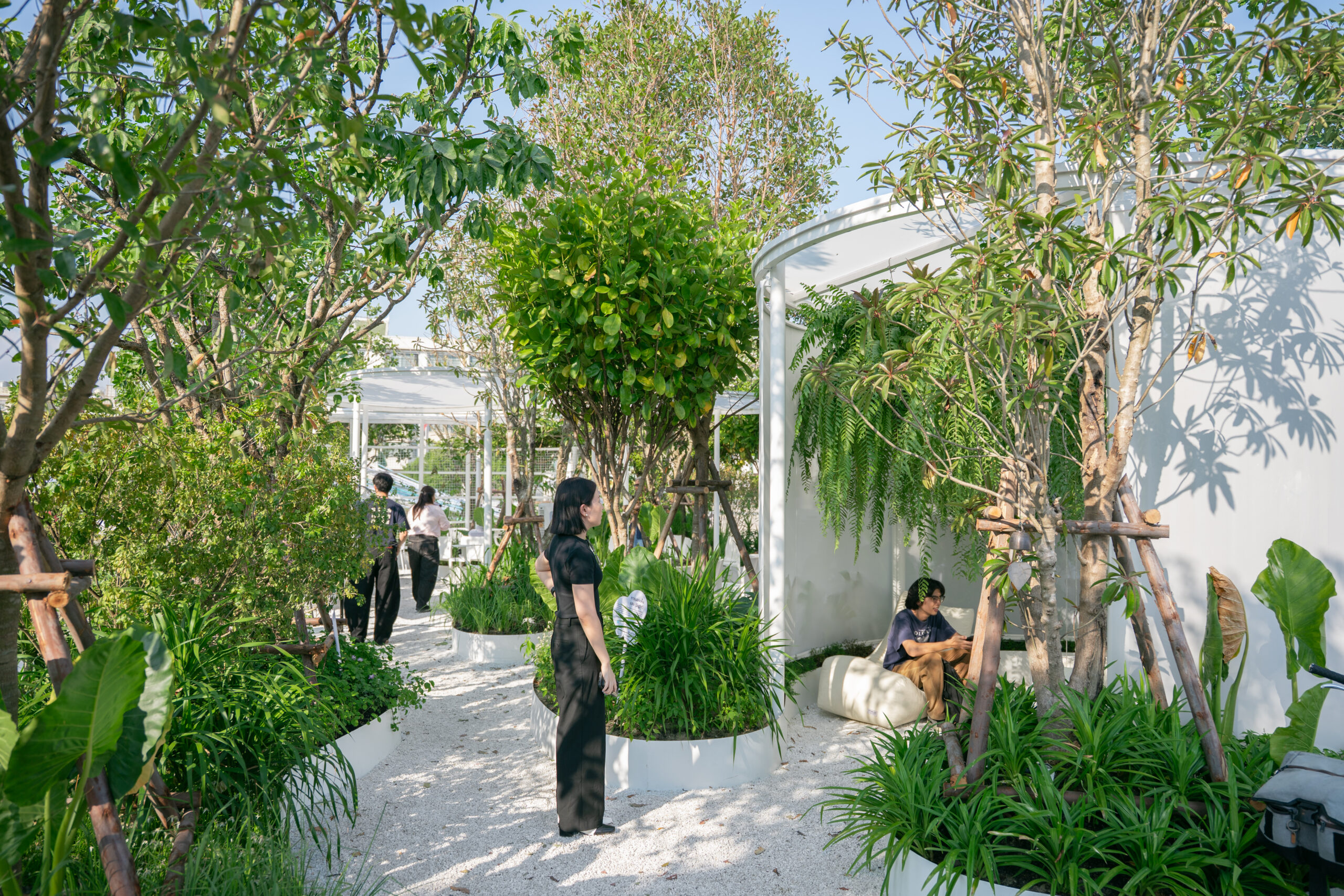
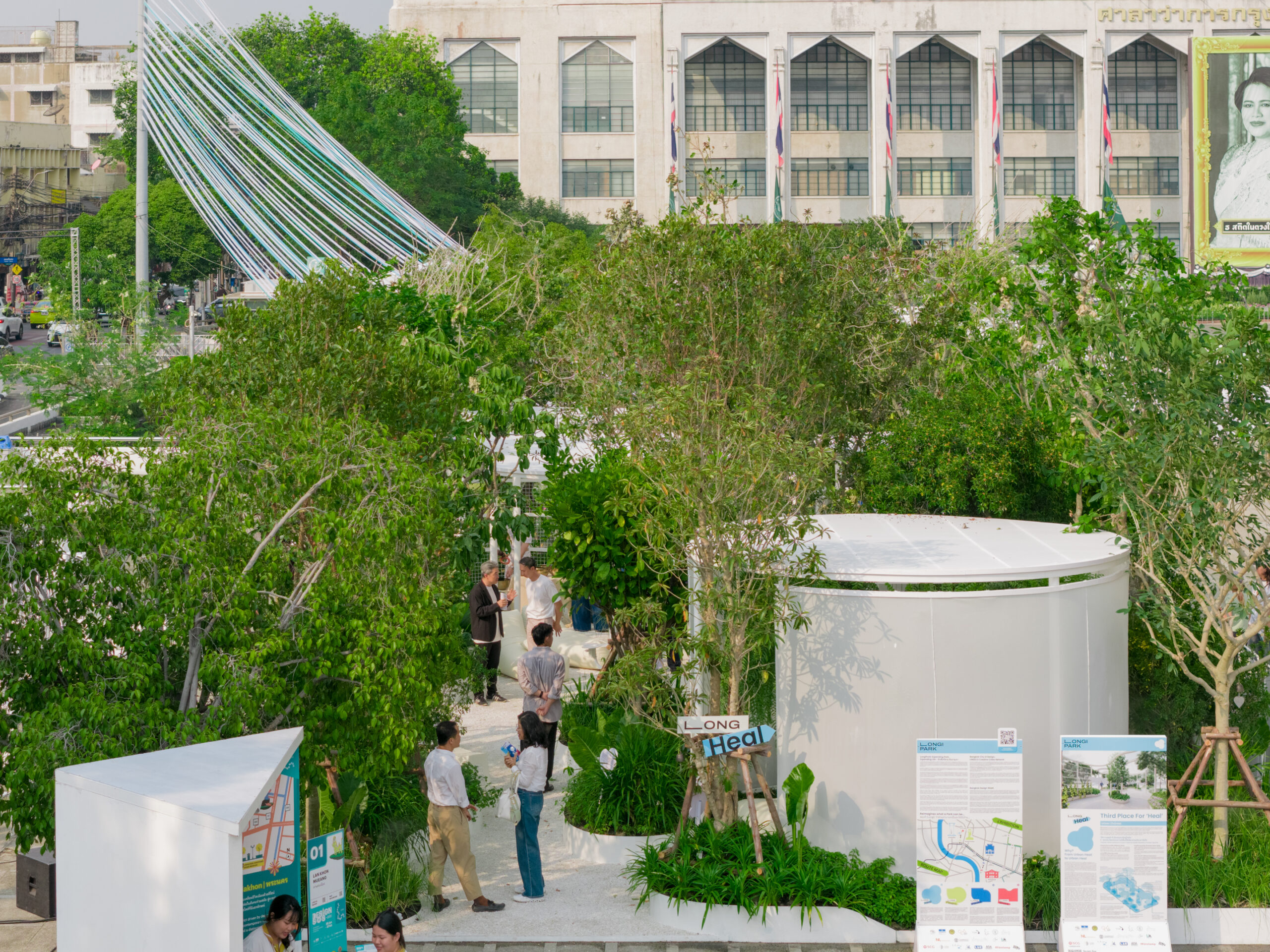
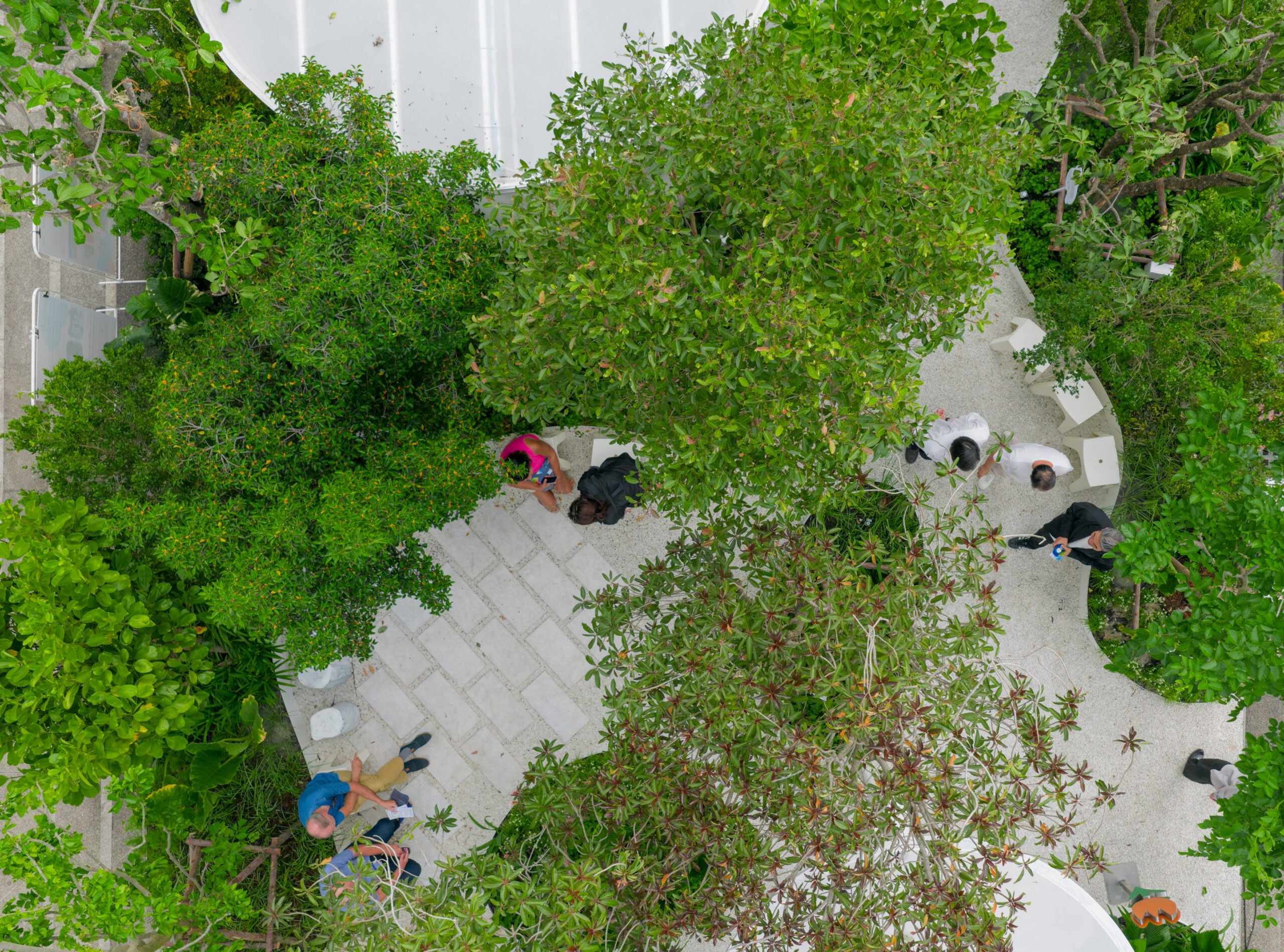
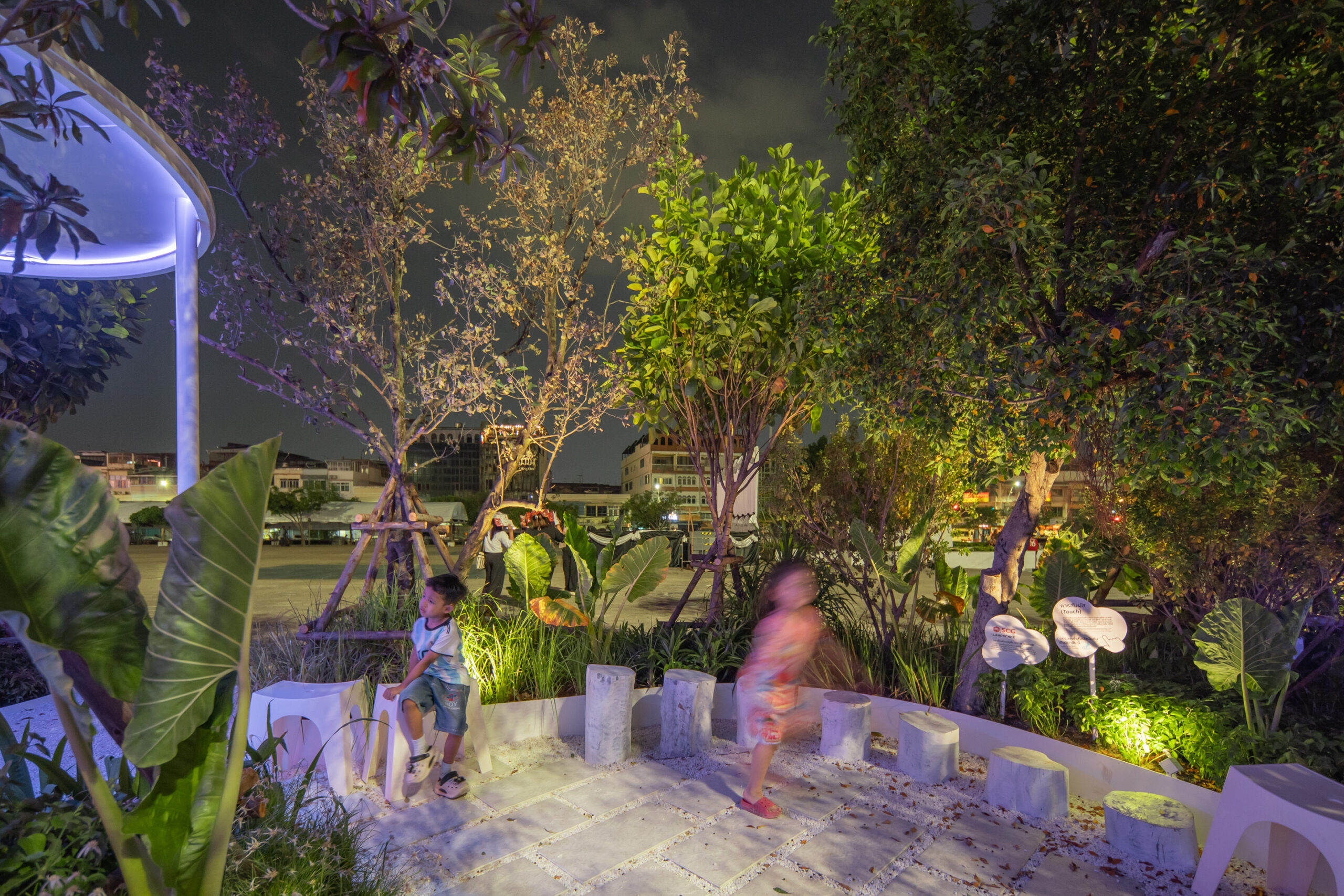
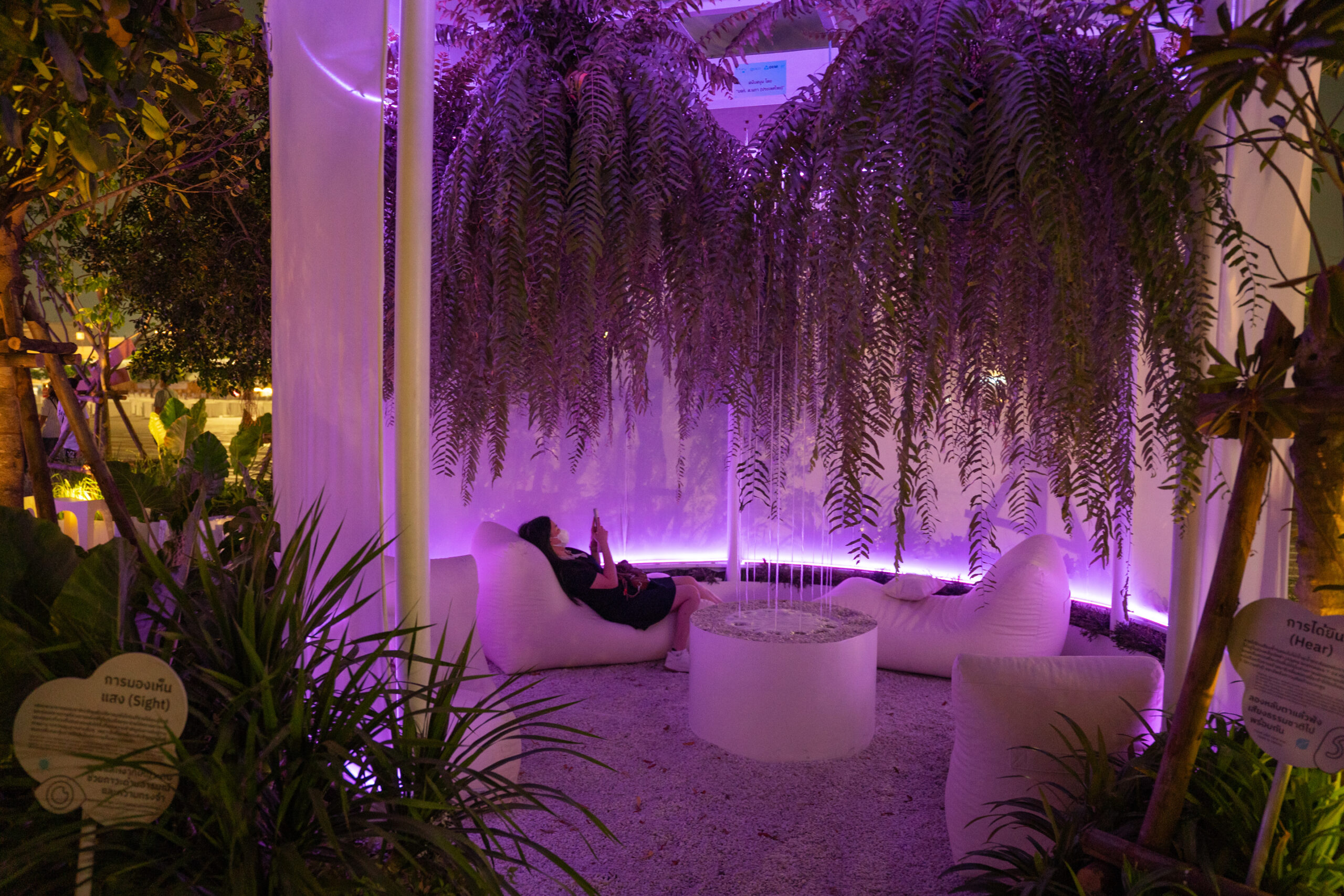
The Long Heal exhibition, under the concept ‘Urban (Fo)rest),’ at Lan Khon Mueang (City Hall Plaza), explores urban forest bathing as a tool for restoring body and mind. The project transforms a rigid, heat-absorbing hardscape into an elongated pocket forest, forming a sequence of experiential rooms that encourage interaction through sight, sound, scent, and touch—demonstrating how temporary design can generate lasting environmental awareness.
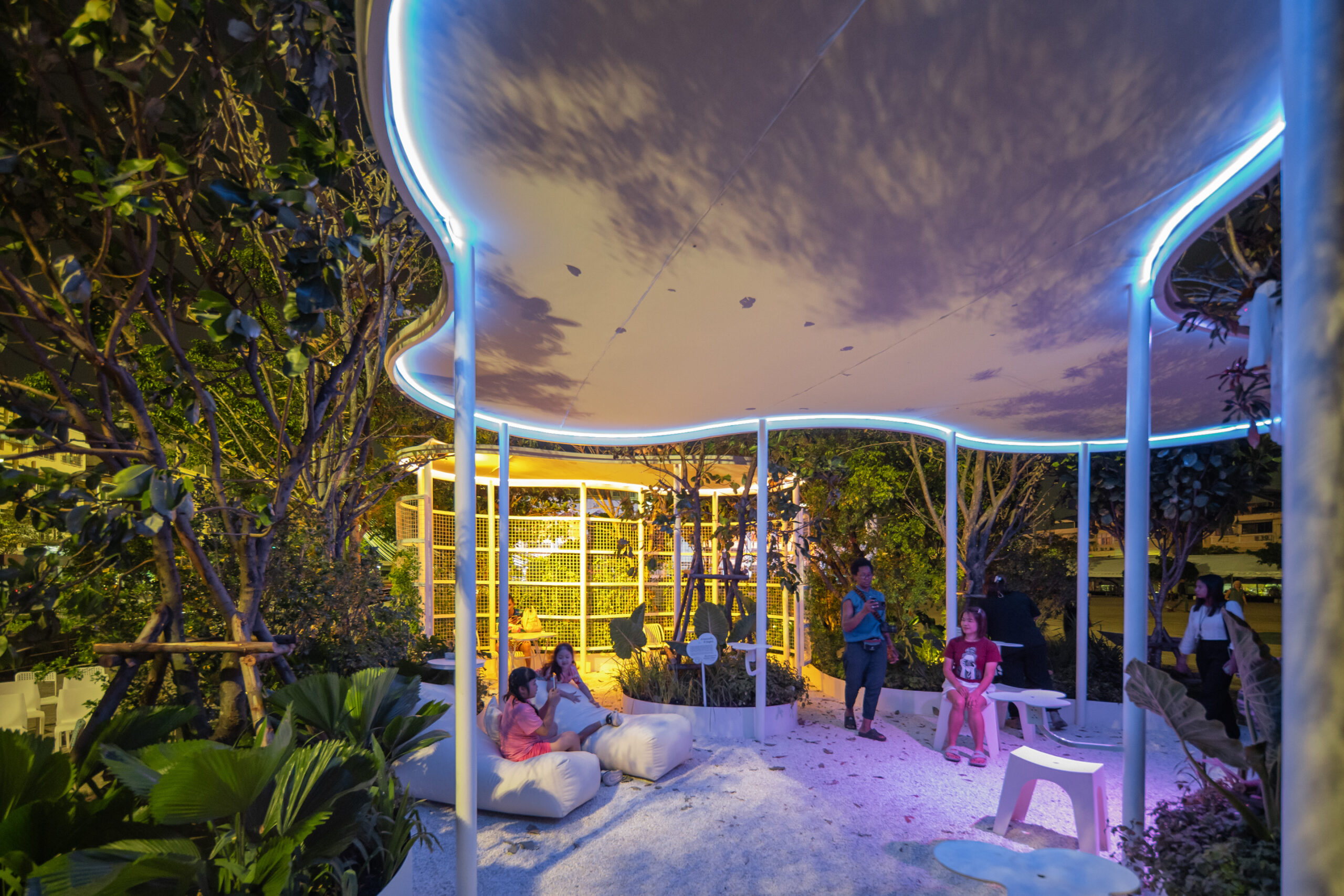
More than a green space, the site is conceived as a collection of experiential rooms, seamlessly connecting nature, people, and emotions into a holistic environment. The Social Room promotes conversation through greenery as a natural catalyst. The Forest Room invites visitors to slow down and reconnect with themselves. The Game Room and Play Room encourage creativity, movement, and learning through immersive engagement with nature, strengthening both social bonds and personal resilience.
Guided by Therapeutic Garden and Biophilic Design principles, the landscape incorporates 70% natural elements and 30% hardscape. Layered planting, aromatic species, fine mist systems, and cool-toned night lighting create a multisensory environment—transforming the space into a sanctuary for urban healing and climate-responsive design.
Long Plearn
Turning Streets into Places for Play and Learning
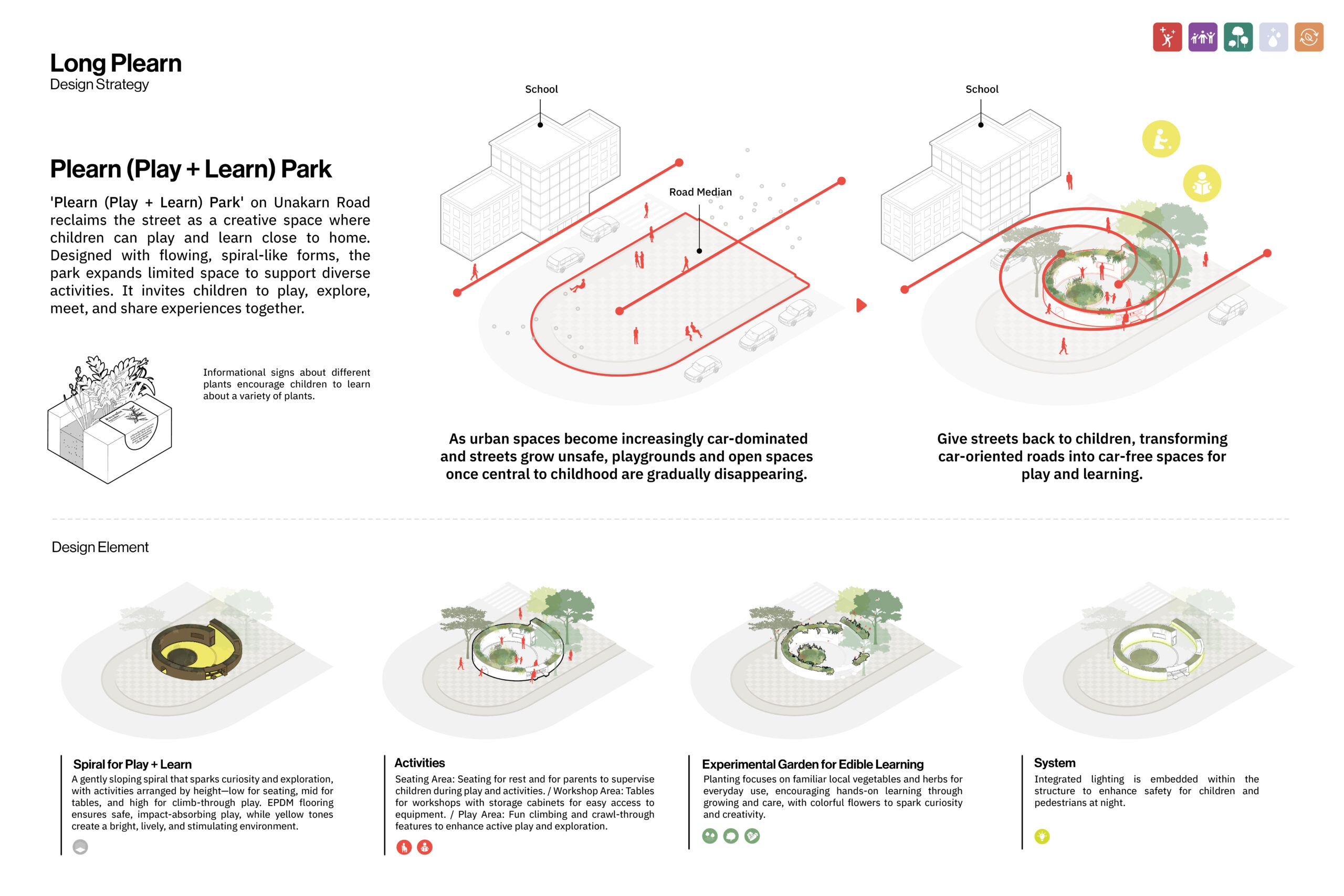
Cities worldwide are rethinking their relationship with children as urban spaces become increasingly car-dominated and unsafe. Playgrounds and open areas, once central to childhood, are disappearing, even though play, learning, imagination, and social interaction are fundamental rights of children—and responsibilities adults must protect. In response, many cities are reclaiming streets for children, transforming car-oriented roads into safe public spaces for play and community connection through initiatives such as School Streets.


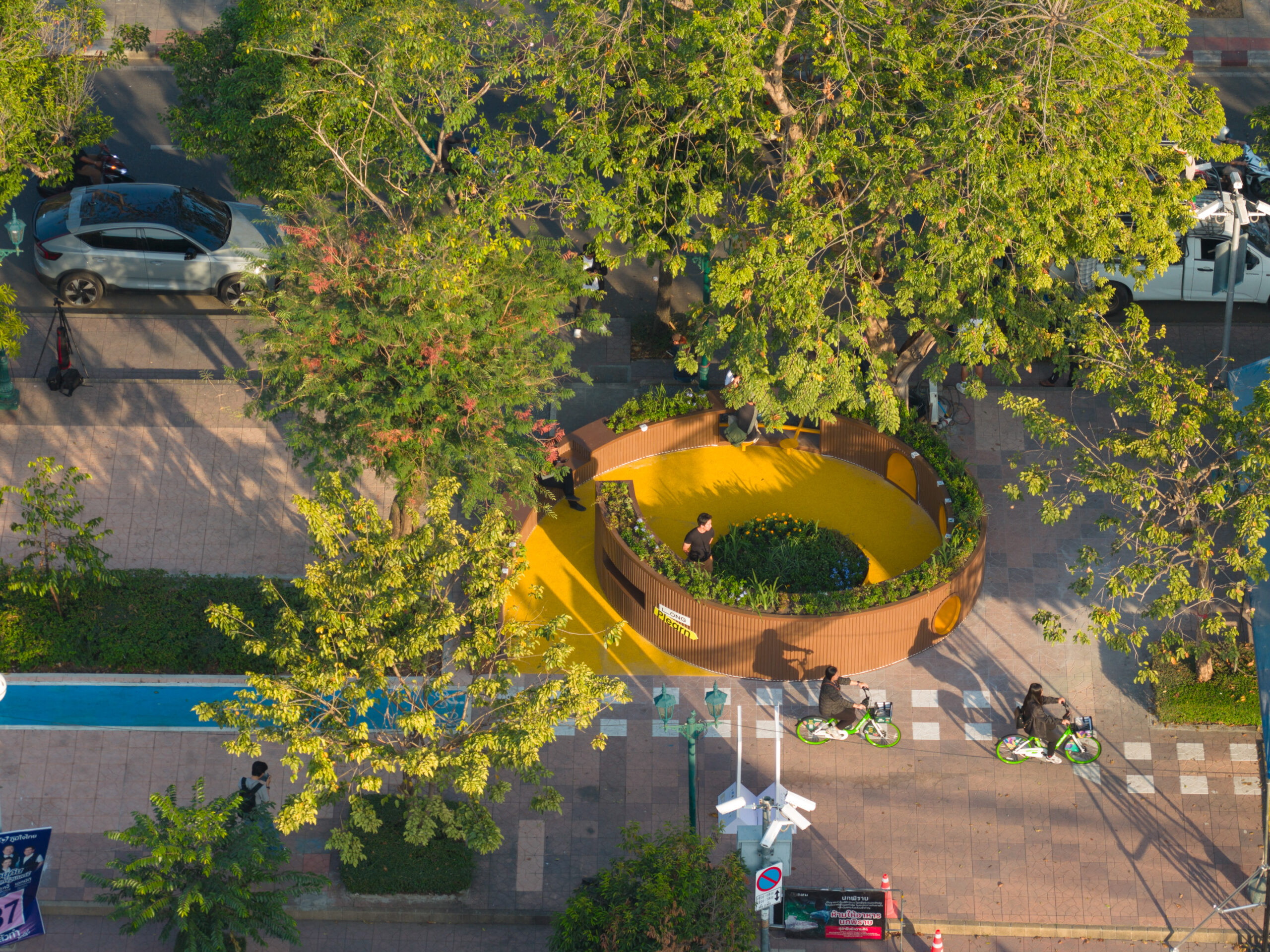
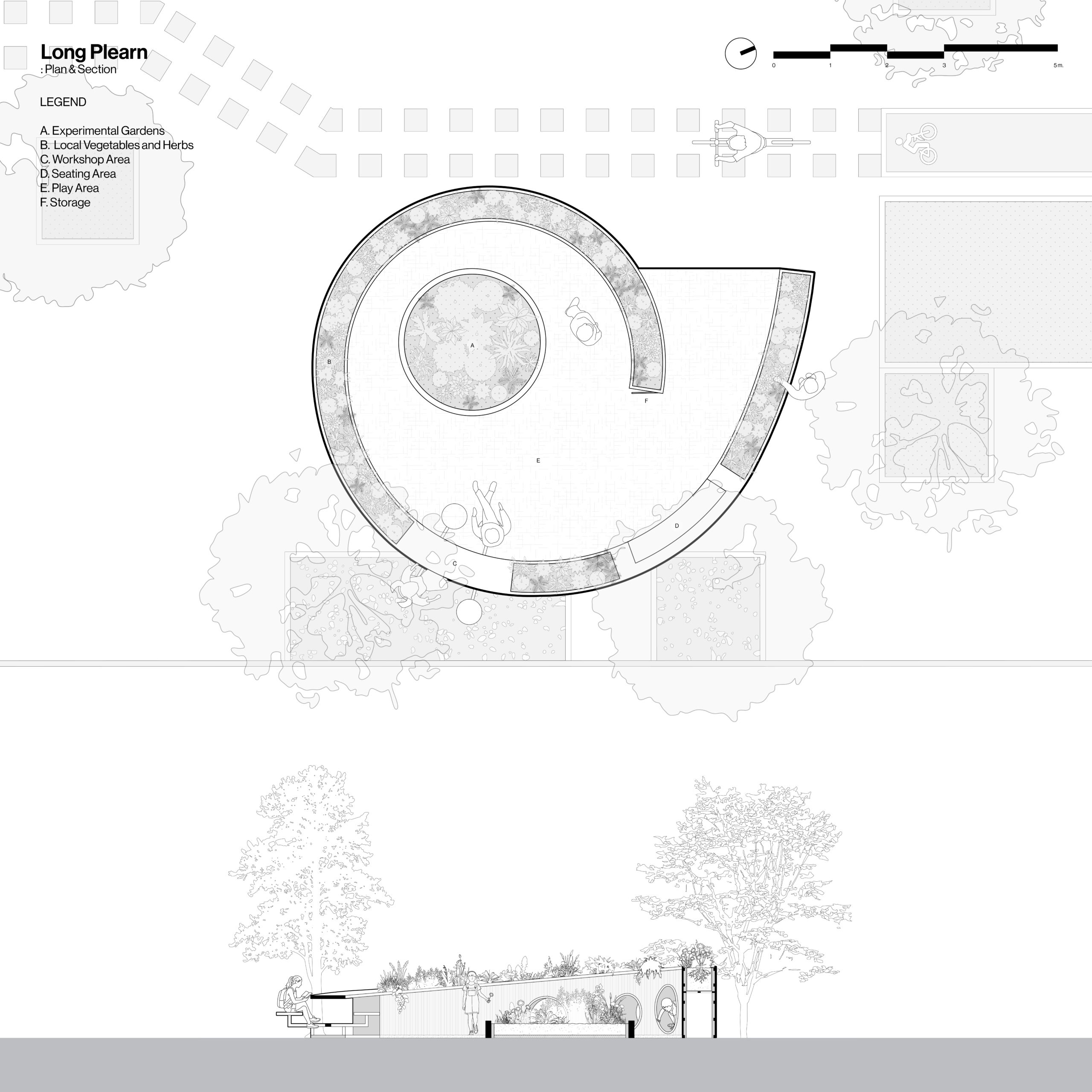
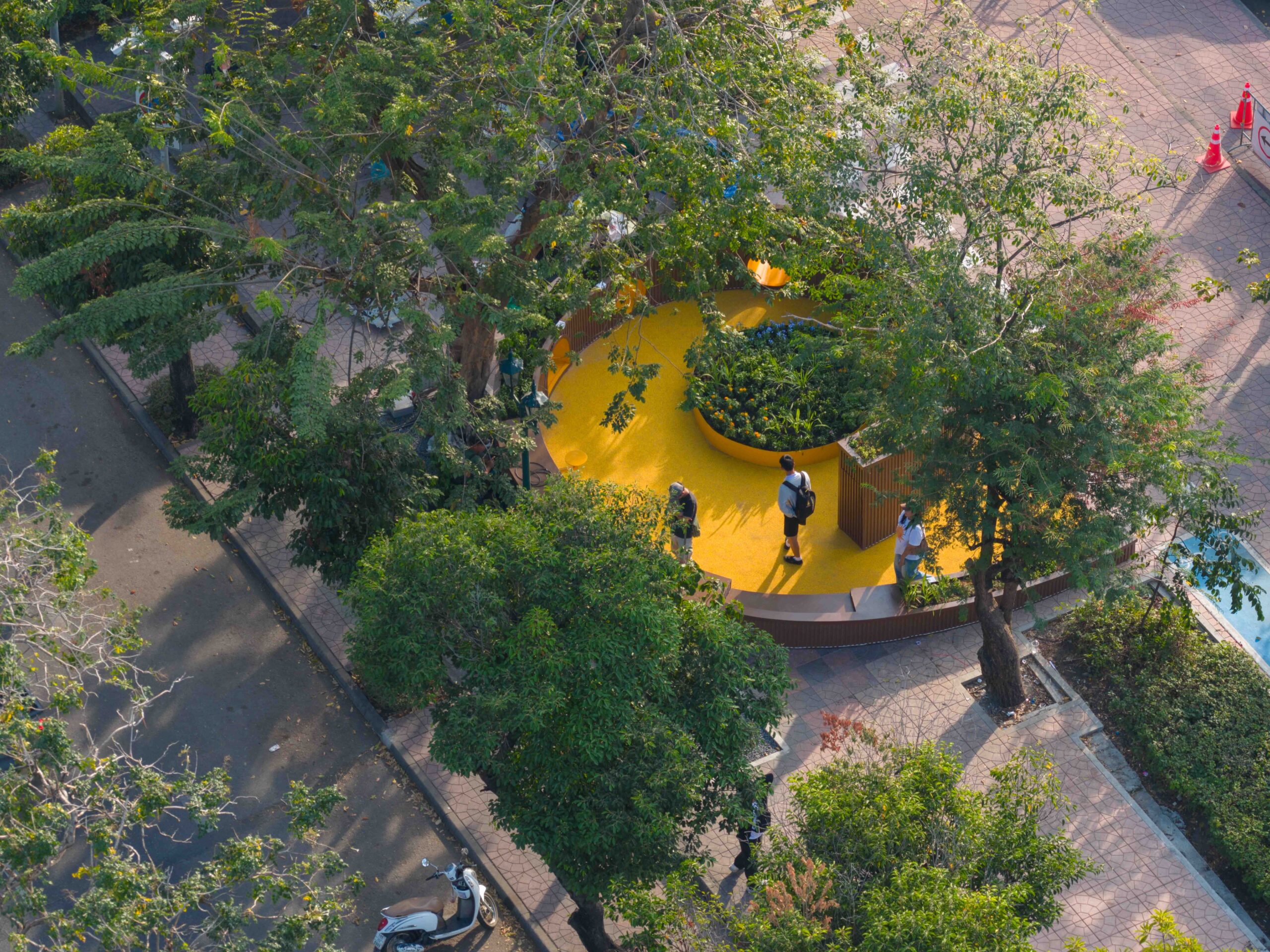
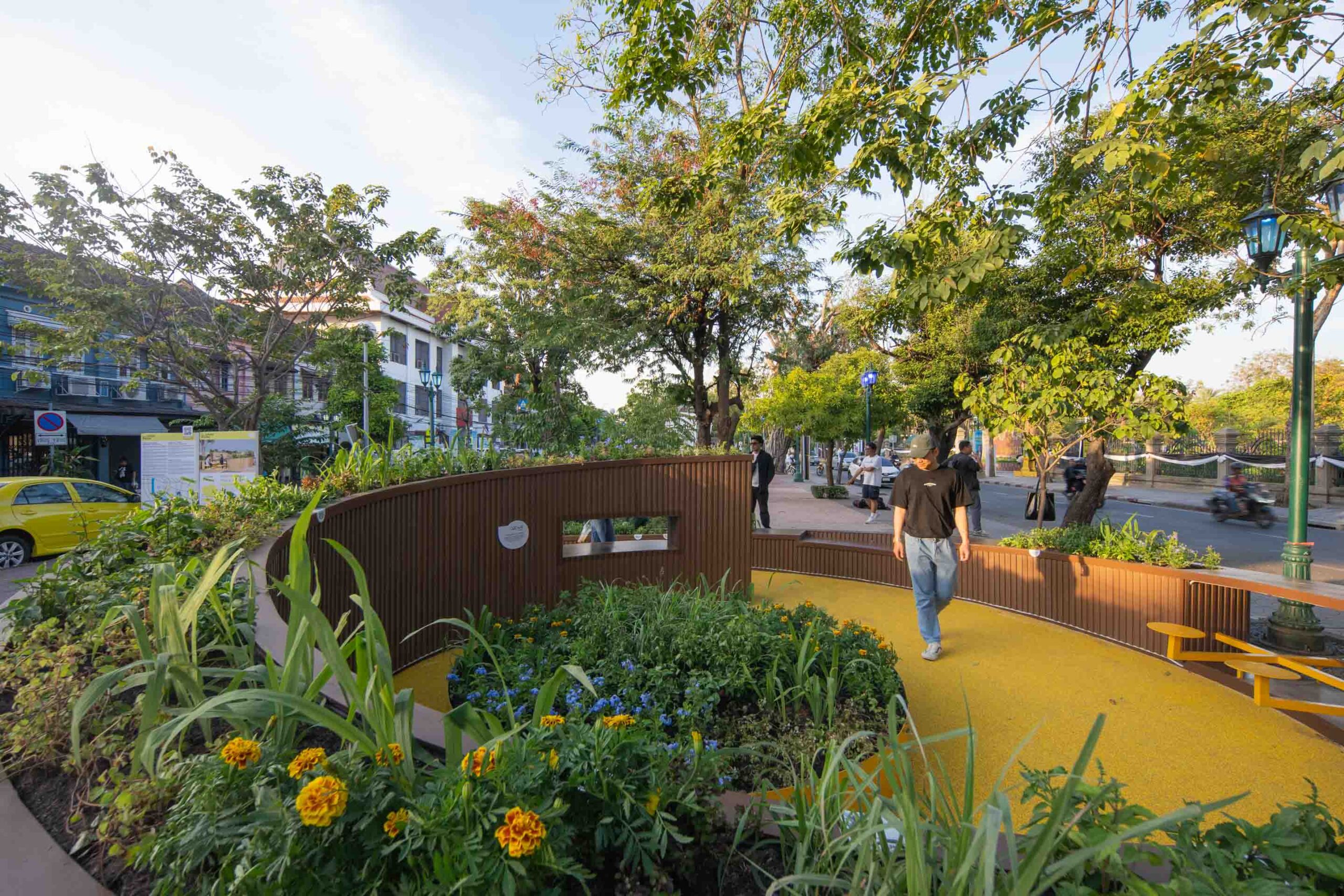
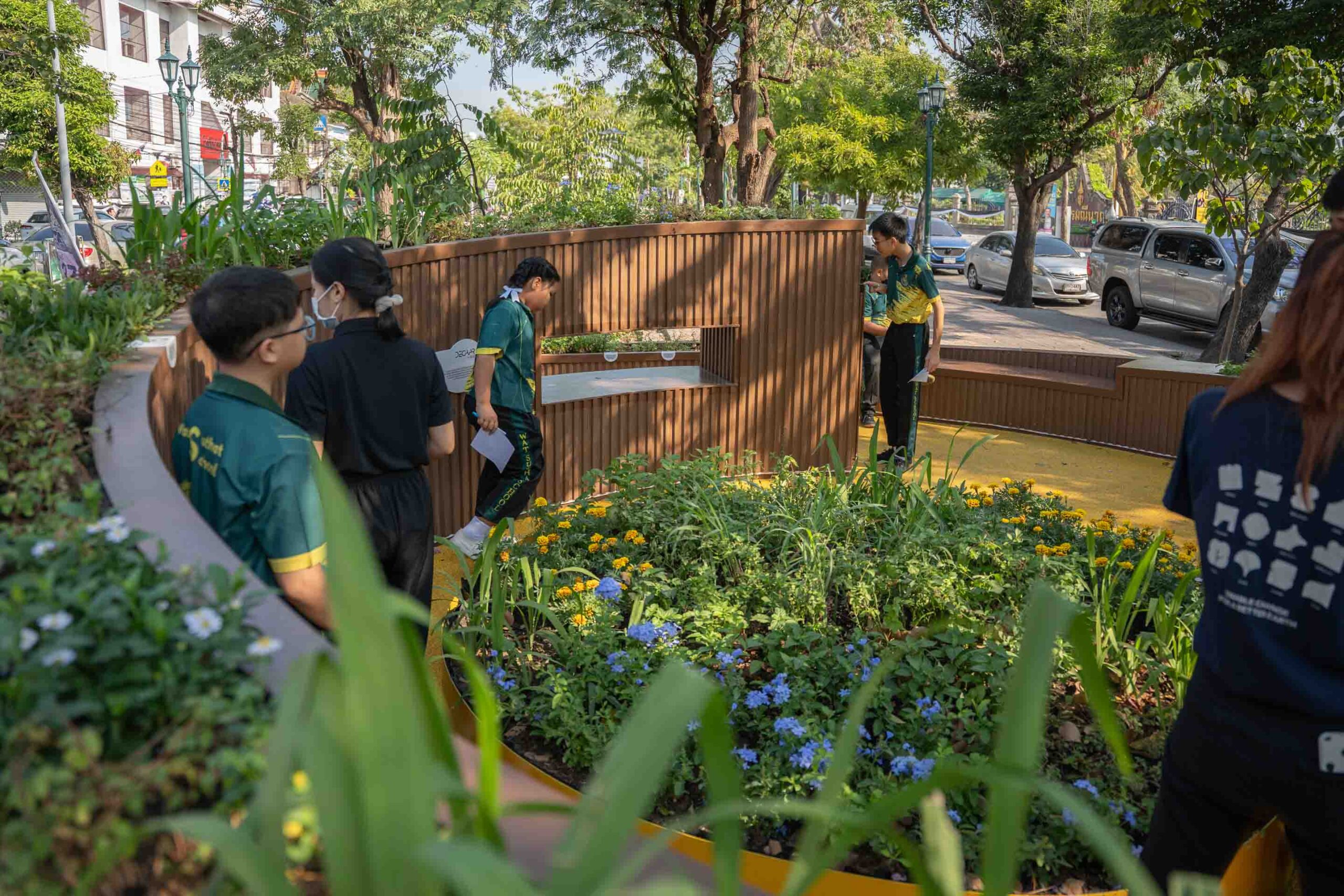
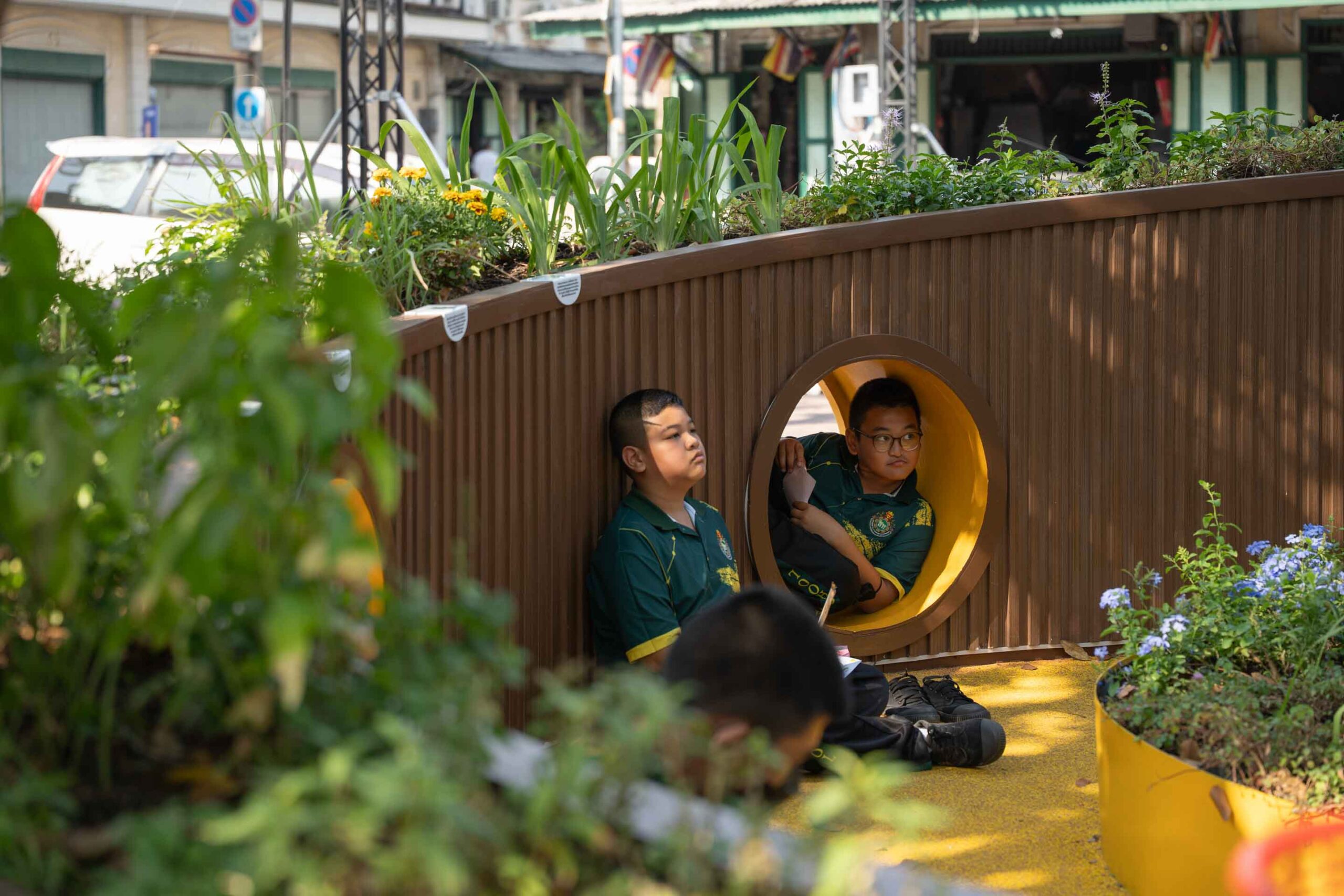
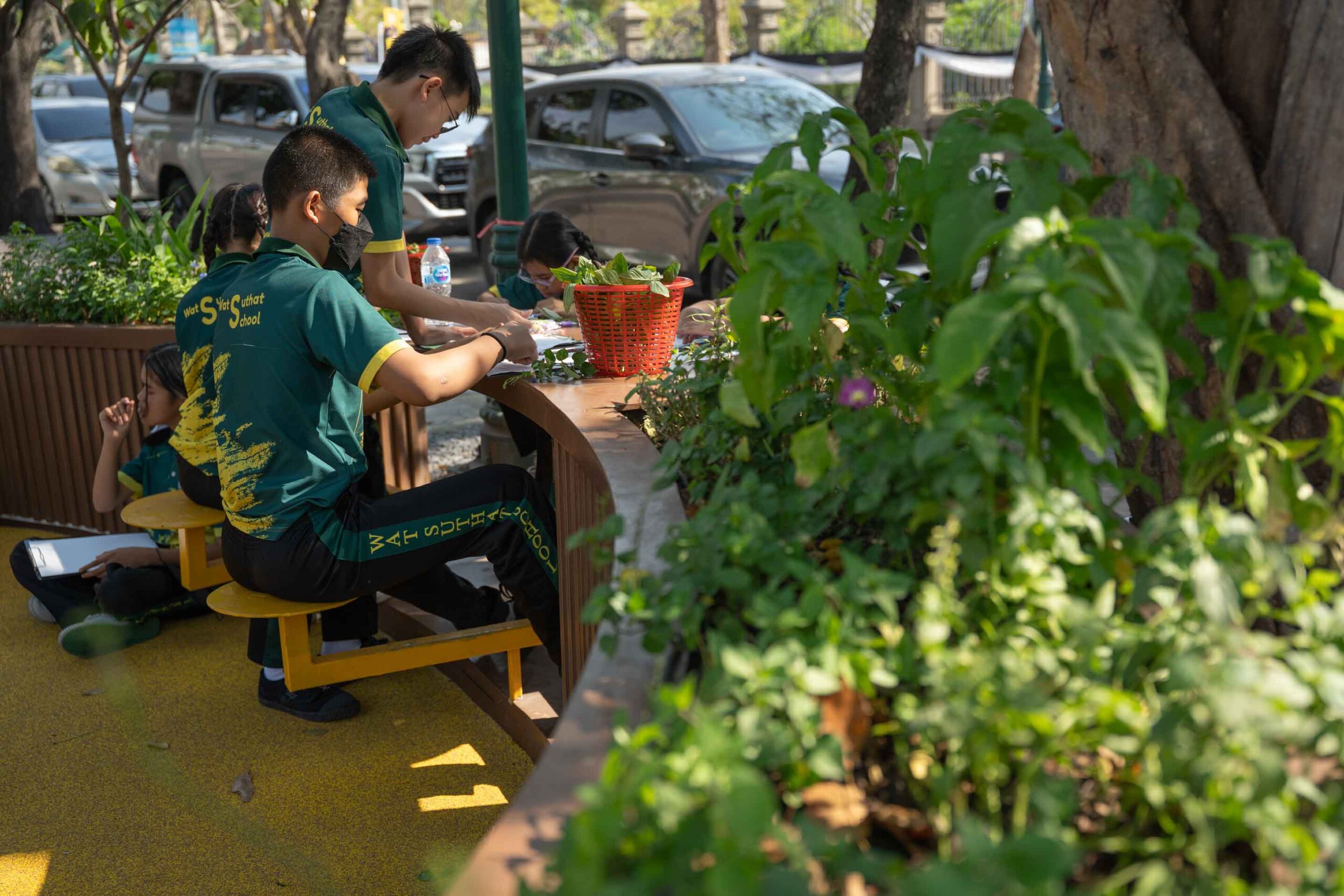
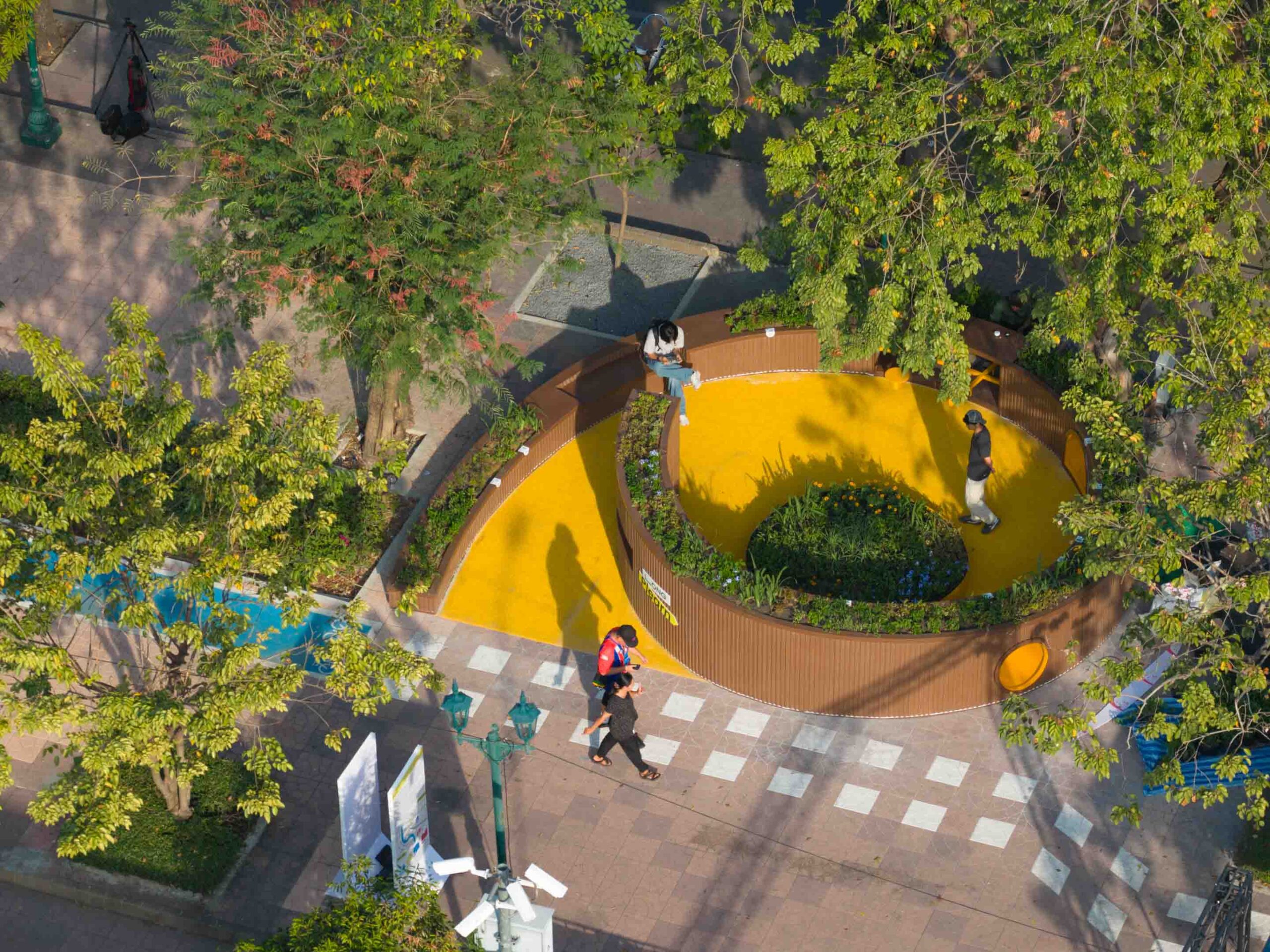
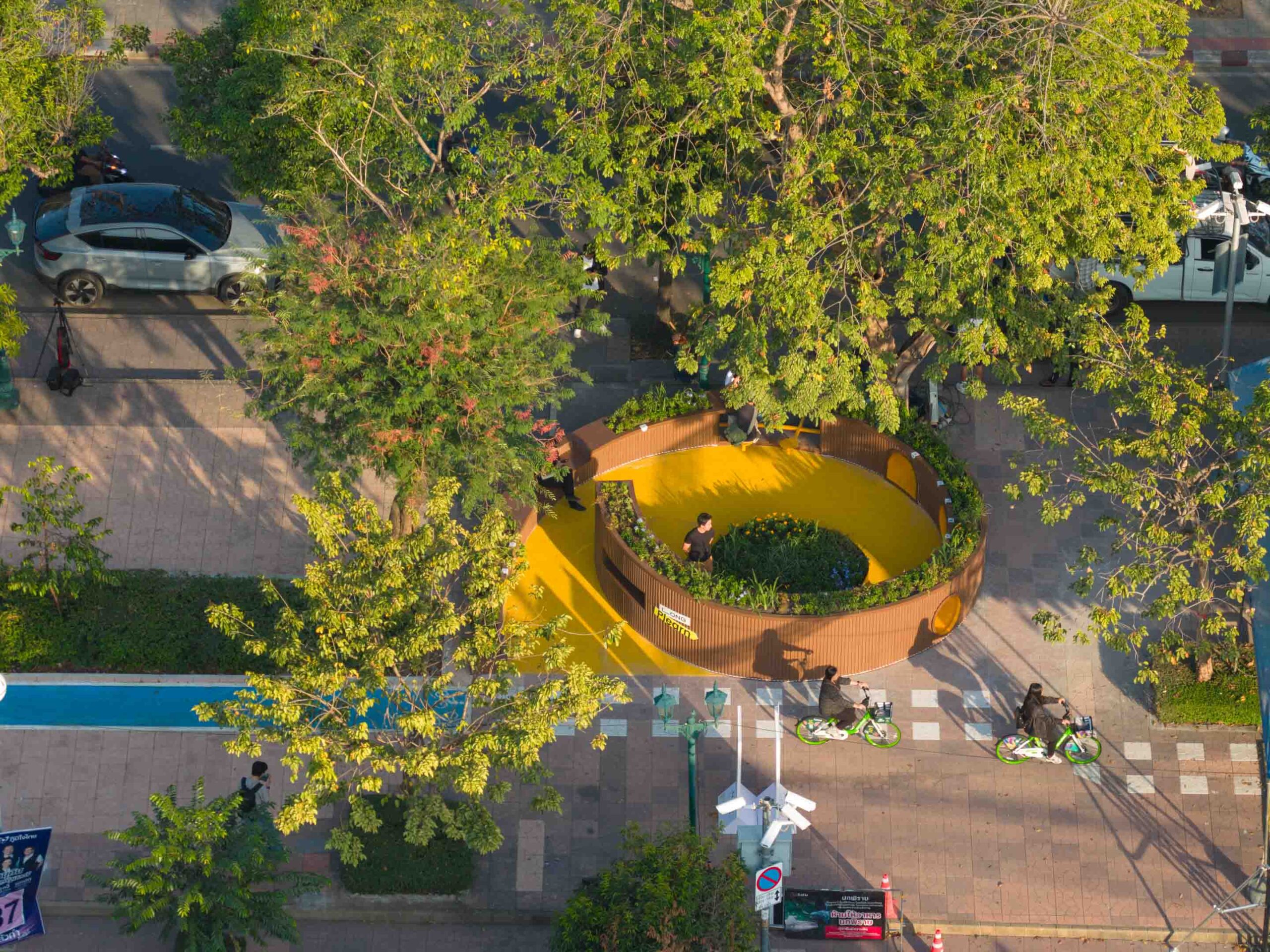
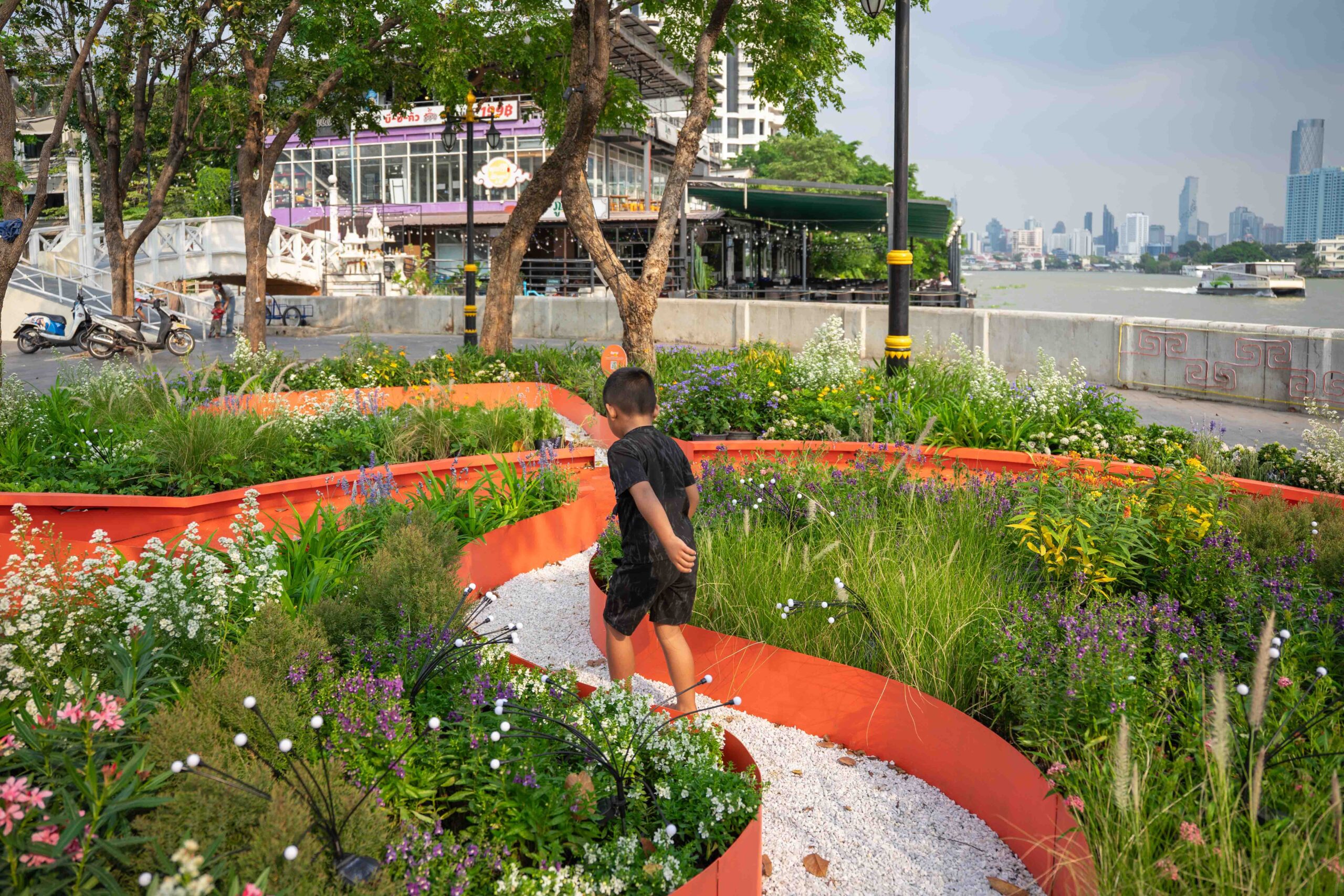
The Long Plearn exhibition, under the concept “Plearn (Play + Learn) Park,” transforms Unakan Road into a shared street dedicated to children. A curving, spiral-like garden form expands usable space and introduces flexible functions for play, exploration, and group activities. The design maximizes every inch through gently shifting elevations—lower levels become seating, mid-levels serve as activity tables, and higher openings invite crawling and climbing. This layered landscape encourages movement, curiosity, and interactive learning.
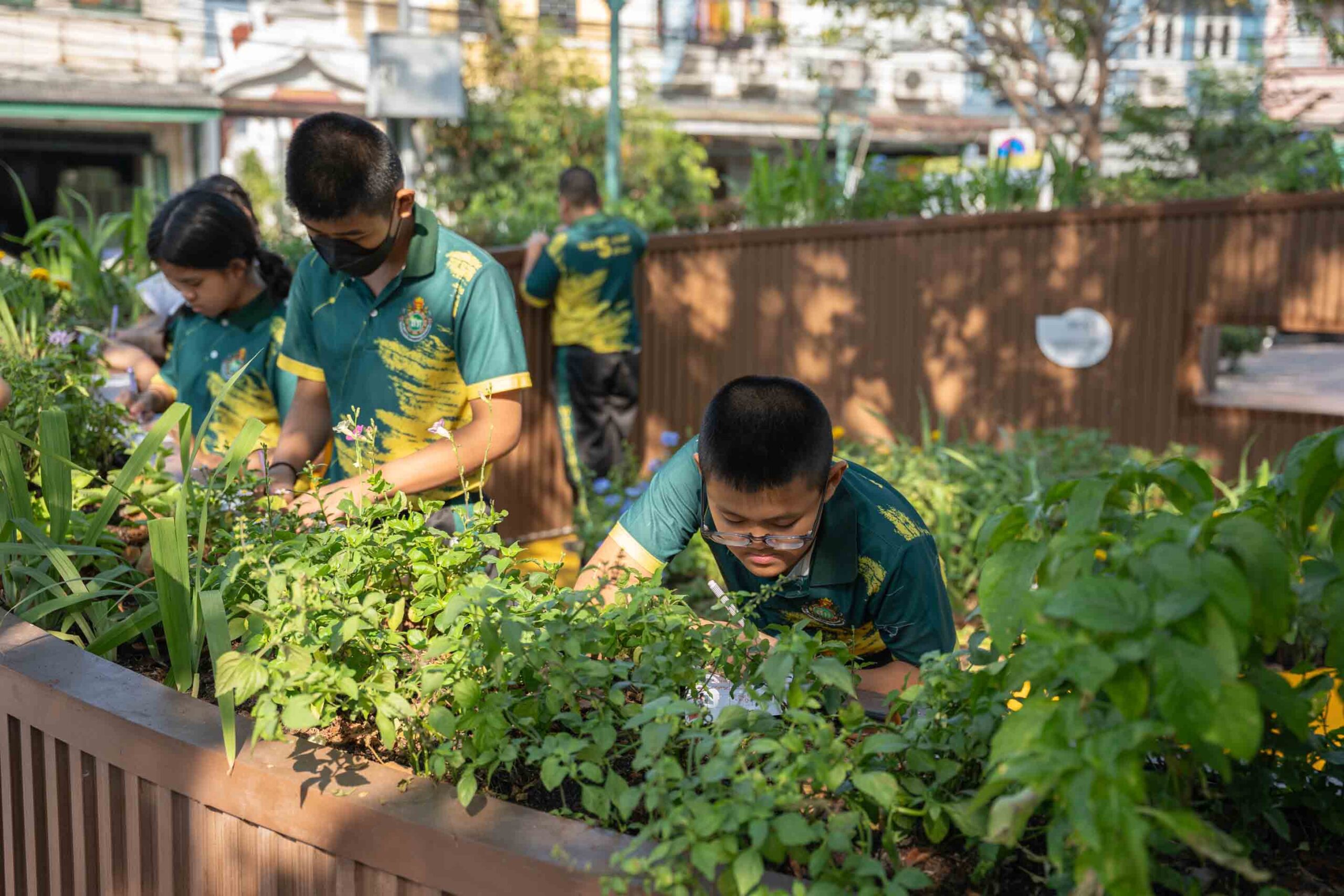
Yellow is used throughout to create a lively atmosphere that stimulates positive emotions. Edible plants and herbs invite hands-on learning from planting to harvesting, while colorful flowering species spark curiosity—transforming the space into a living learning environment where play and growth naturally coexist.
The Play Area integrates climbing elements and crawl-through openings to stimulate imagination and physical development, with EPDM flooring ensuring safety. The Workshop Area provides tables and storage for hands-on learning activities, fostering creativity and skill-building. A Seating Area allows parents to comfortably supervise, reinforcing shared experiences between children and adults.
Long Share
The Lonely City to City of Life
Big cities are hubs of diversity and prosperity, yet urban anonymity often brings loneliness. Limited social interaction can harm mental and physical health, contributing to stress and anxiety. Research shows, however, that cities can also reduce these feelings when designed well. Everyday encounters in shared spaces improve emotional well-being, and people living near public areas tend to experience lower stress. Designing walkable streets and welcoming public spaces is key to building social connections.


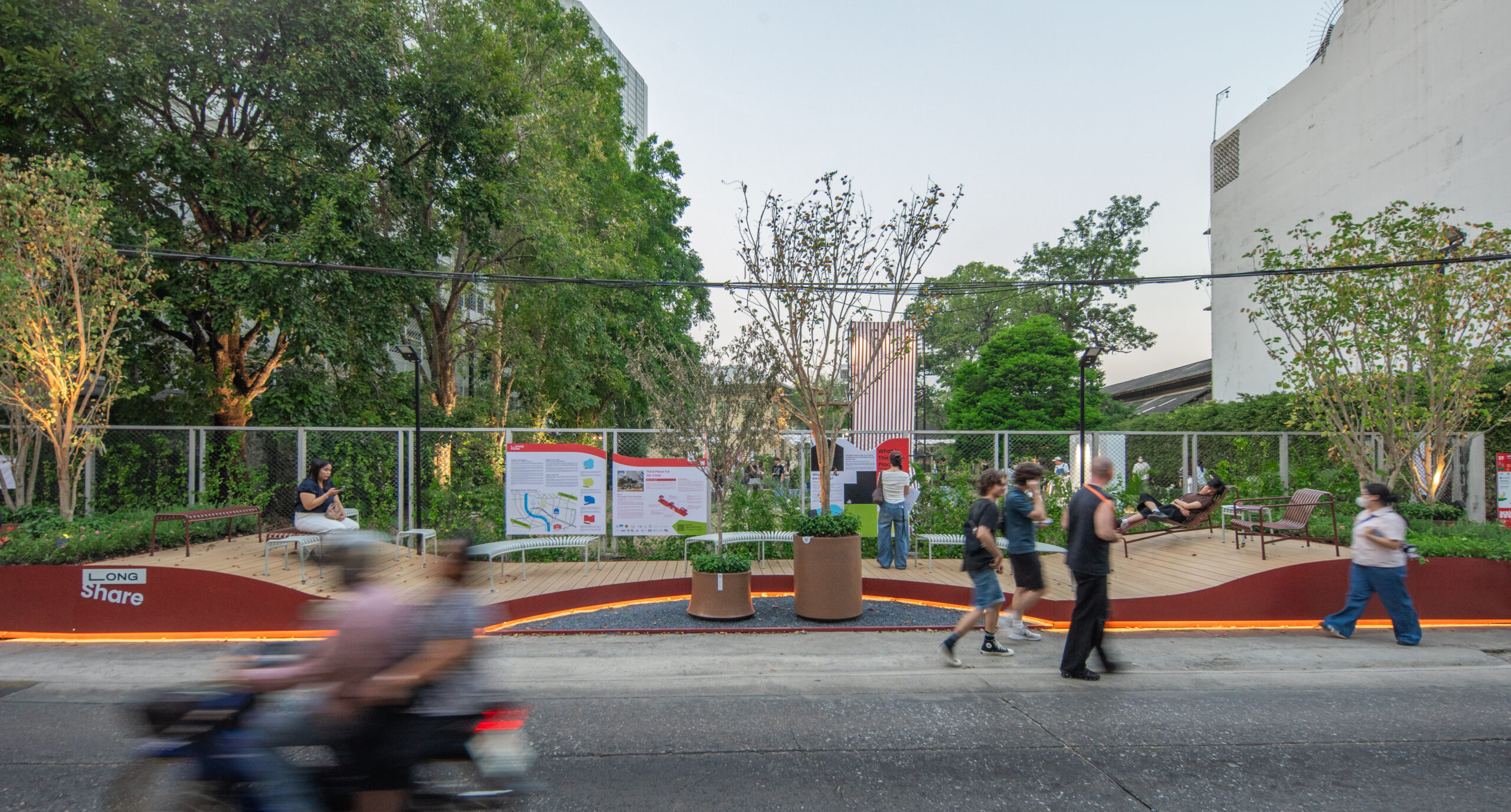
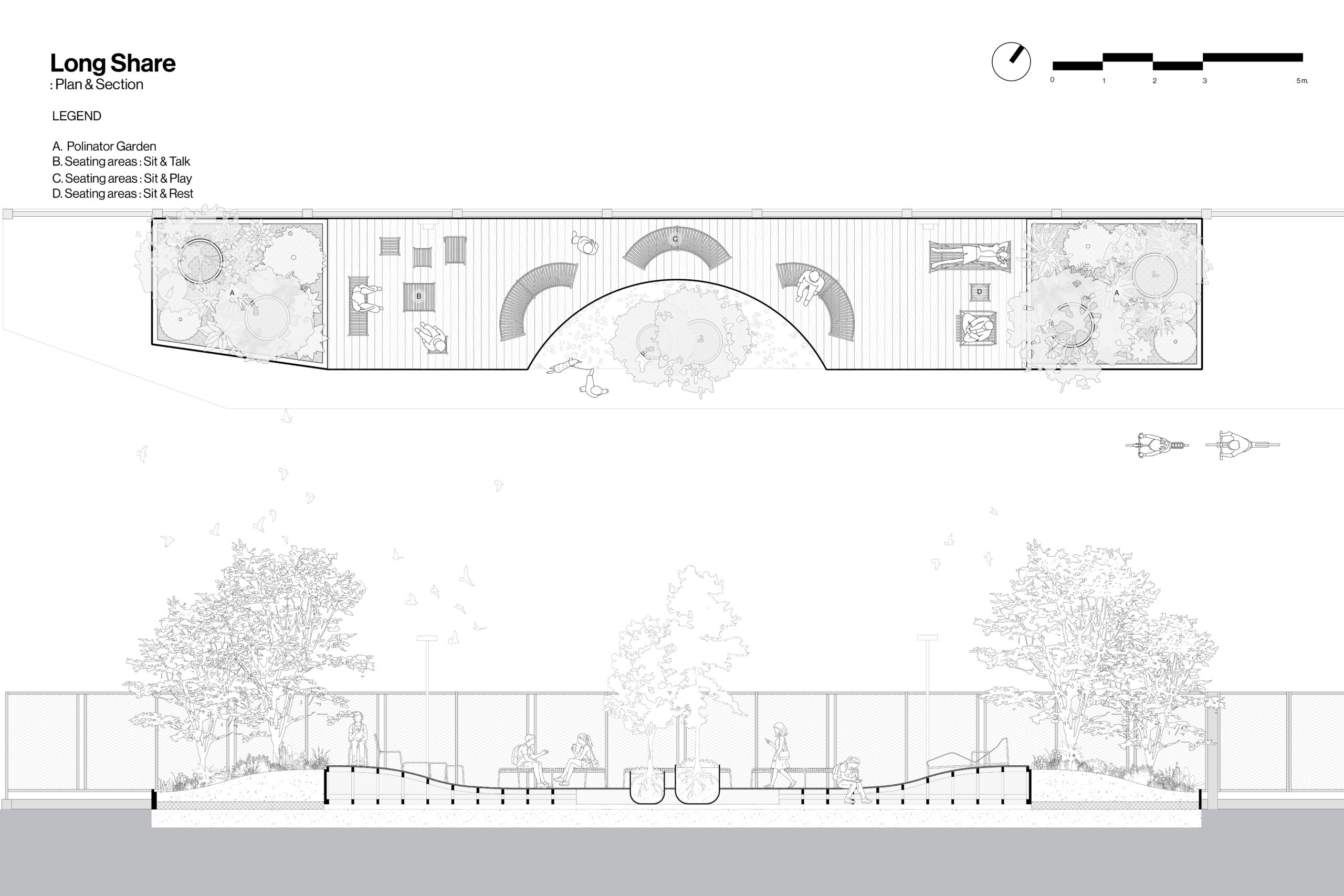
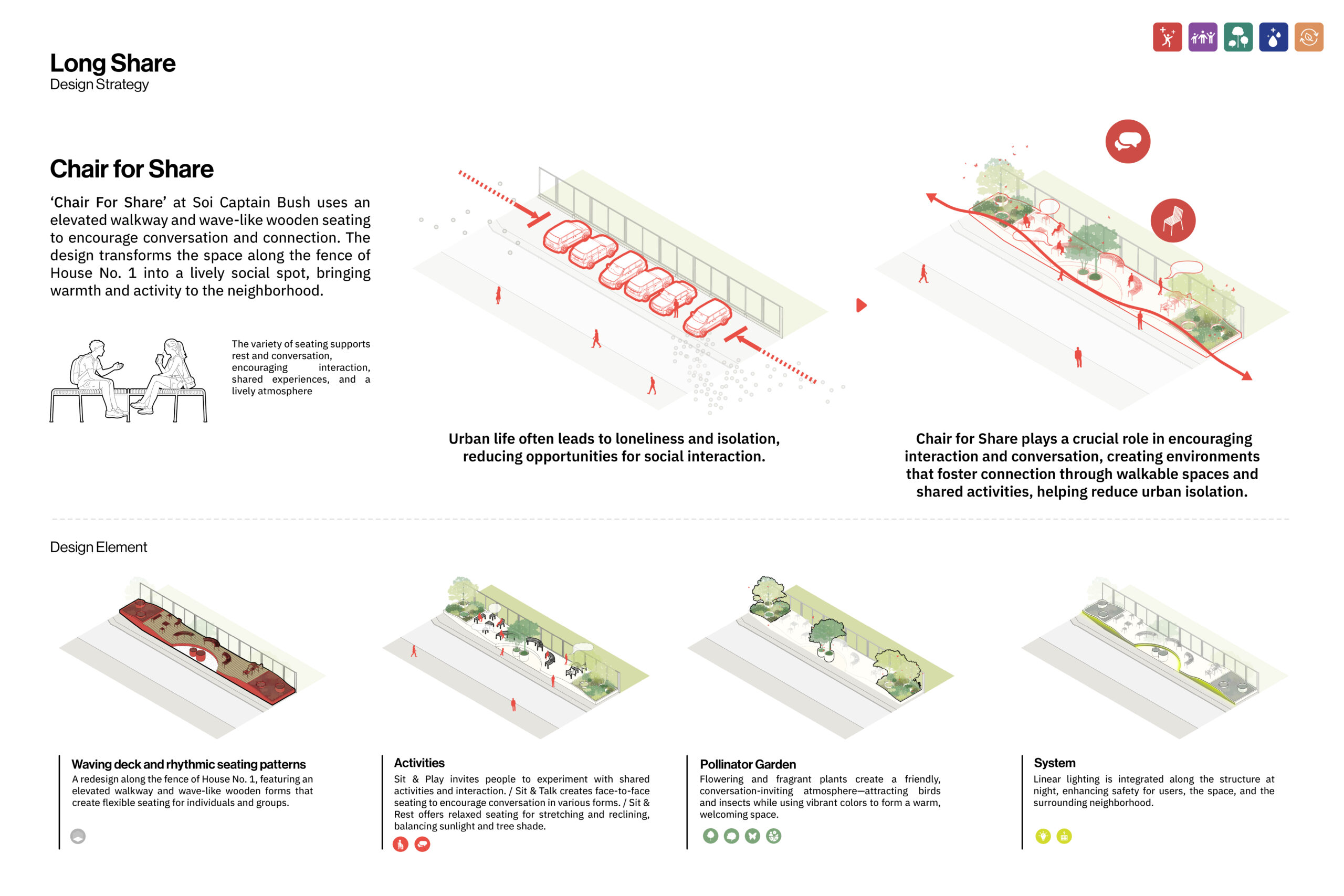
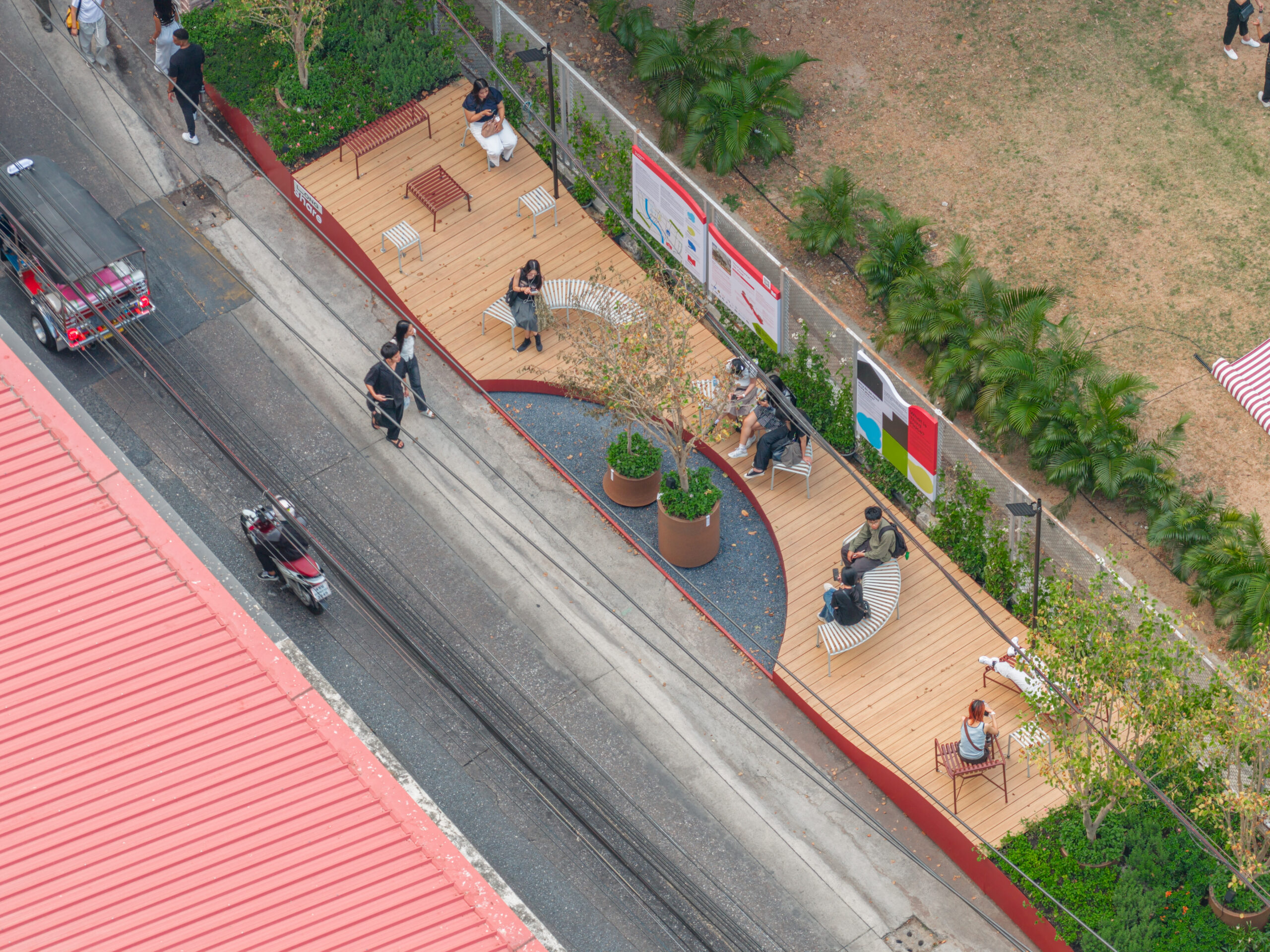
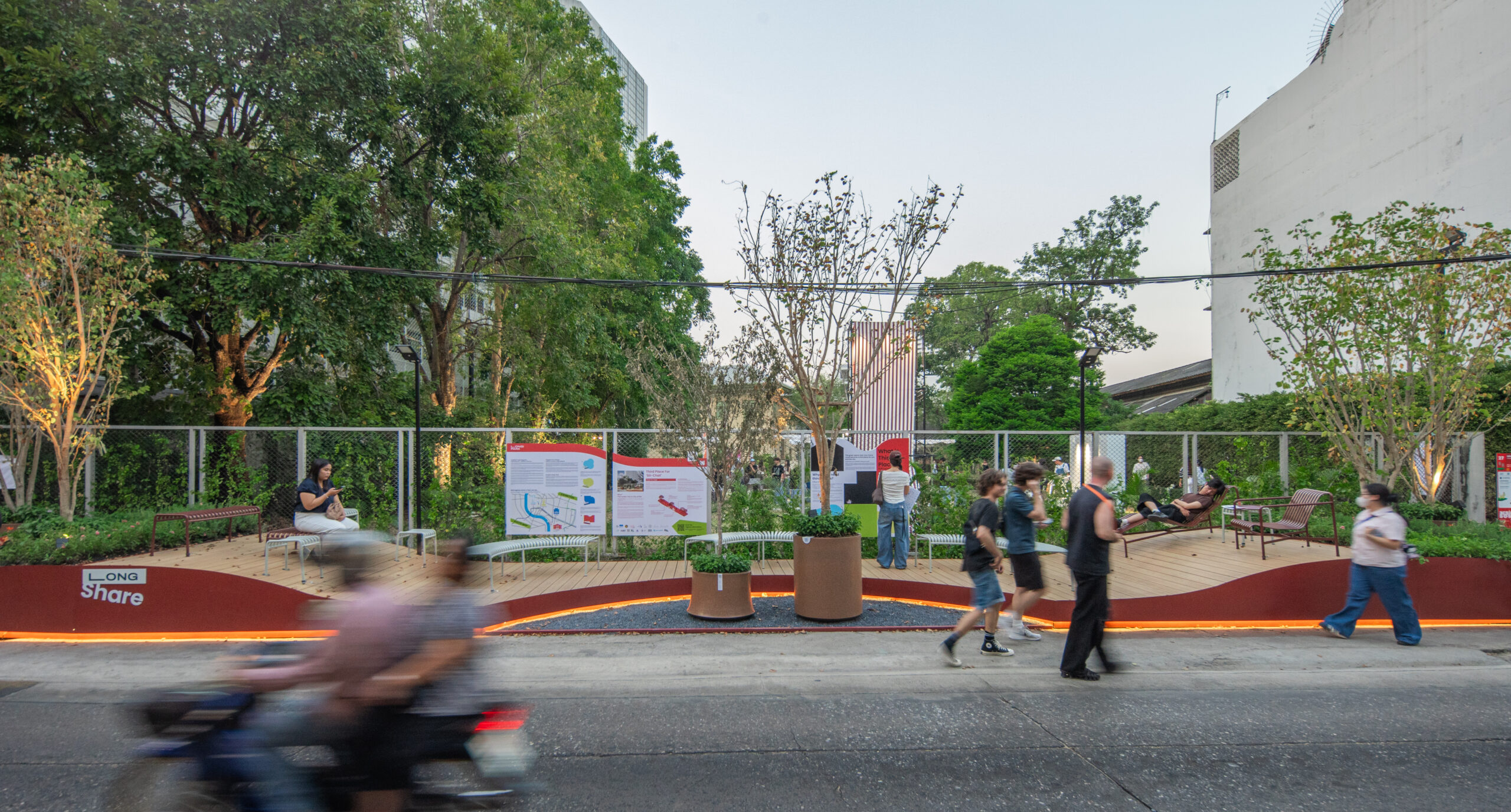
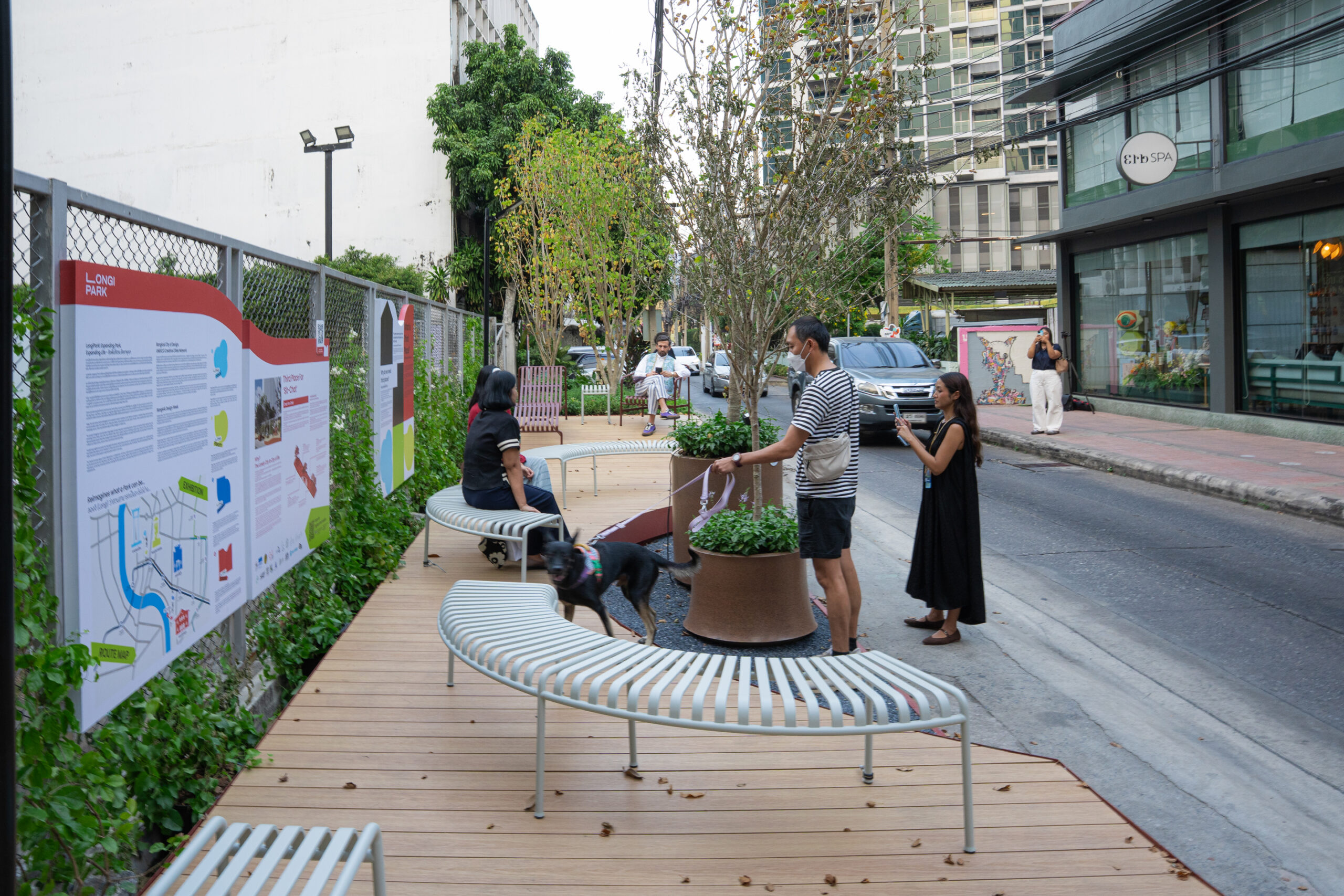
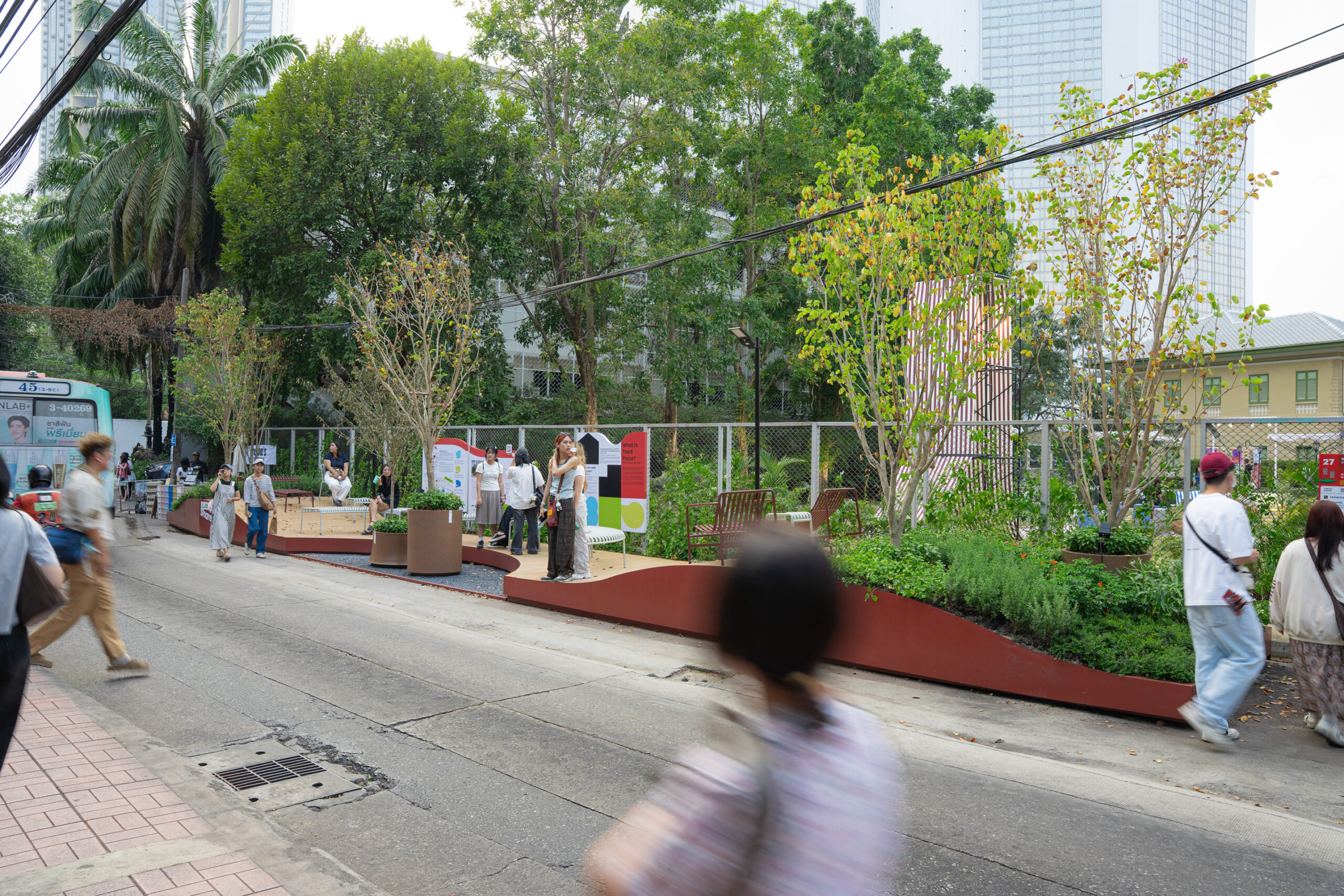
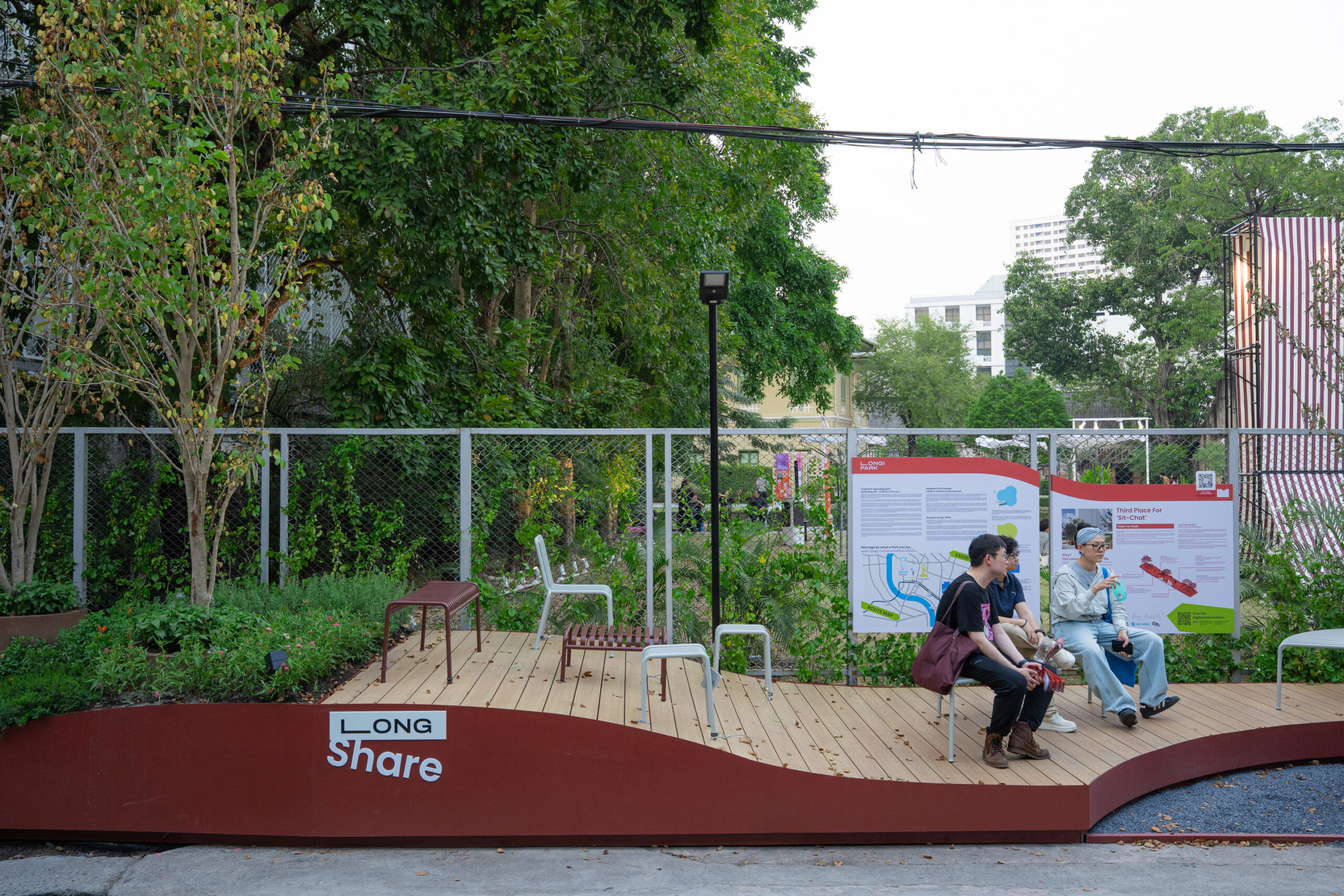
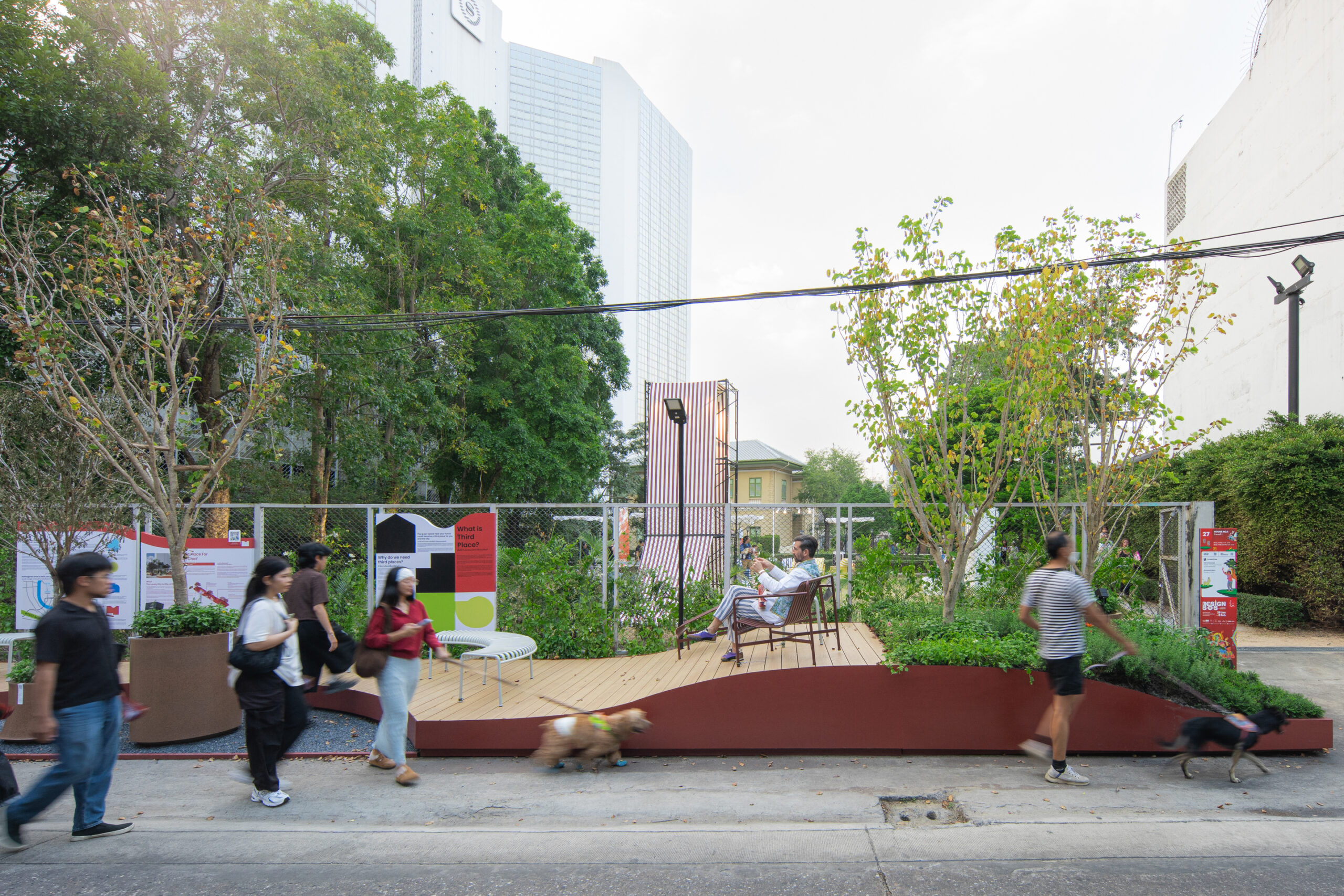
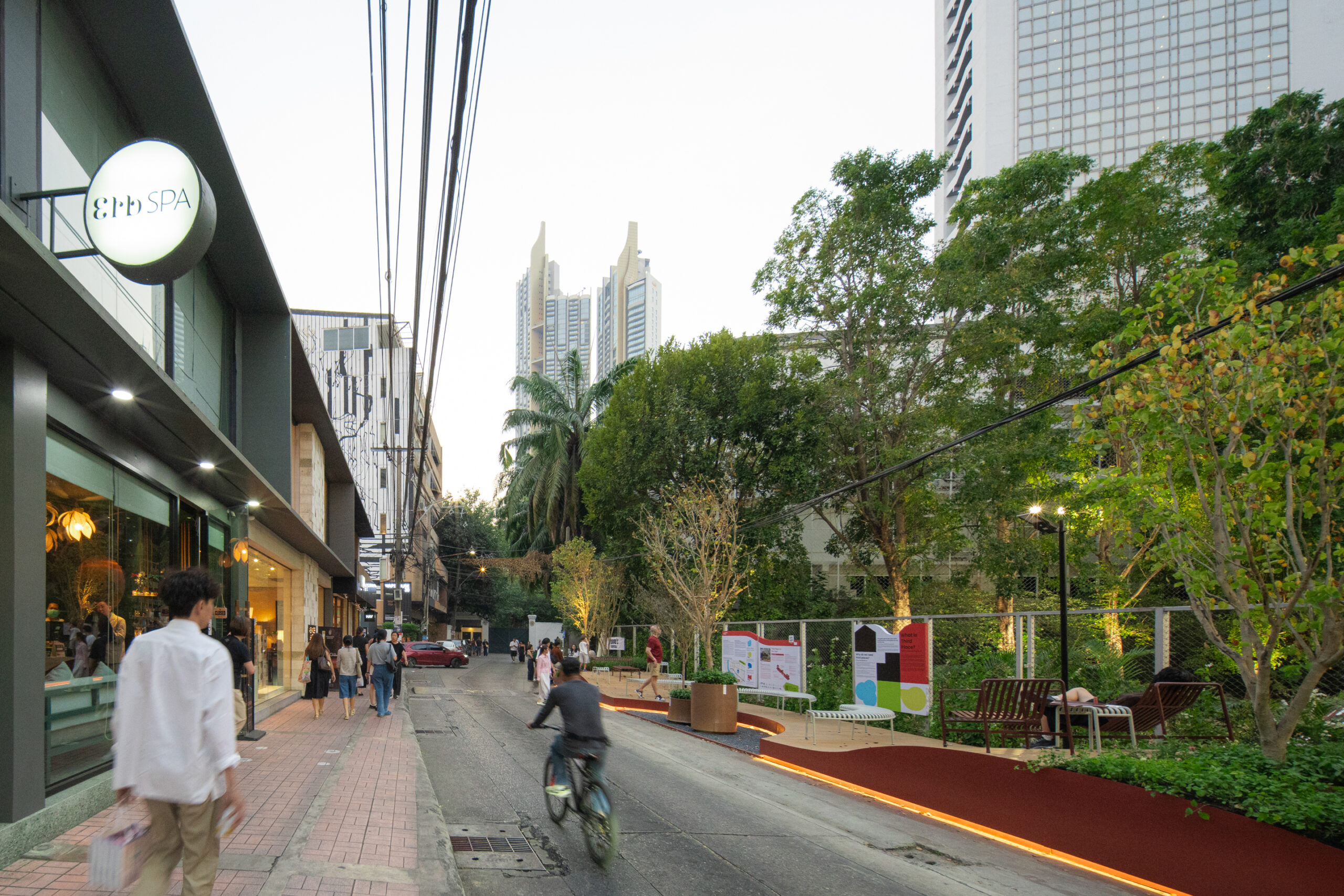
The Long Share exhibition, under the concept “Chair For Share” at Soi Captain Bush, enhances neighborhood interaction by redesigning the space along the fence of House No. 1. An elevated walkway and wave-like wooden structures form a rhythmic landscape with varied seating, creating opportunities for rest, conversation, and gathering for both individuals and groups.
A surrounding Pollinator Garden of flowering and fragrant plants adds warmth and vitality, attracting birds and insects. Integrated night lighting enhances safety and ambiance, keeping the space welcoming and active throughout the day and evening.
The project reimagines sitting as a shared experience. Sit & Play uses curved, layered forms to encourage movement and relaxation. Sit & Talk arranges seats face-to-face to promote dialogue. Sit & Rest provides comfortable areas in shade and natural light for physical and mental recovery.
Long Pause
Activating Urban Gaps into Urban Green
Bangkok, a metropolis of over six million people, continues to grow rapidly. While infrastructure supports urban life, unplanned expansion has left many small, neglected spaces across the city, contributing to environmental and health concerns. In response, cities worldwide have embraced pocket parks—compact green spaces created from underused corners and alleyways. These small parks increase access to greenery, reduce stress, and offer everyday relief. Within a 15-minute walk (400–1,000 meters), they provide an efficient way to expand urban green networks


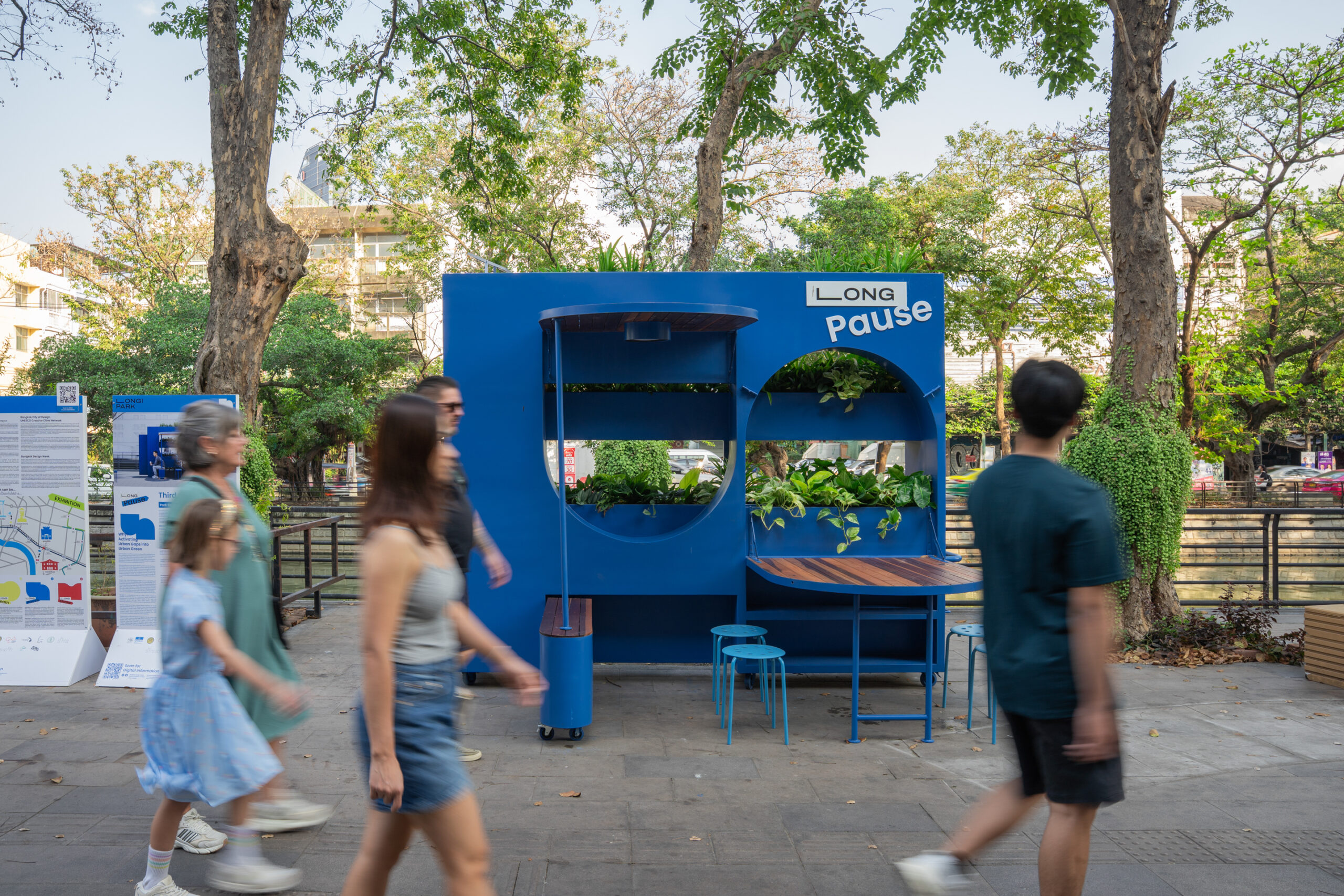
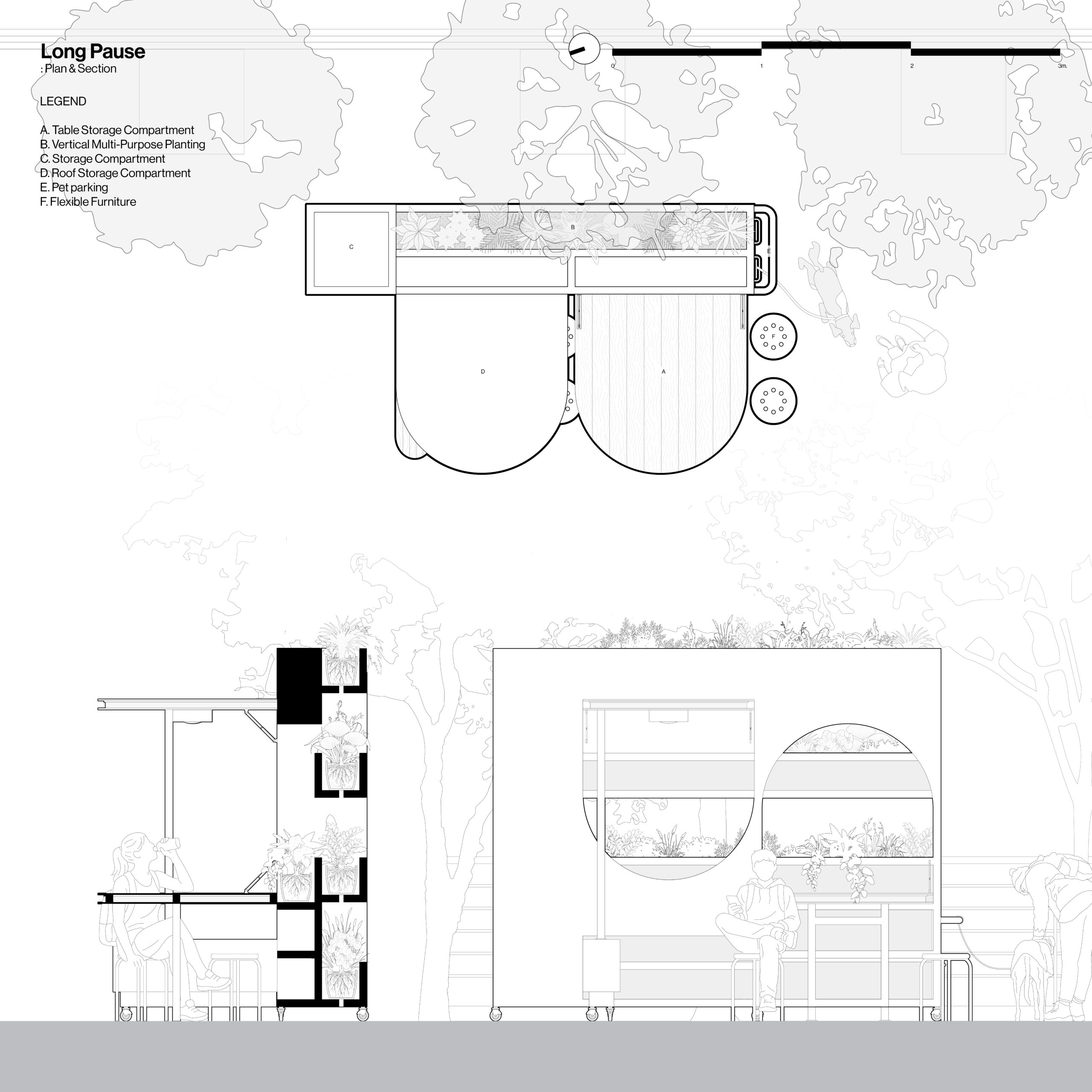
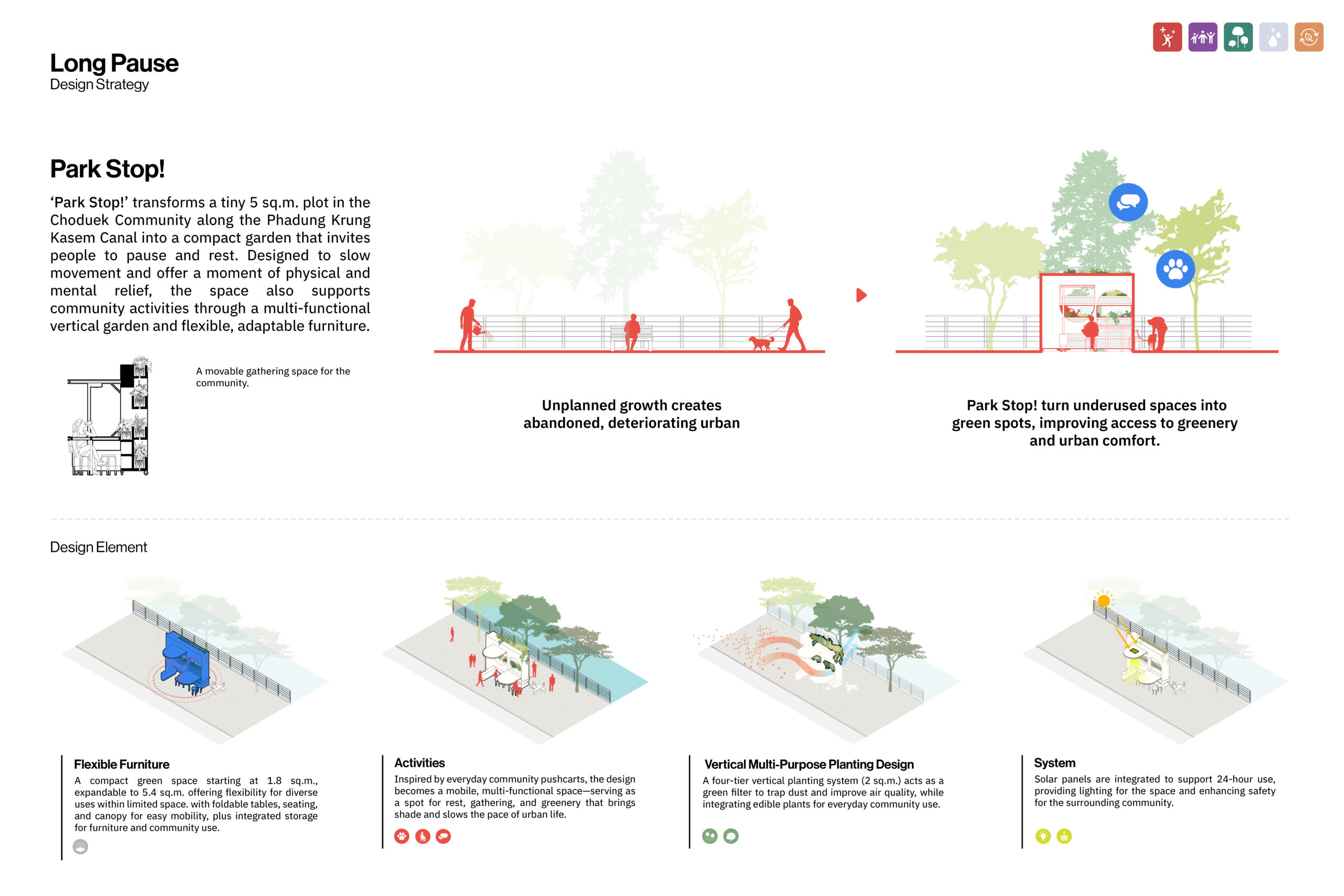
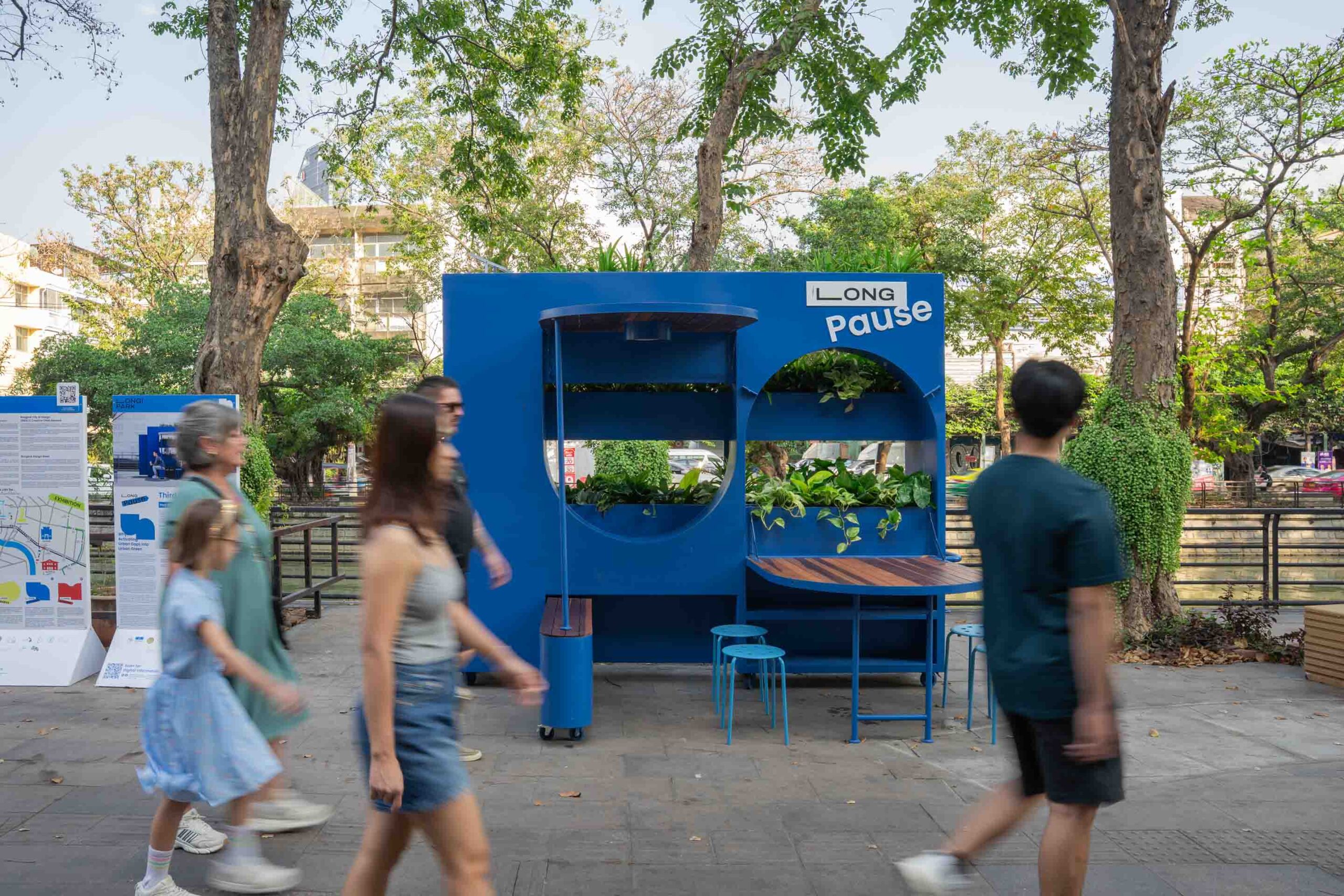
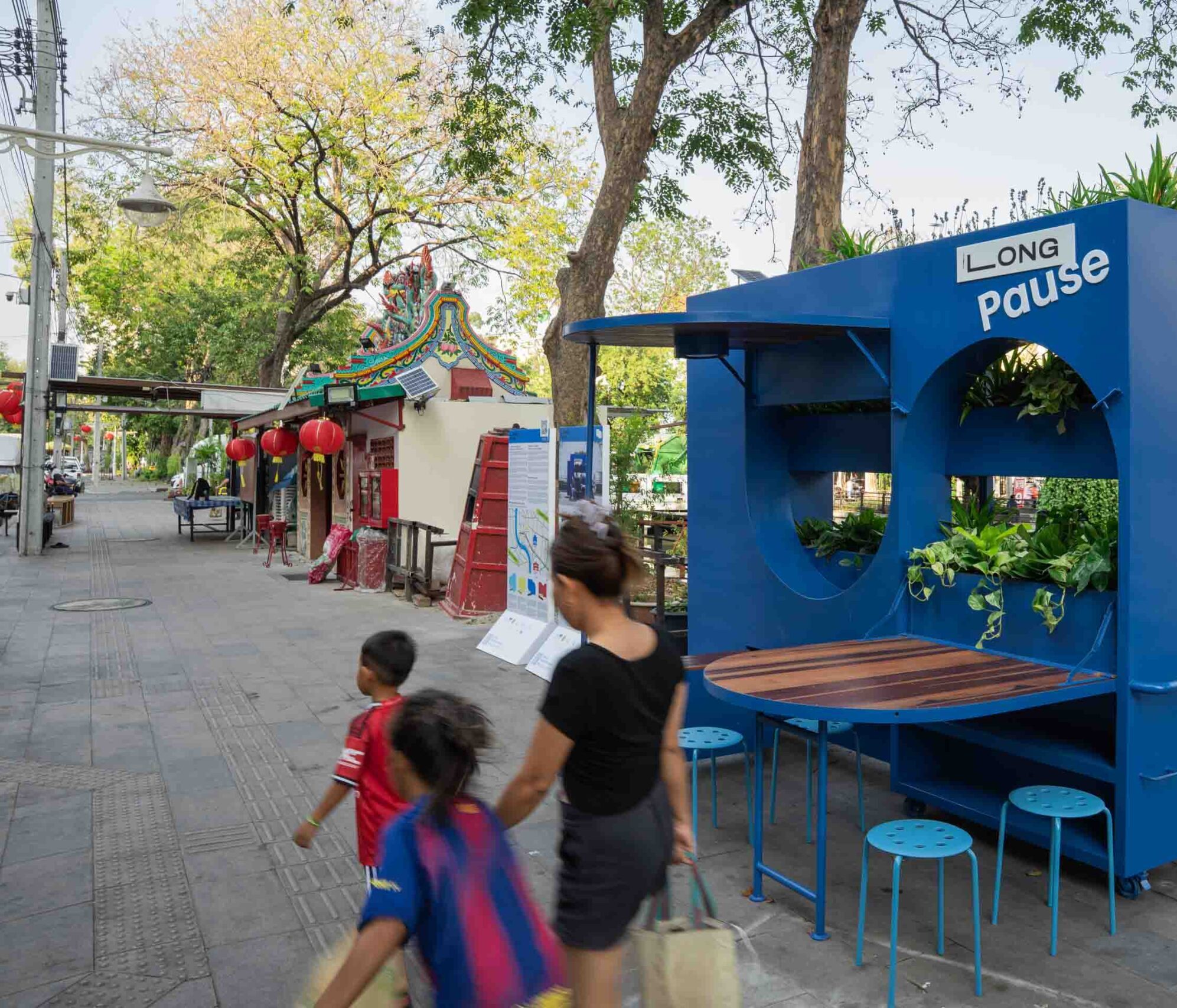
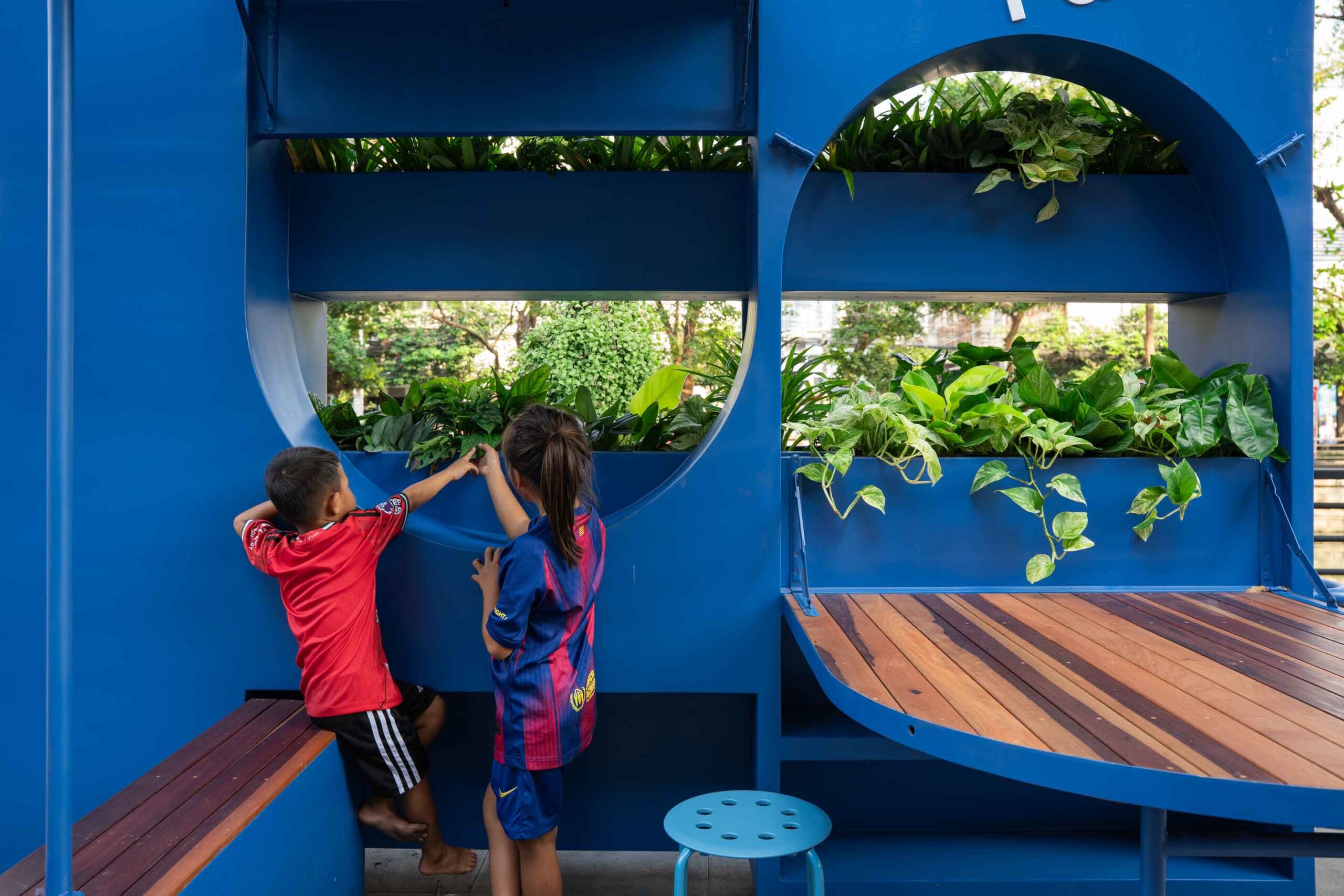
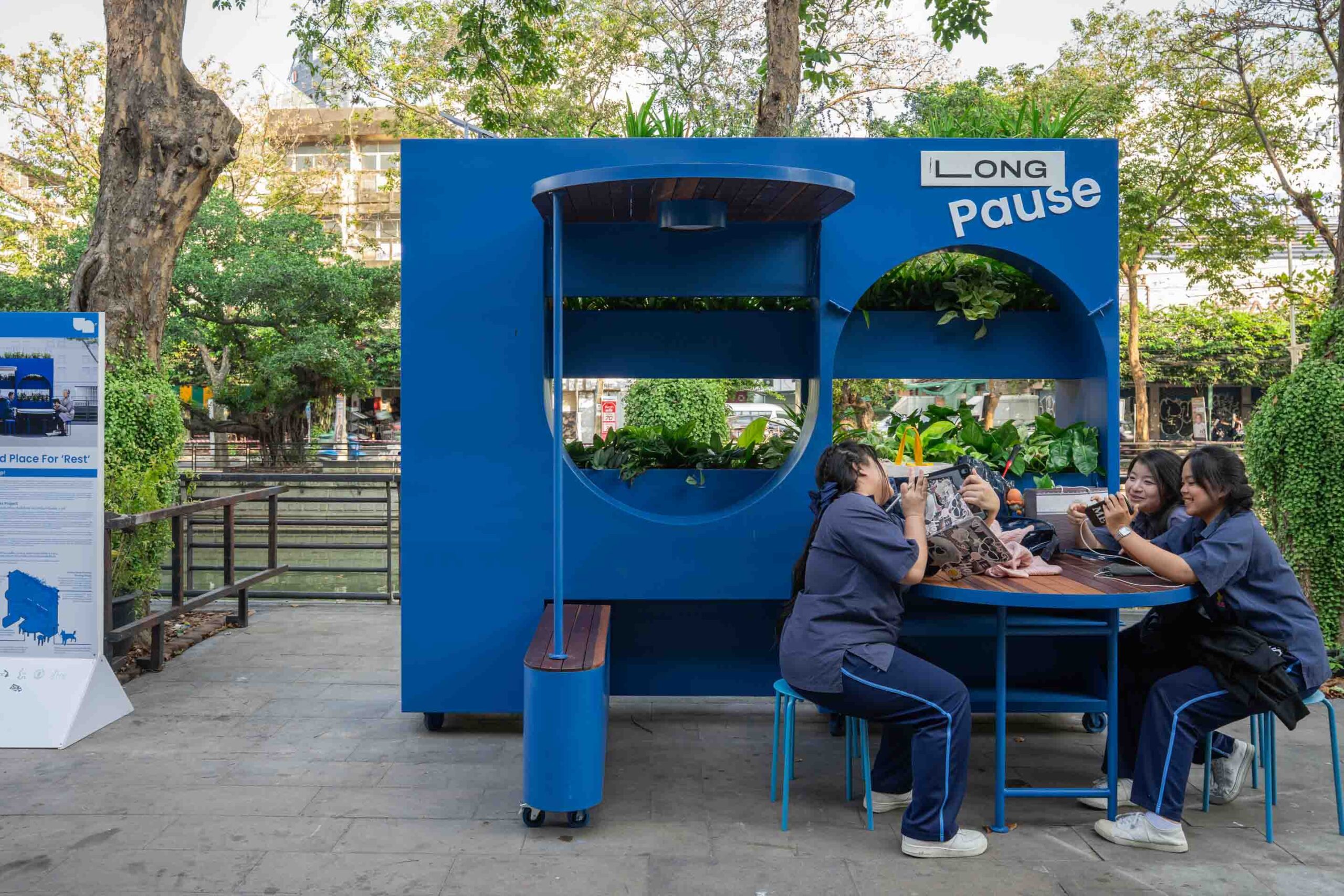
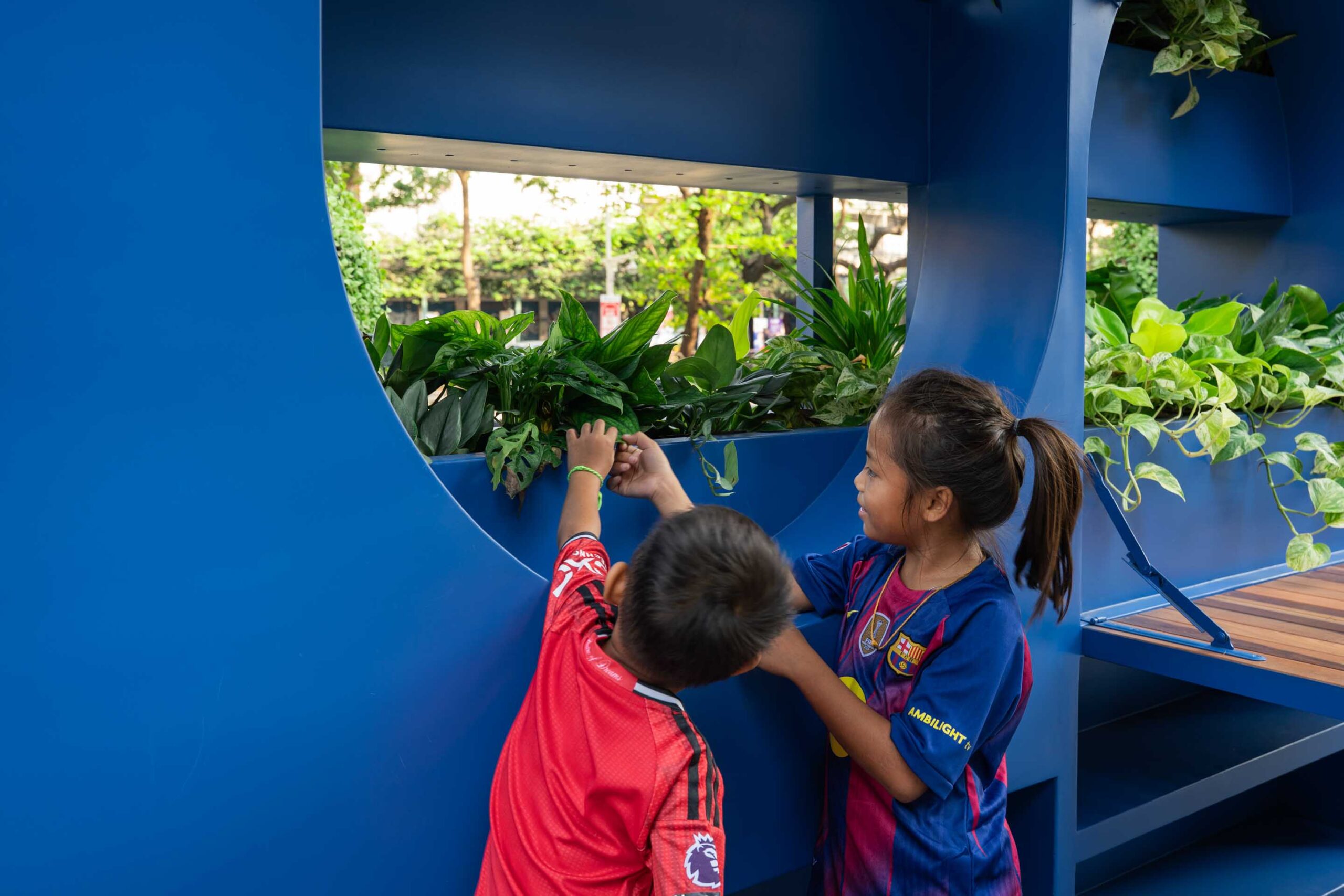
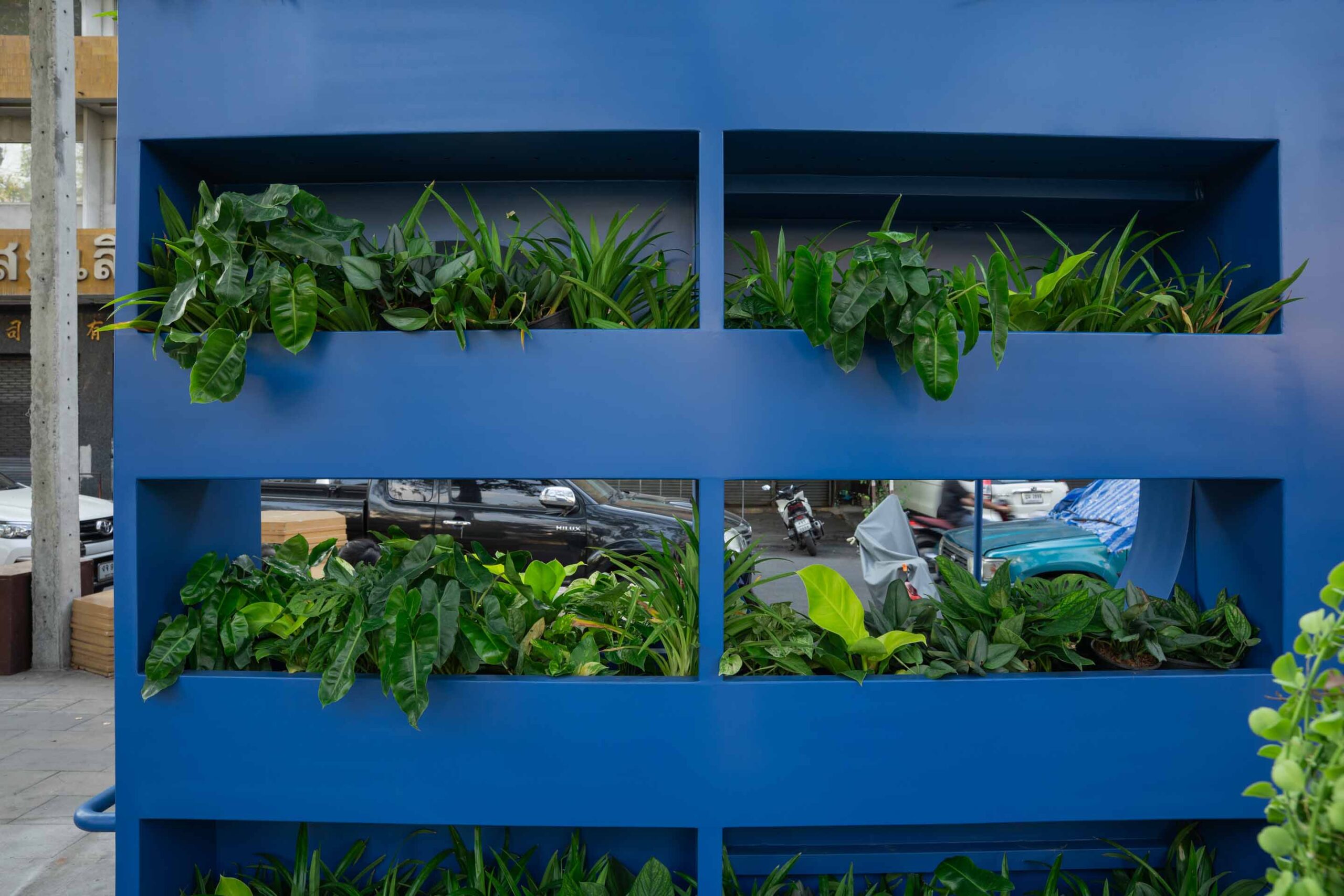
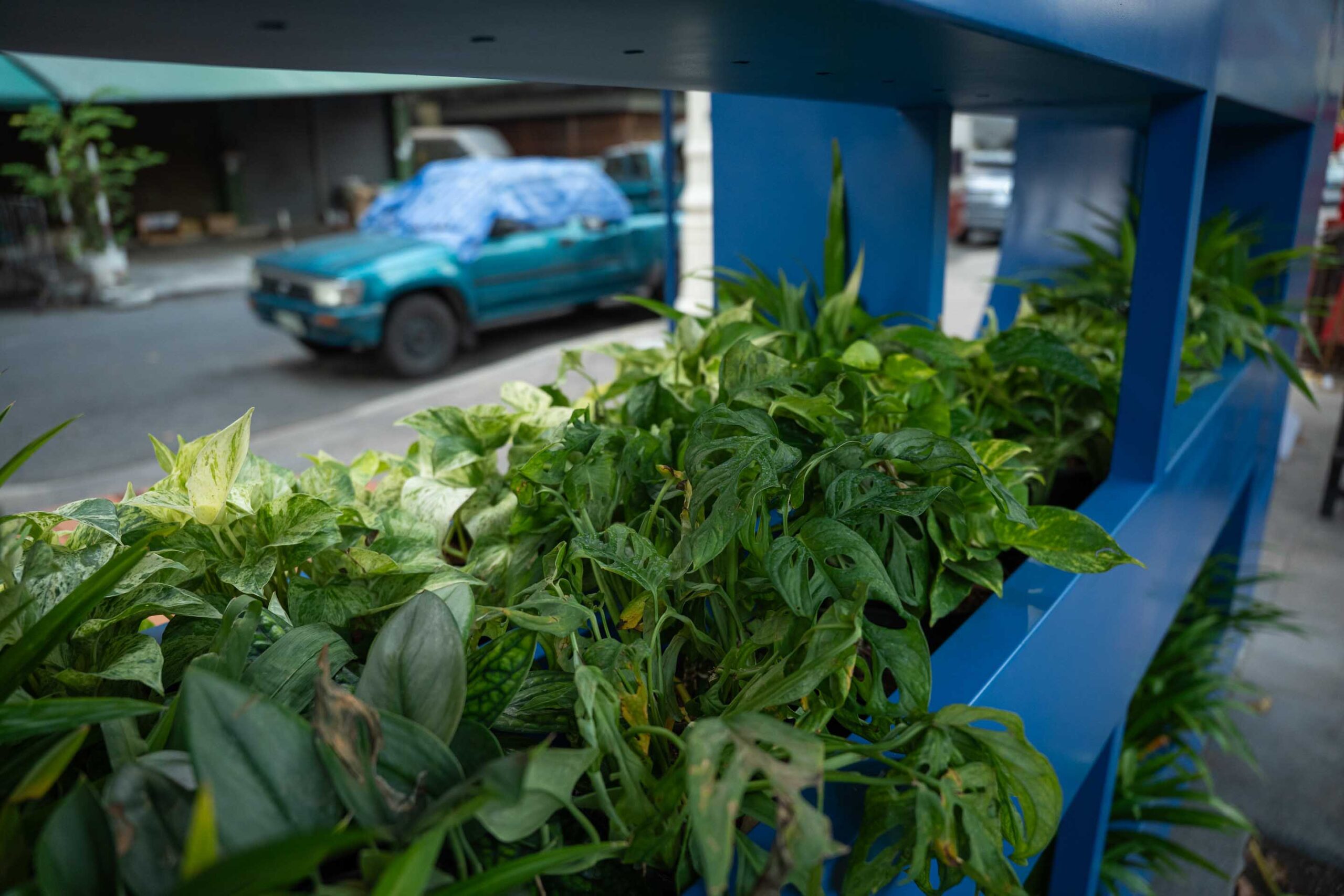
The Long Pause exhibition, under the concept “Park Stop!”, transforms a tiny 5 sq. m. space in Choduek Community along Phadung Krung Kasem Canal into a compact garden that invites people to pause. Designed to gently slow pedestrians, it creates a shared moment of rest through a vertical multi-purpose planting system and flexible, expandable furniture—serving as a prototype for small-scale urban parks.
Starting from just 1.8 sq.m. and expandable to 5.4 sq.m, the movable design— inspired by the familiar neighborhood cart—functions as a resting point, meeting space, and mobile green pocket. Folding tables, sliding seats, retractable sunshades, and built-in storage allow it to adapt to daily activities.
Layered planting filters dust and improves air quality, while edible plants encourage community use. More than a temporary installation, Park Stop! demonstrates how micro-parks can reactivate overlooked spaces and bring flexibility, accessibility, and warmth back to the city.
Park Stop! continues the conversation on developing small-scale parks along pedestrian routes, encouraging the expansion of accessible green public spaces within a 400–1,000 m walking distance, and enhancing shared use between passersby and local residents to help bring greater vitality back to the city.
Long Walk
From Car-Centric to People-Centric: Creating a Walkable Life
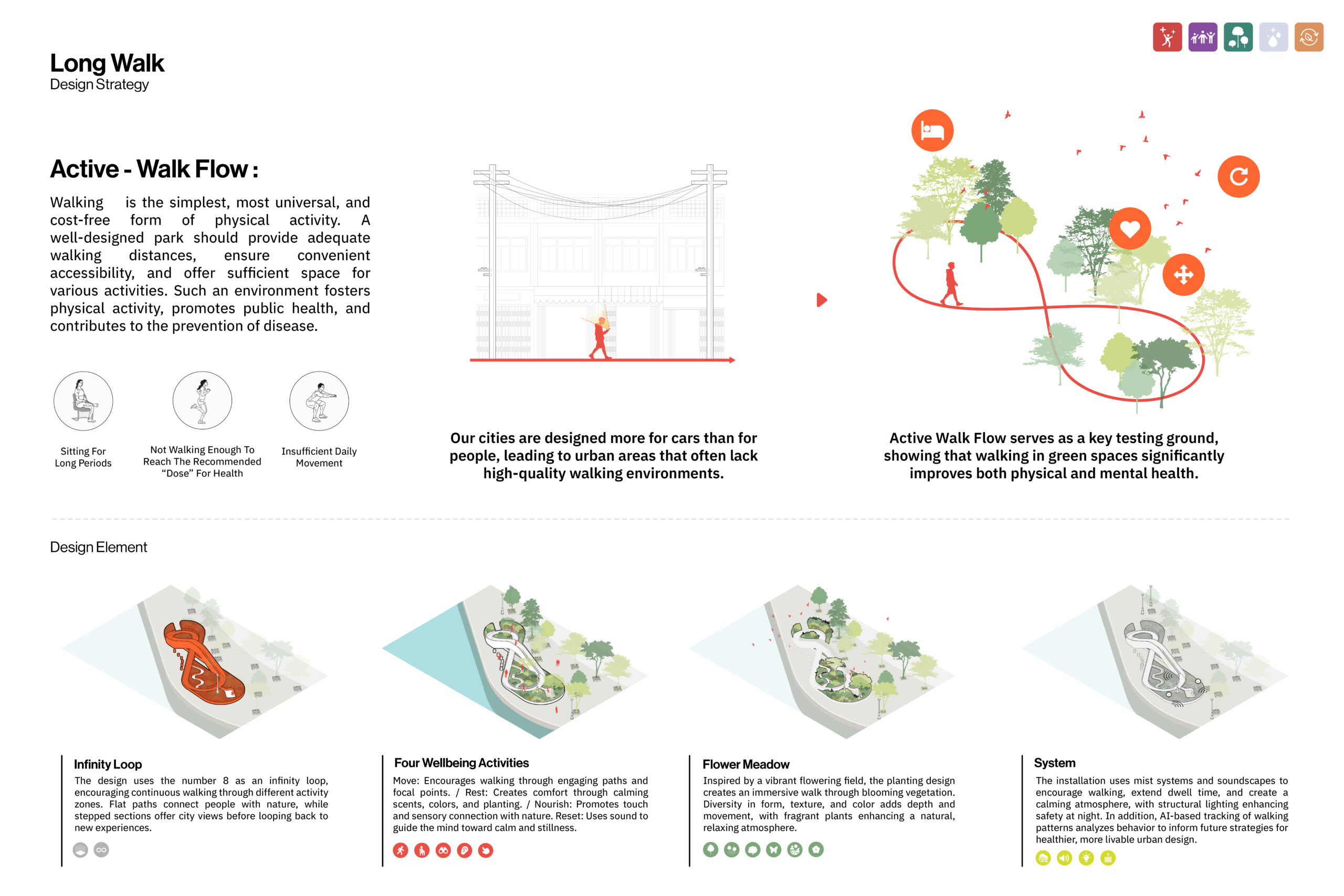
When living in Thailand, many people say they dislike walking—not because they are lazy, but because urban environments are rarely designed to support pedestrian life. In contrast, countries such as Japan and many European cities prioritize walkability as a fundamental urban principle, where walking is not only a mode of transport but also a cultural practice and an economic catalyst. In car-oriented cities such as Bangkok, limited walkability shifts activity into enclosed malls rather than vibrant street life.


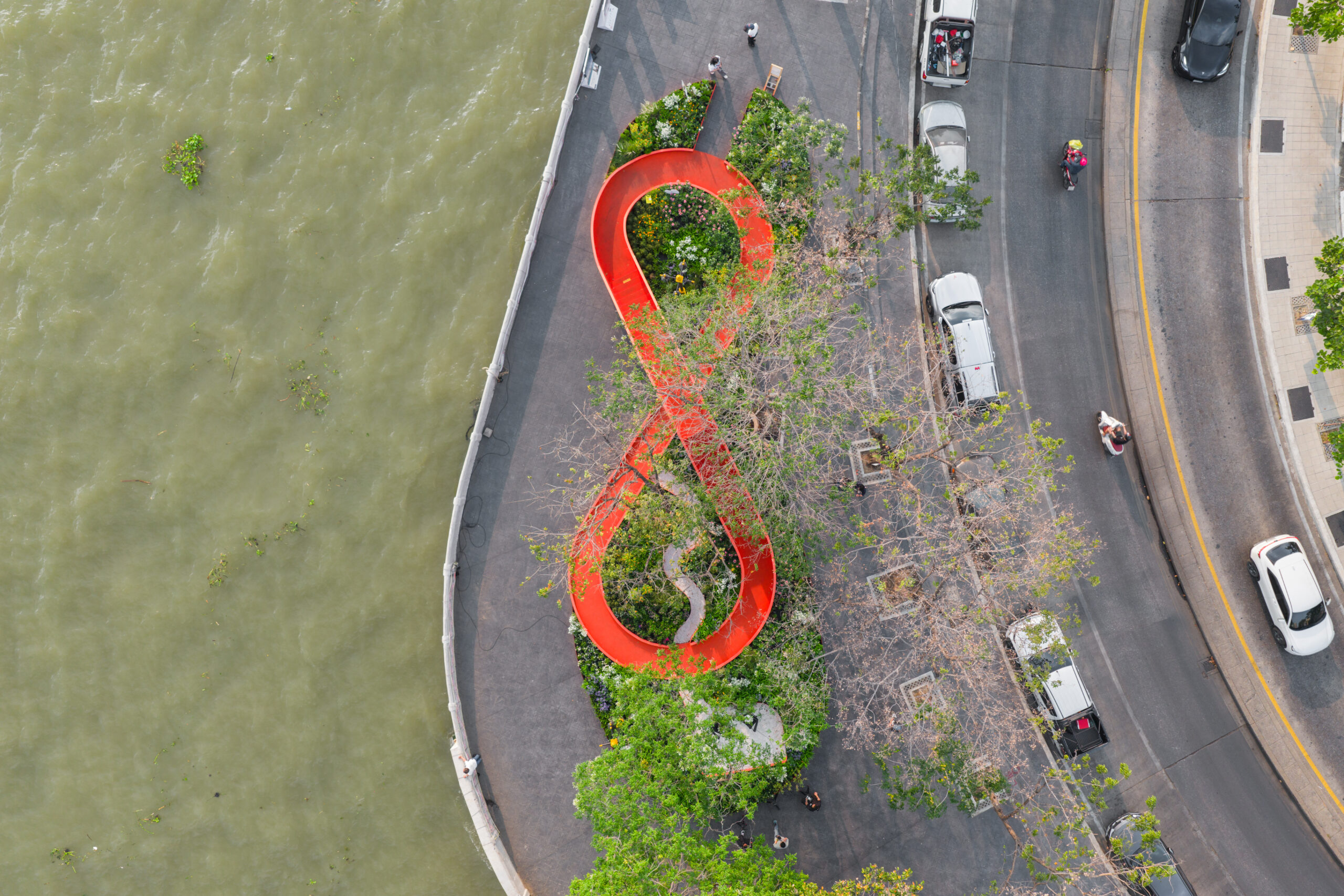
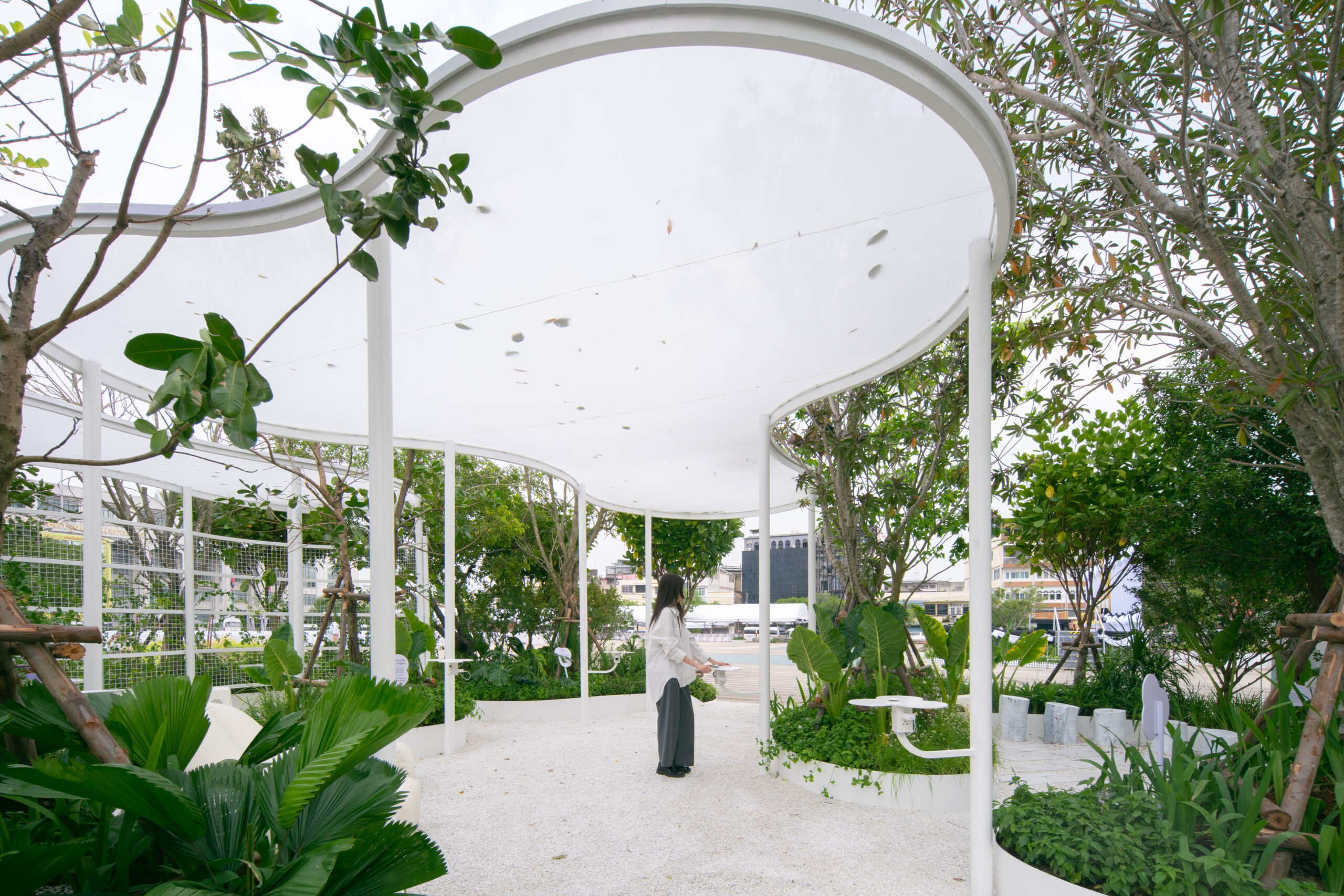
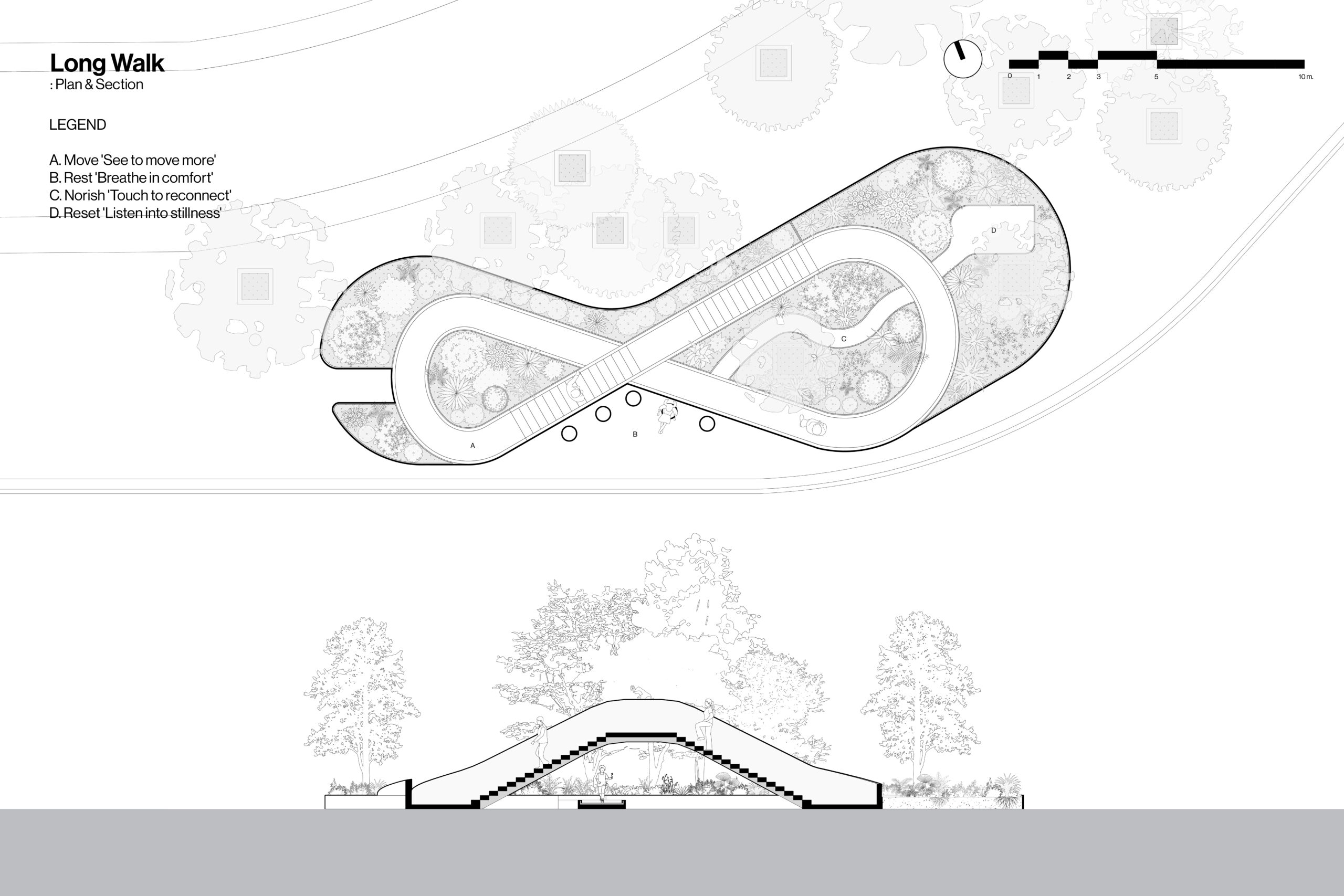
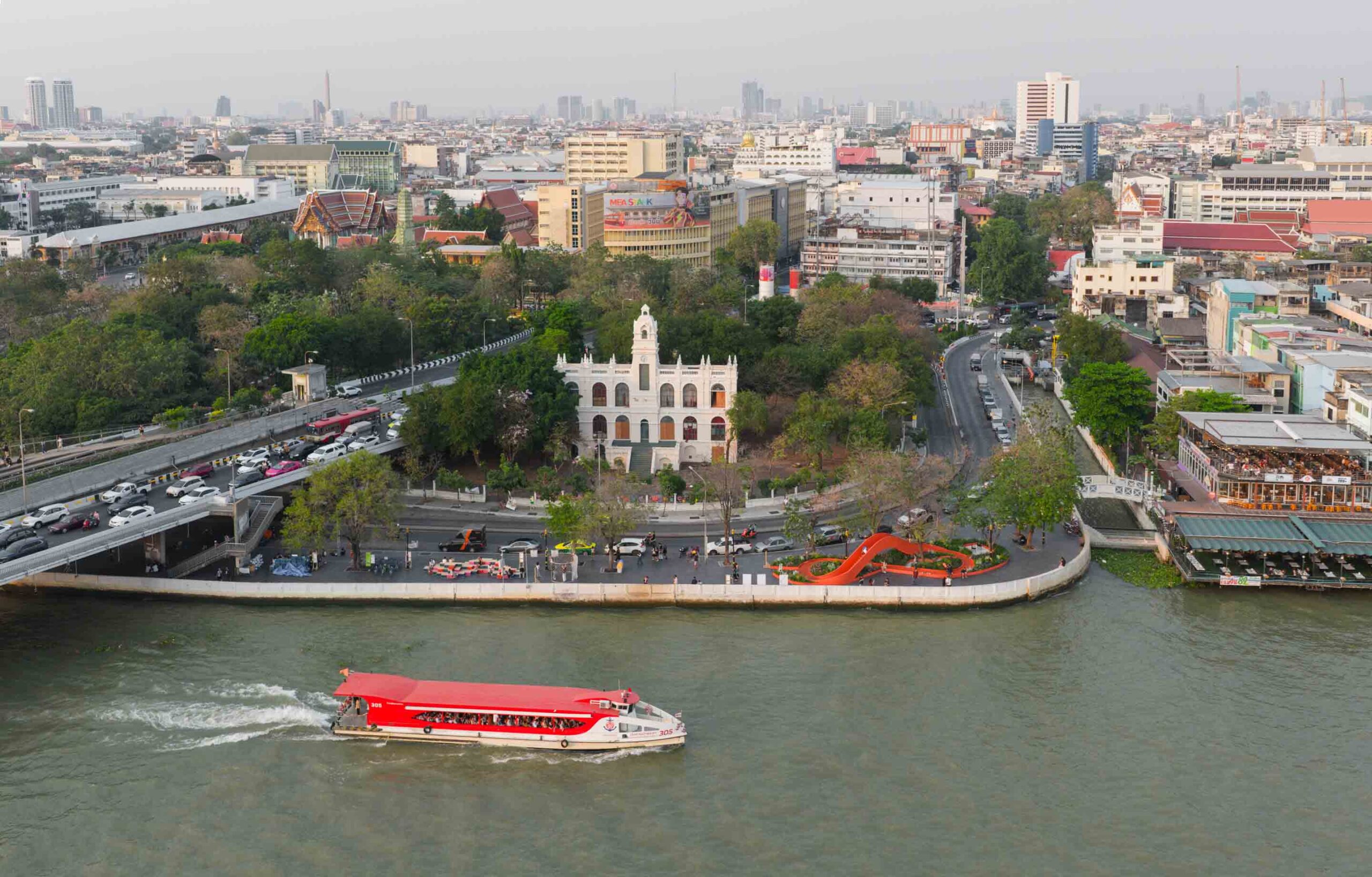
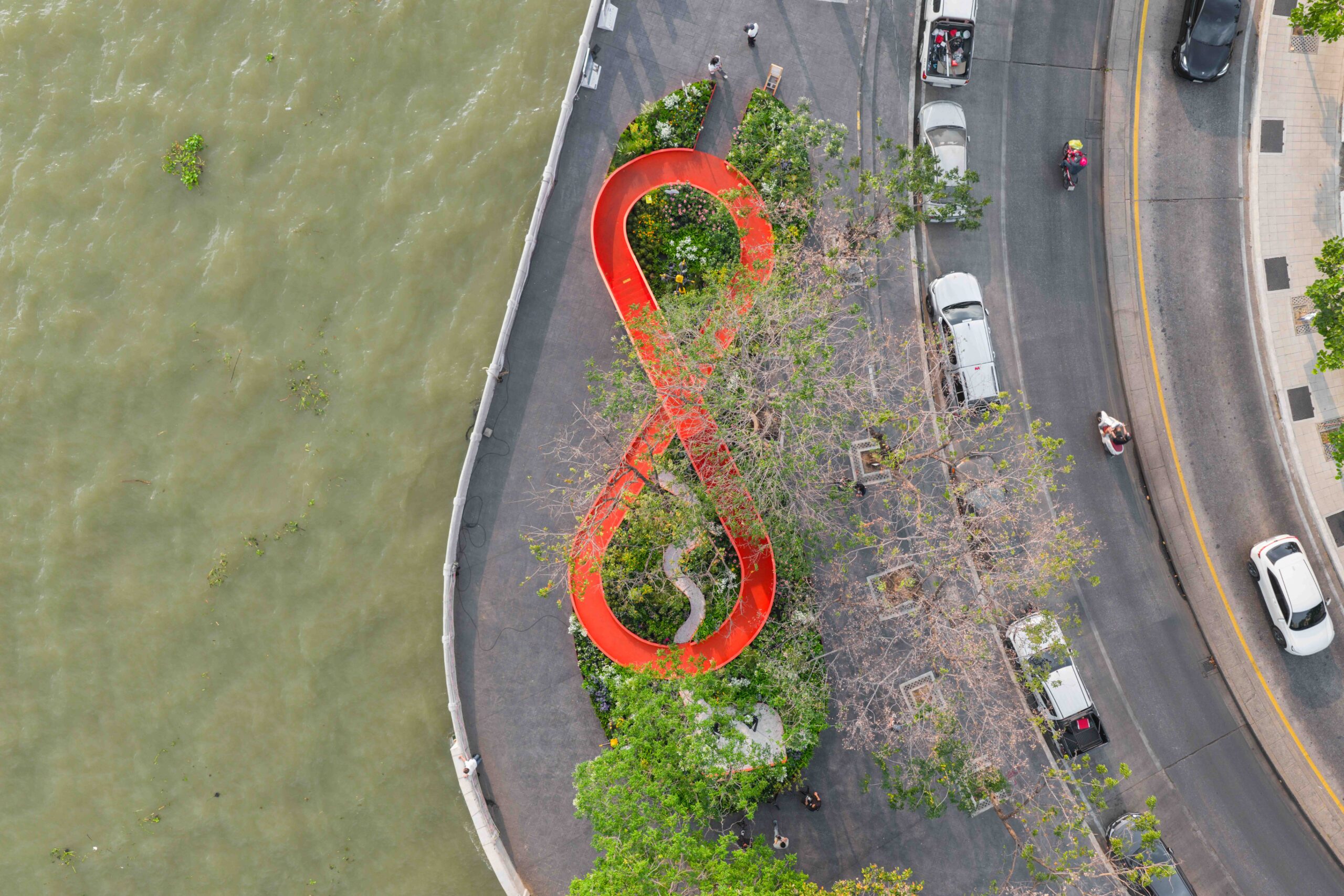
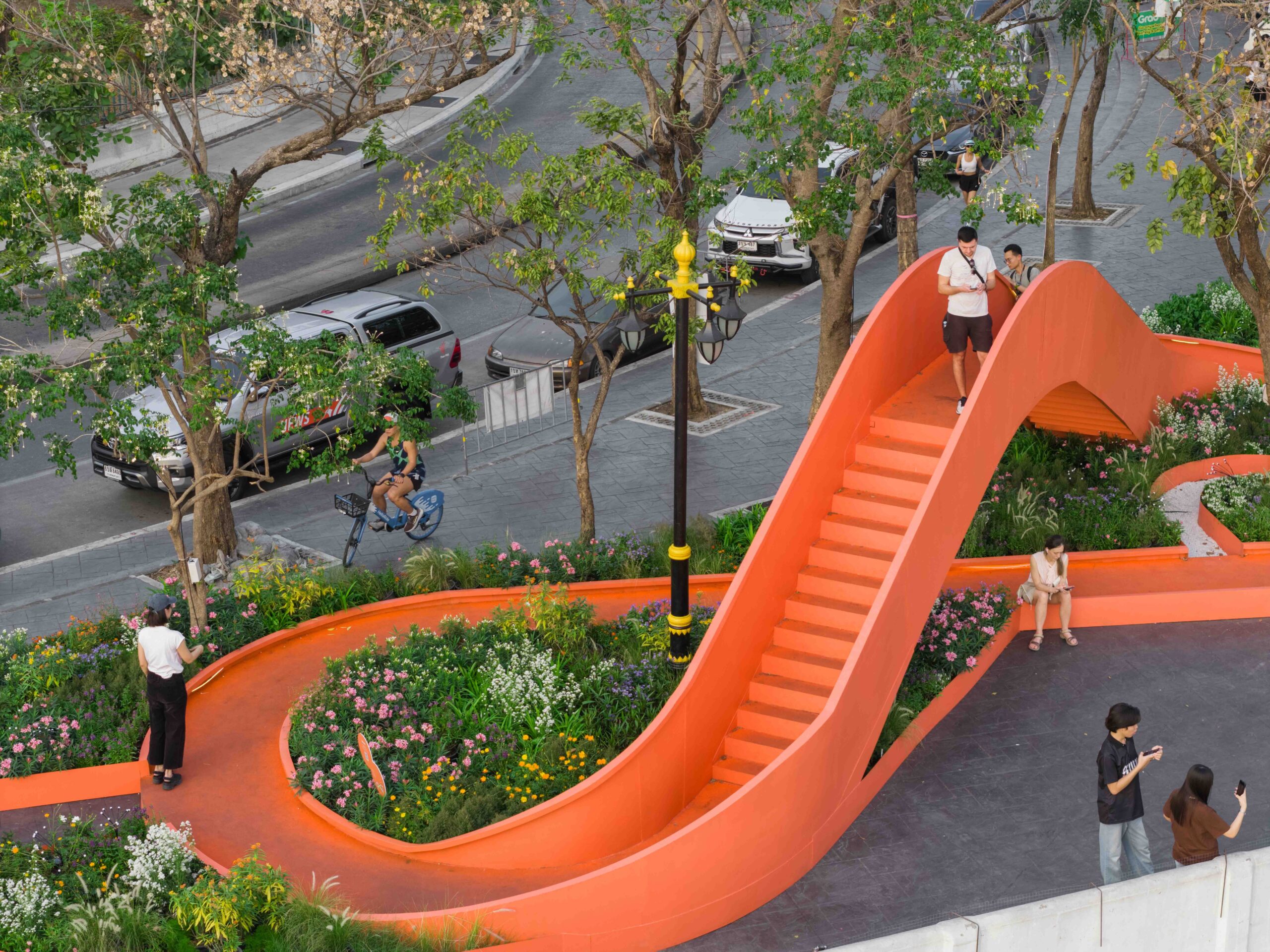
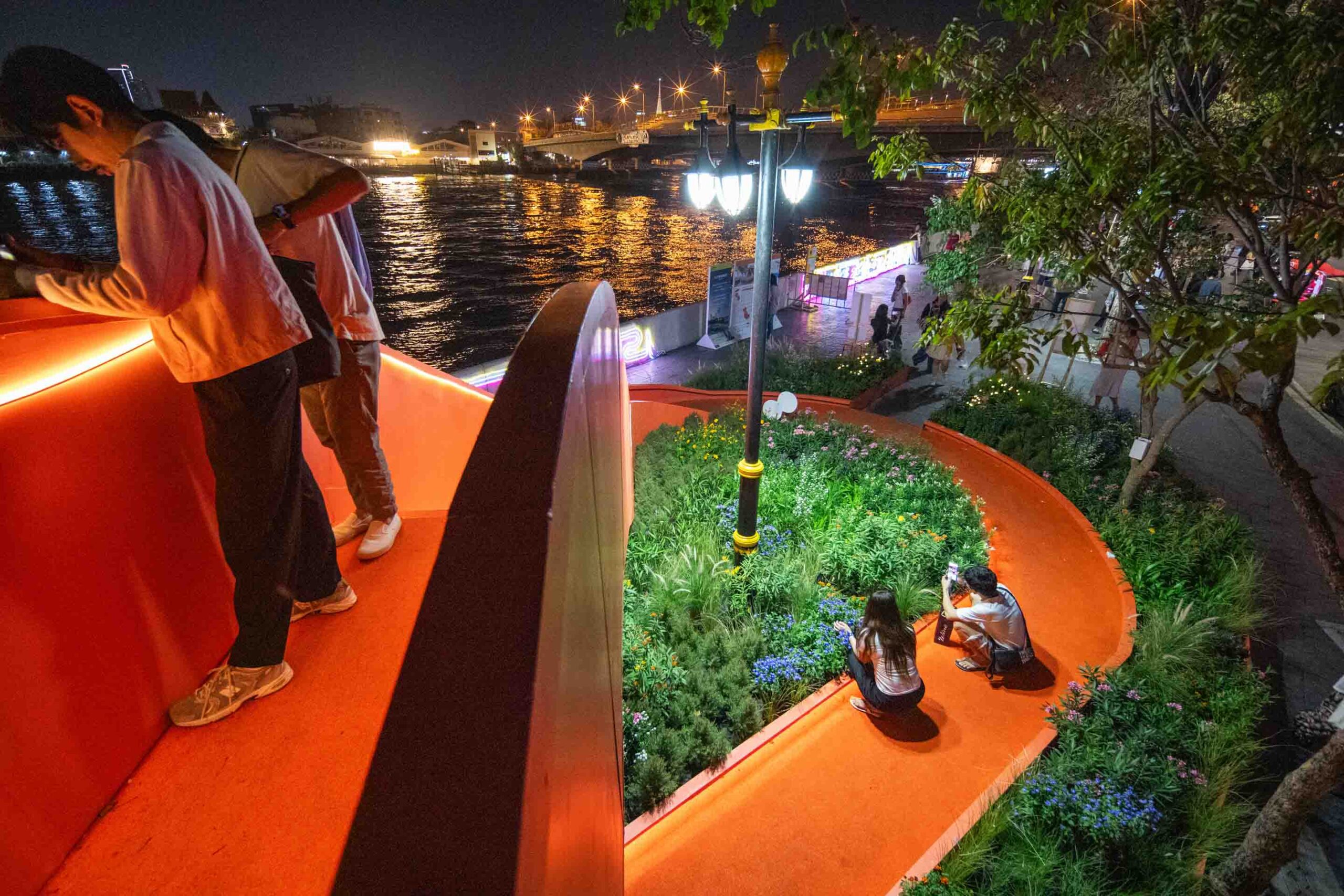
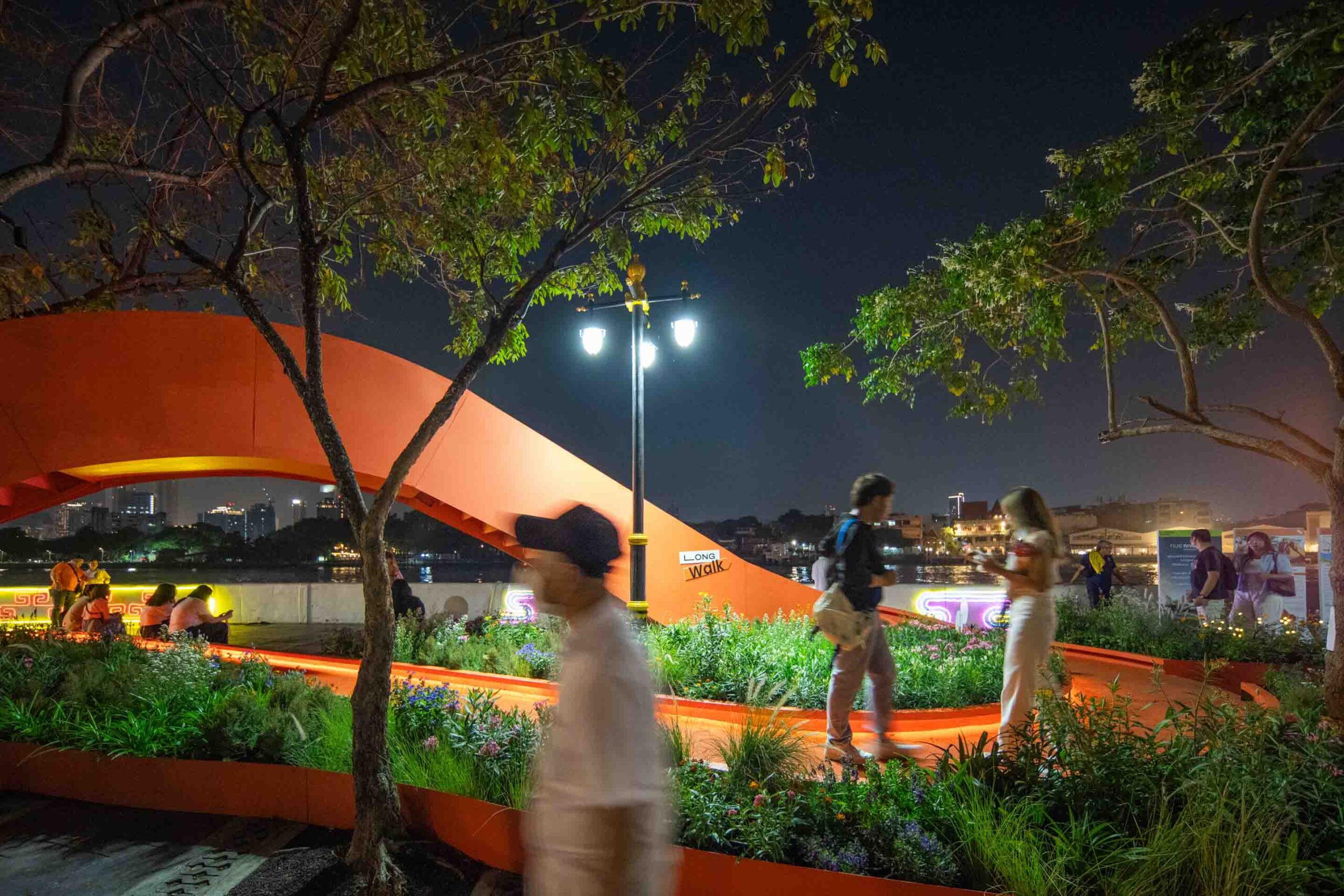
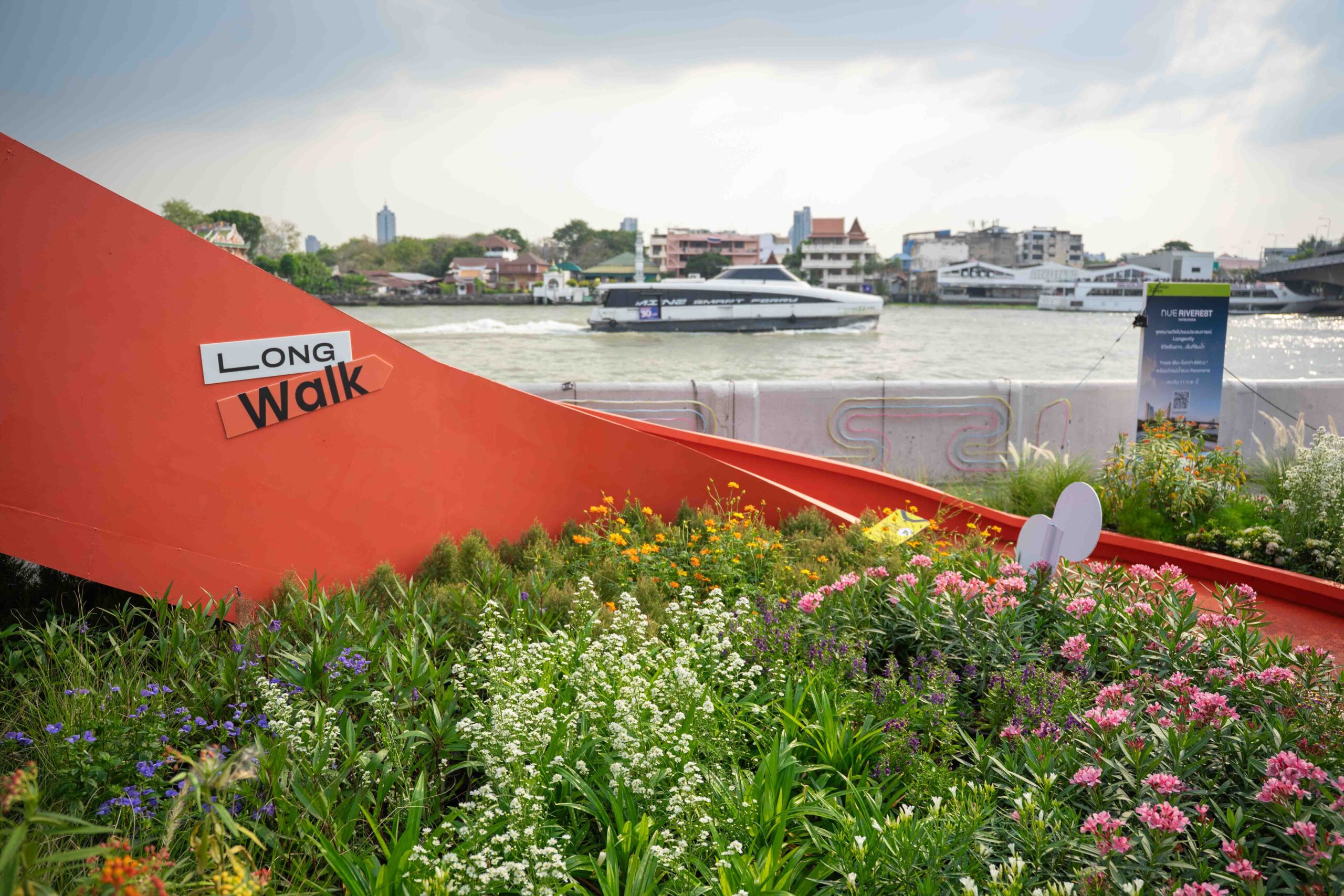
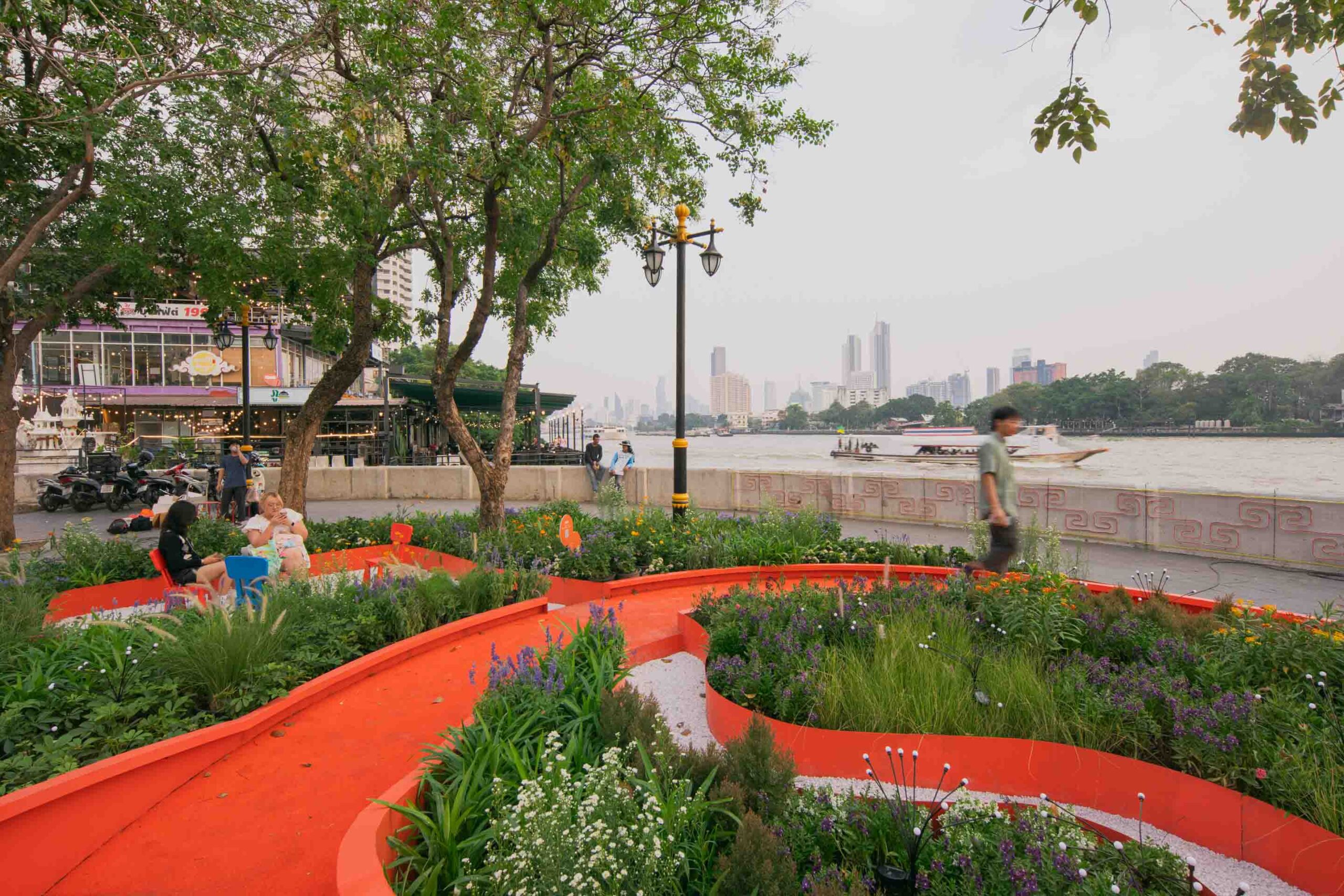
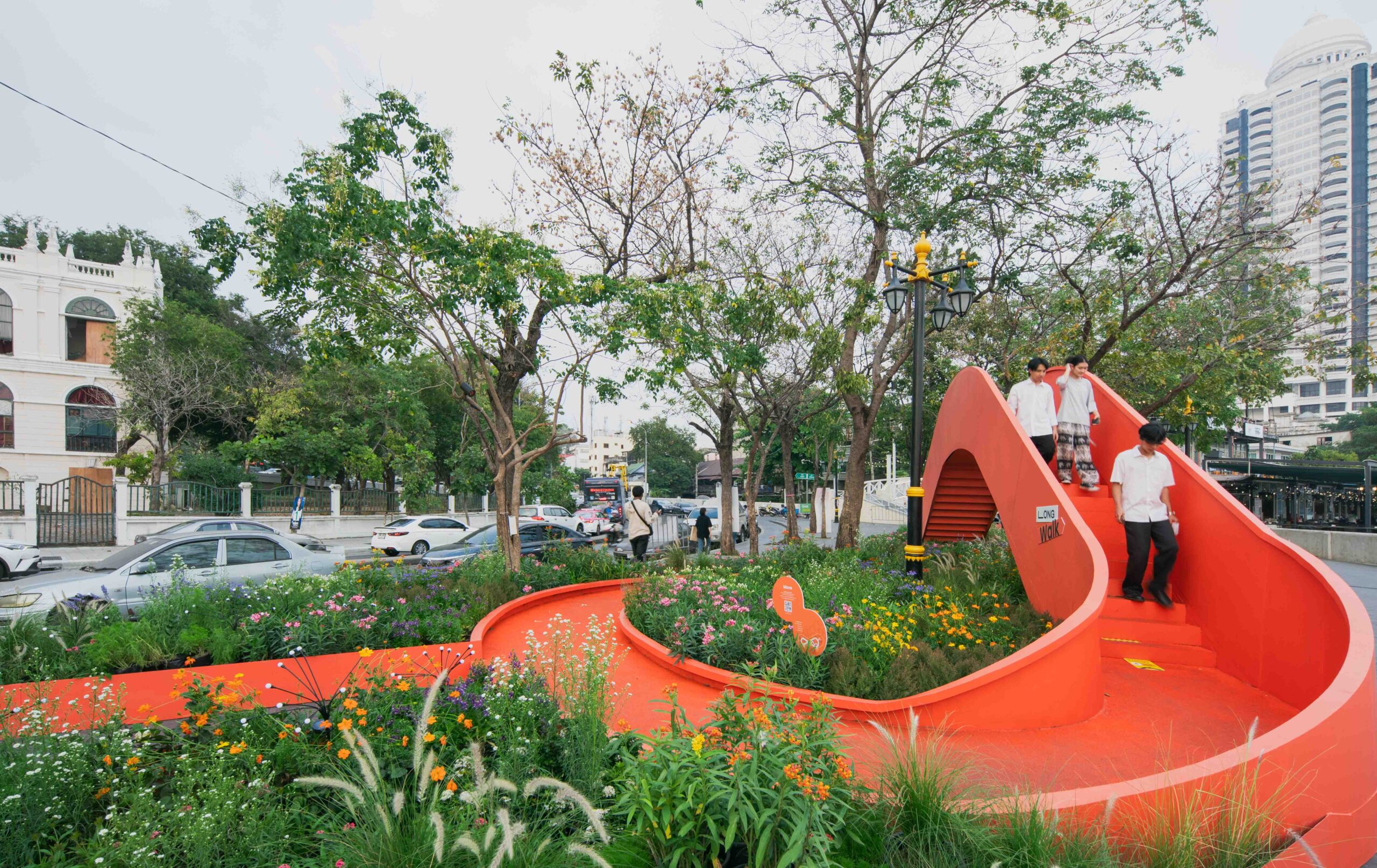
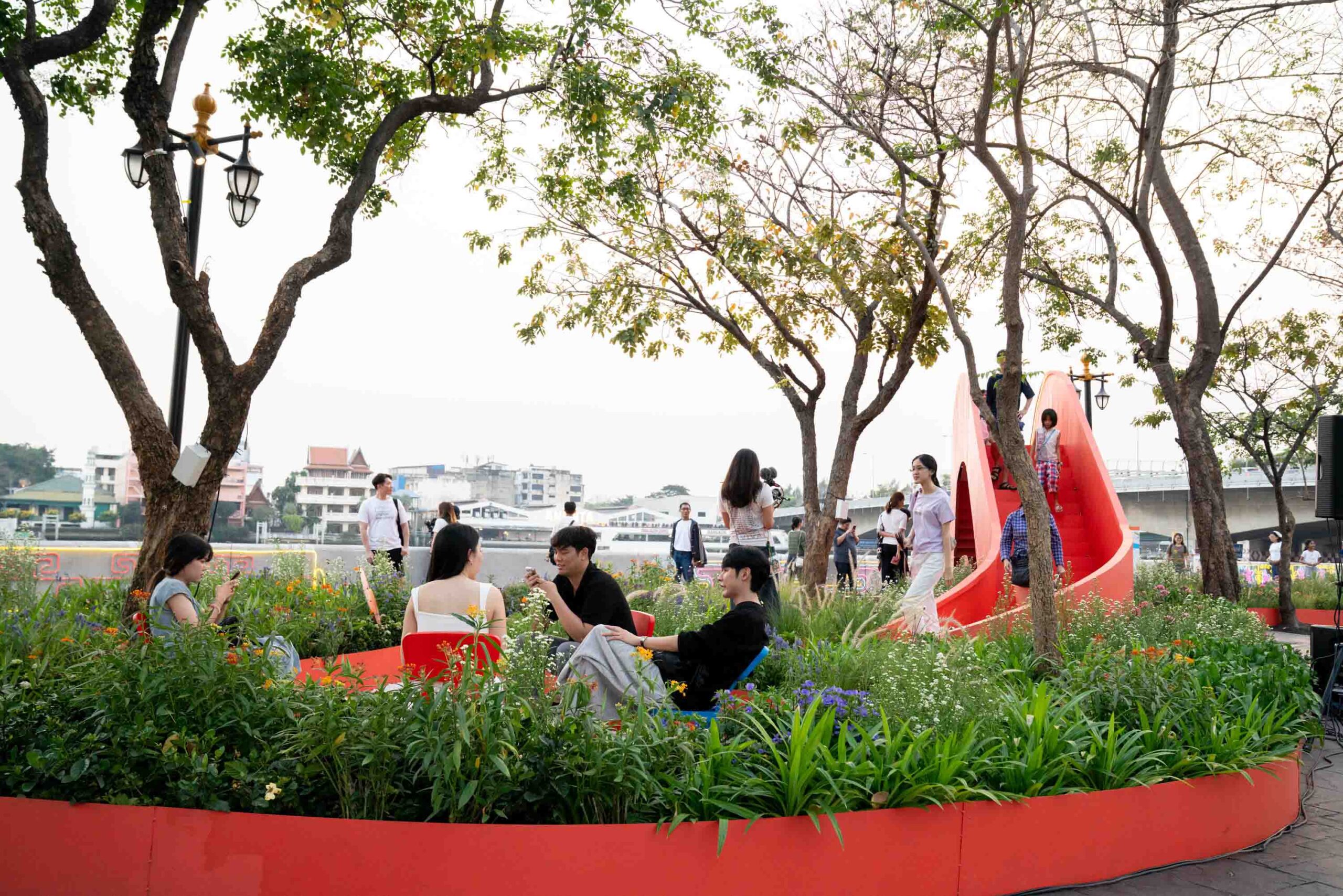
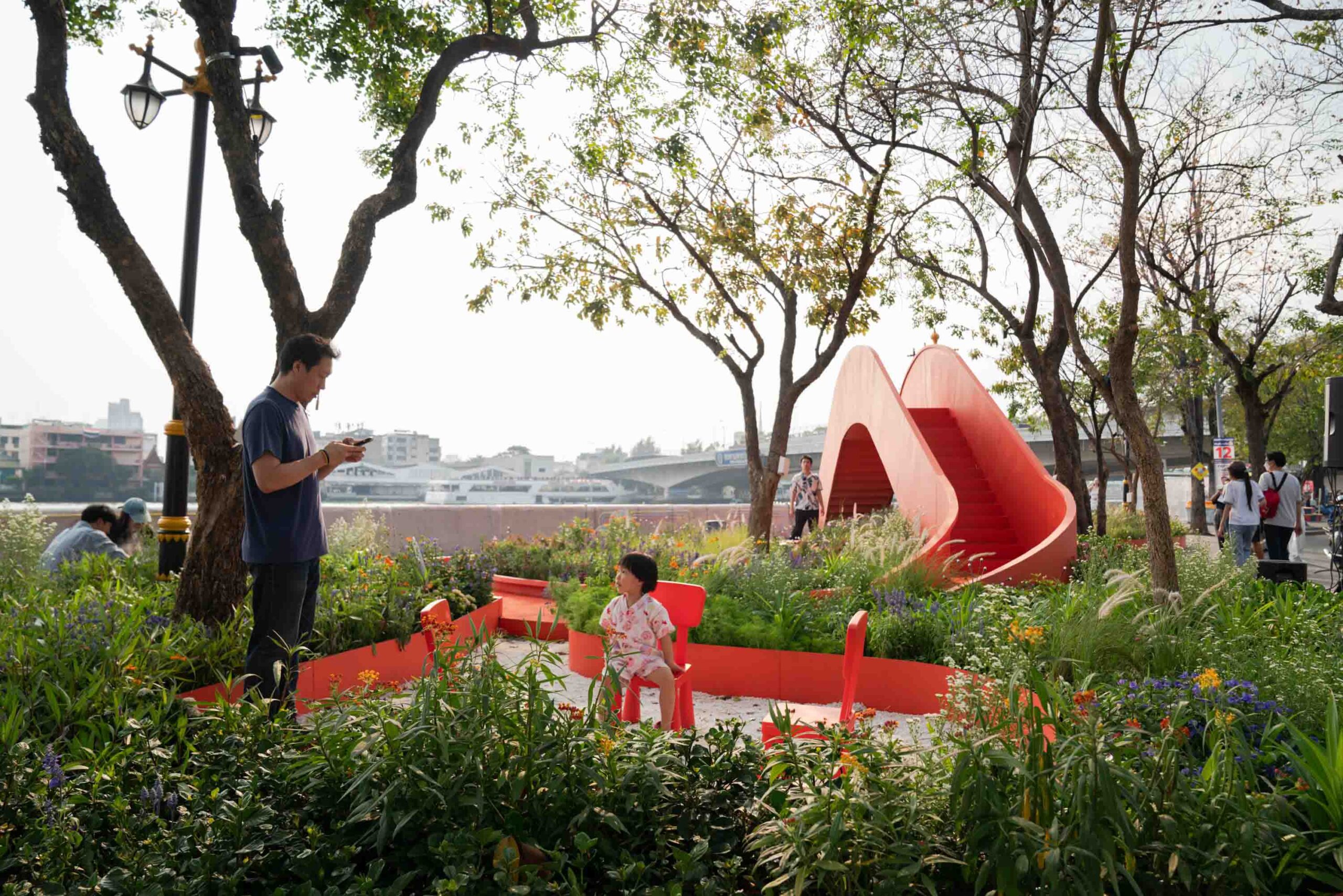
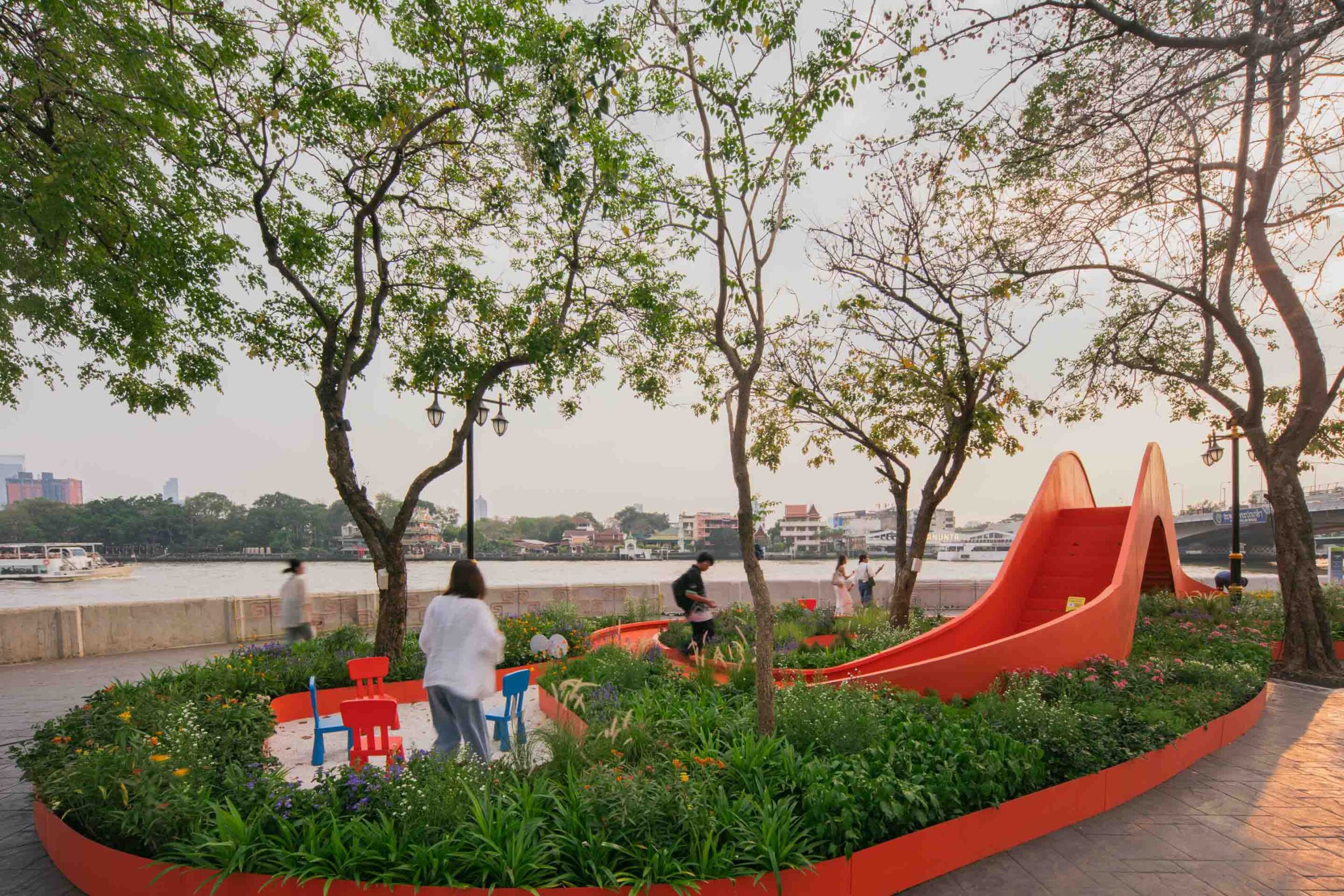
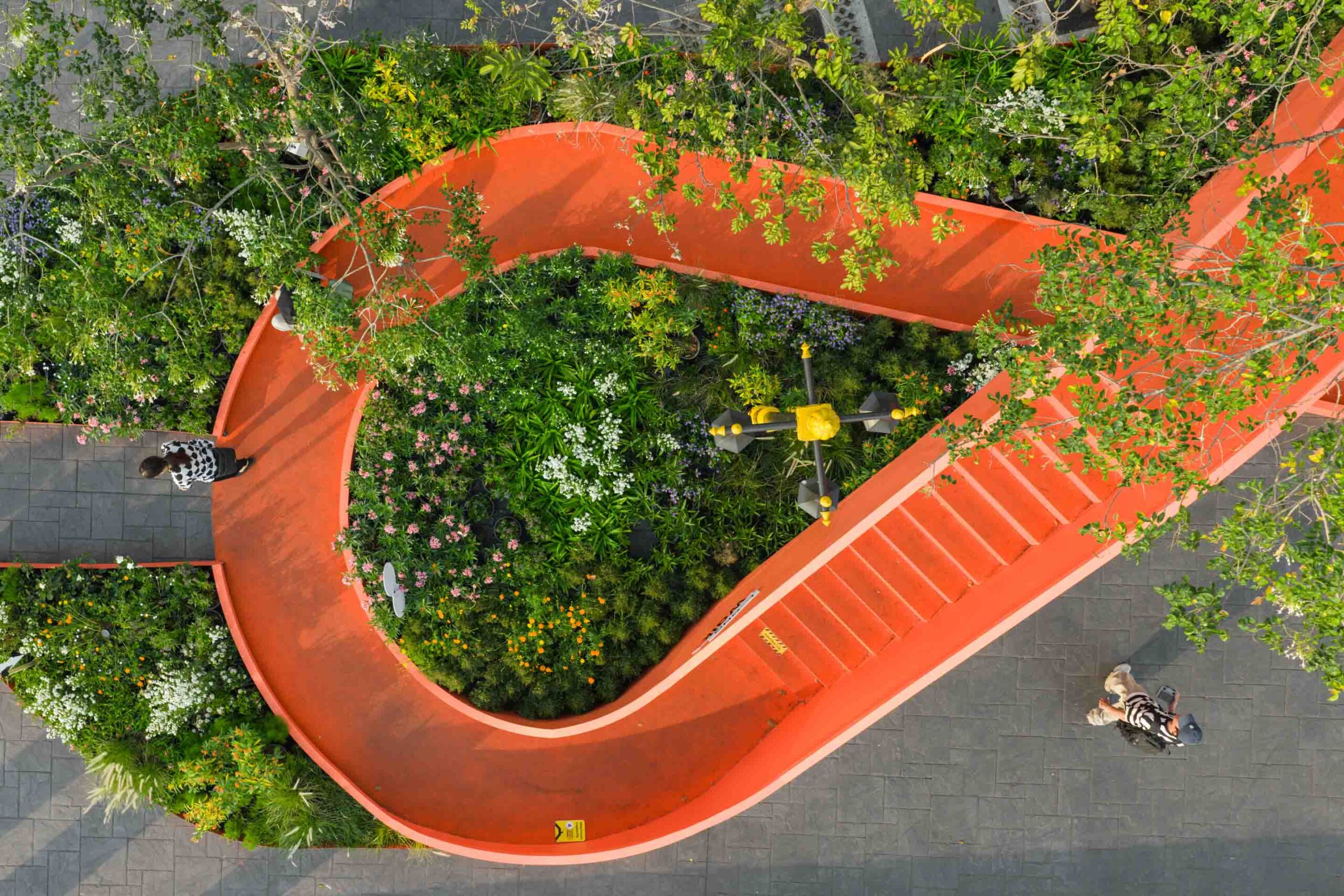
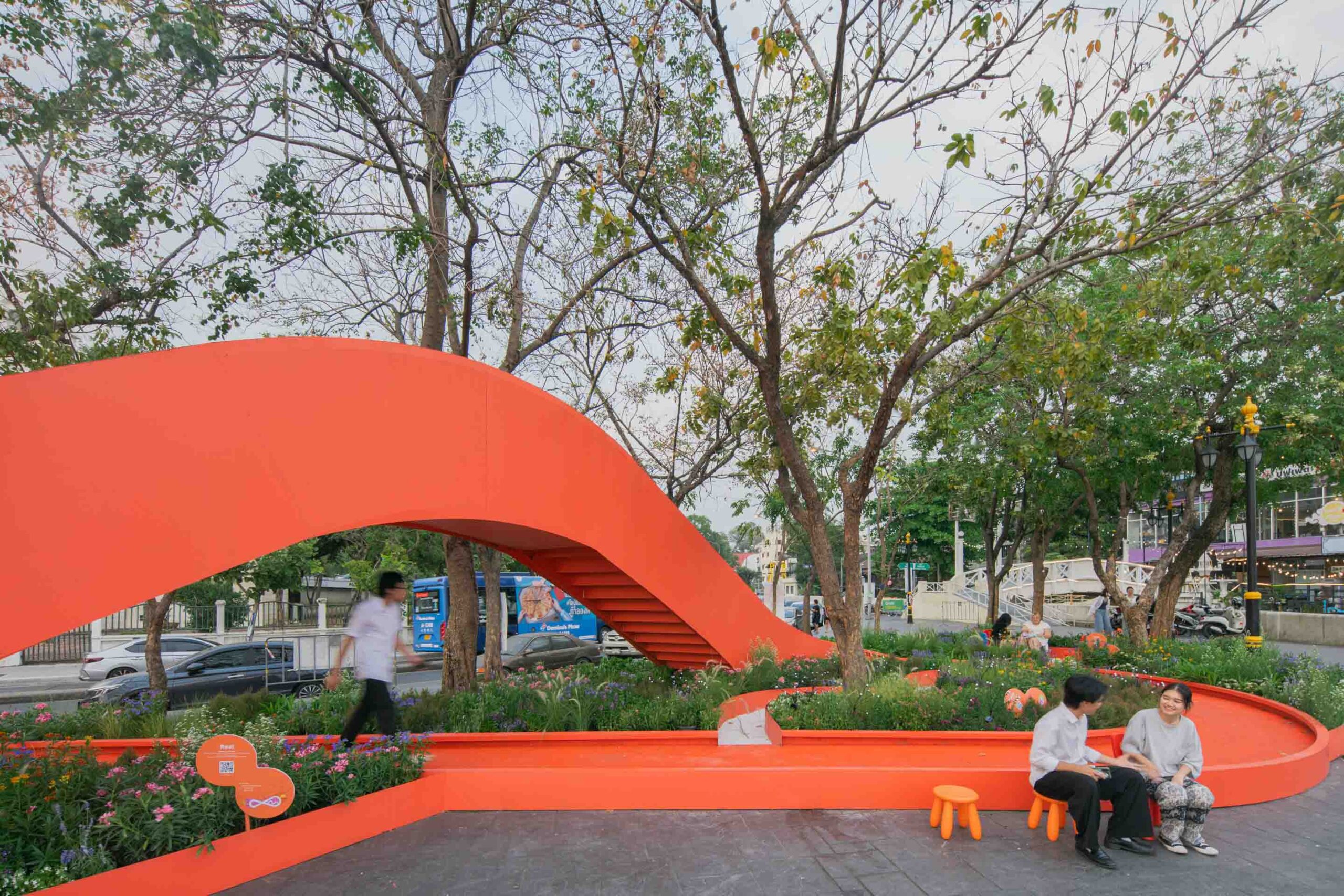
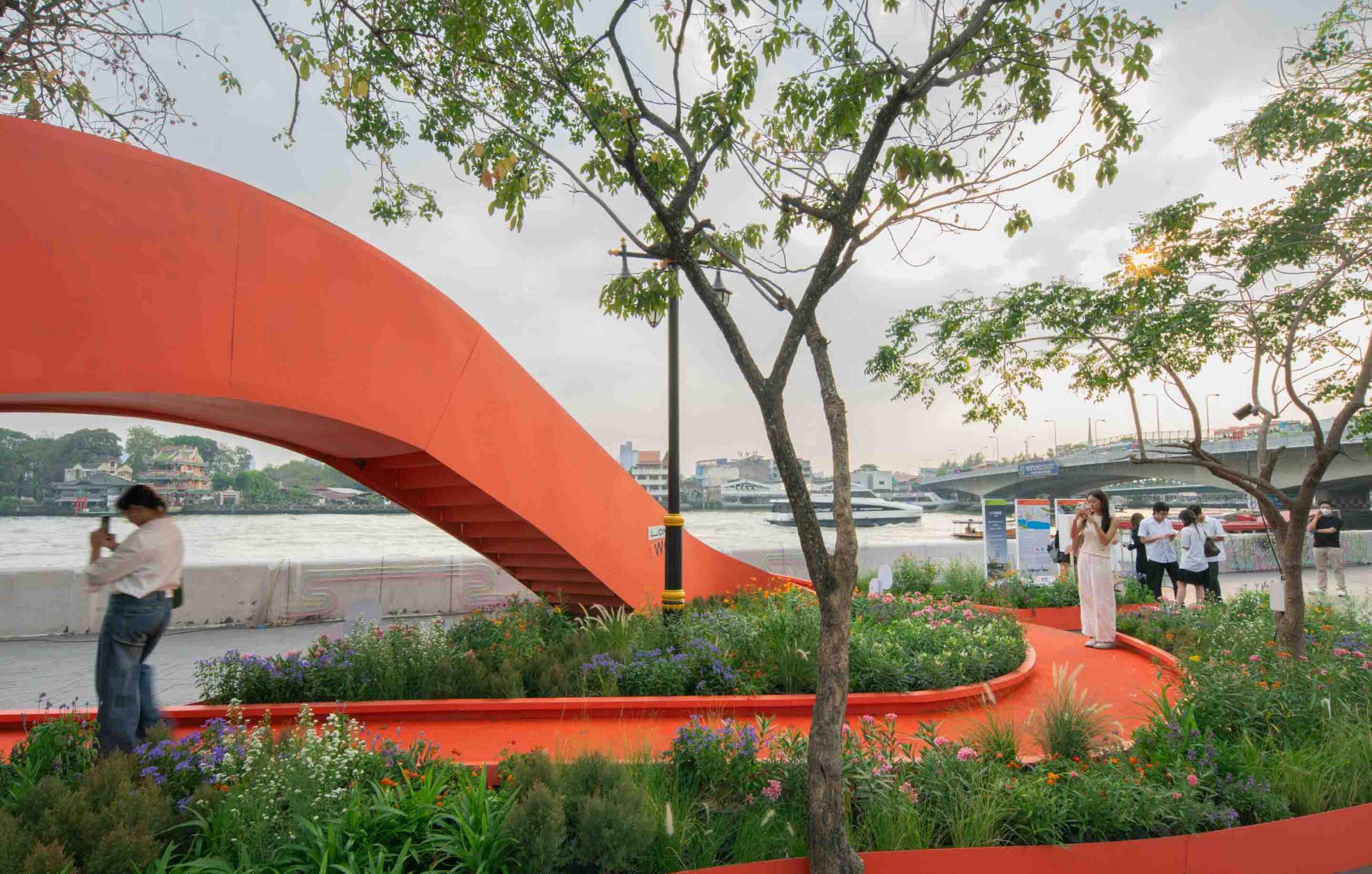
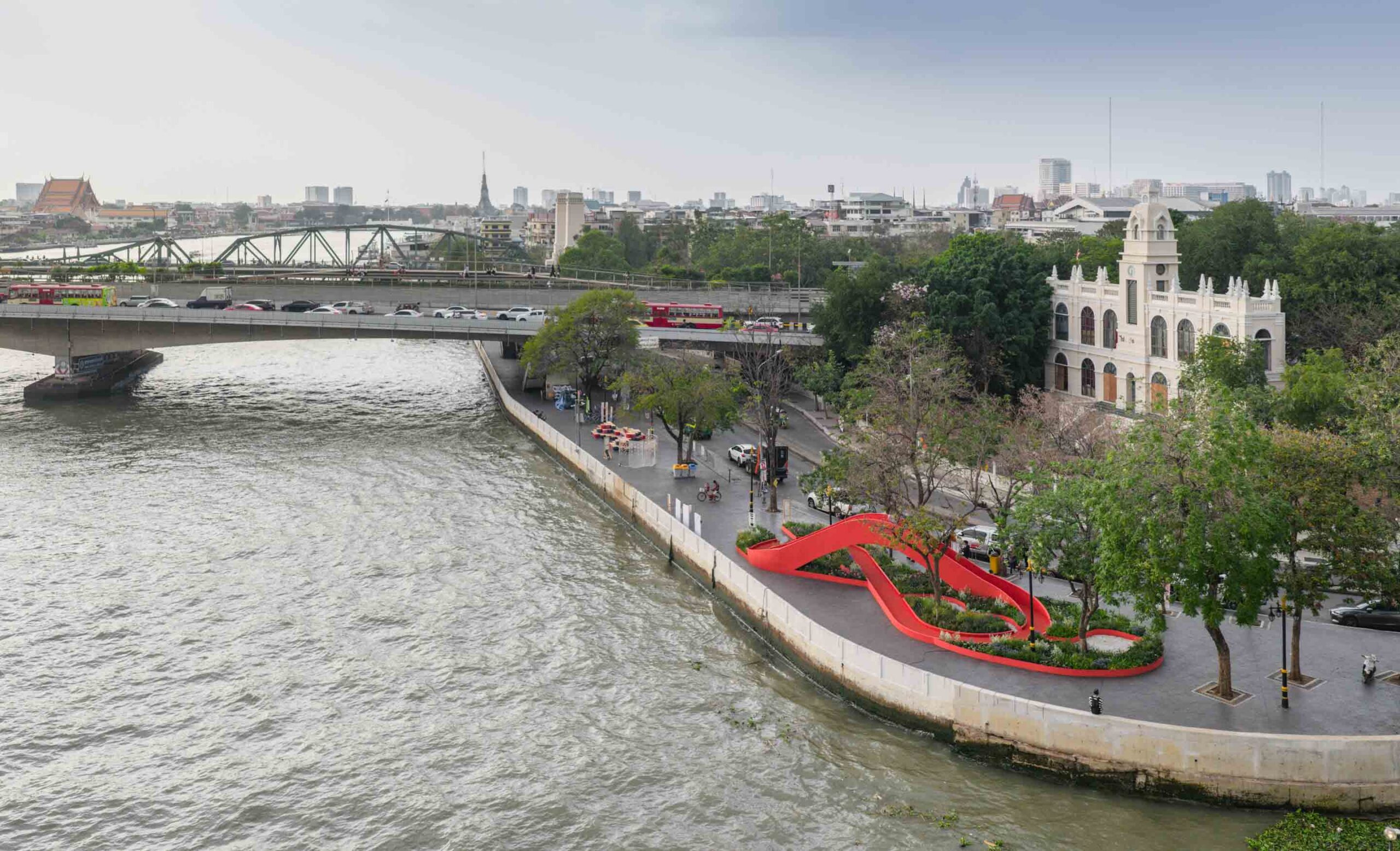
The Long Walk reimagines walking as an immersive and restorative urban experience. Located along the Chao Phraya River near Pak Khlong Talat, the design transforms underutilized urban space into an interconnected pedestrian landscape inspired by the number 8—symbolizing continuity and infinity. Looping pathways encourage continuous circulation, encouraging visitors to move fluidly between programs while encountering diverse spatial sequences and sensory transitions.
Starting from just 1.8 sq.m. and expandable to 5.4 sq.m, the movable design— inspired by the familiar neighborhood cart—functions as a resting point, meeting space, and mobile green pocket. Folding tables, sliding seats, retractable sunshades, and built-in storage allow it to adapt to daily activities.
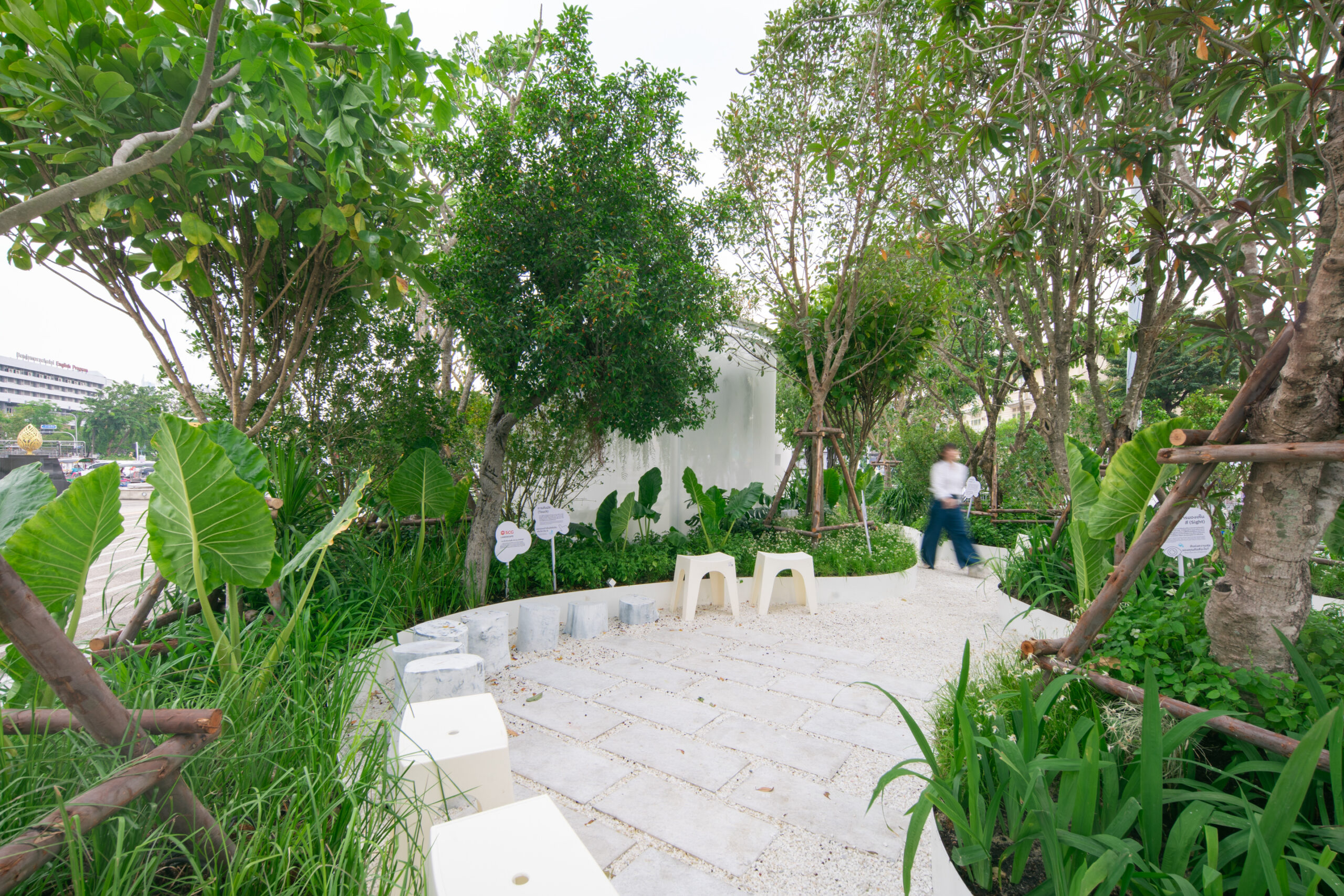
Beyond aesthetic enhancement, the green landscape is conceived through the lens of sensing design, acknowledging that human experience of space is multisensory and embodied. The design intentionally engages the dimensions of vision, scent, sound, and touch to cultivate a layered and restorative pedestrian environment. Rather than treating planting as decorative scenery, vegetation becomes an active sensory medium—shaping perception, emotion, and movement.
The journey unfolds through four design zones: Move — See to Move More, Rest — Breathe in Comfort, Nourish — Touch to Reconnect, Reset — Listen into Stillness.
Inspired by the vibrancy of nearby flower fields, the planting design embraces diversity in form, texture, and tone. A naturalistic composition replaces rigid order, creating depth, movement, and a sensory-rich pedestrian realm—where walking becomes not just circulation, but a restorative urban ritual.
LongiPark is more than a series of design installations—it is the beginning of a broader conversation about how cities shape public health and everyday life. At a time when the most serious health challenges stem from lifestyle, stress, and environmental pressures, public space must evolve beyond aesthetics to become essential infrastructure for well-being.
More than a temporary exhibition, LongiPark proposes a long-term vision for public space development—one grounded in lived experience and measurable behavioral change. It invites cities to see parks not simply as amenities, but as living systems that enable people to move, heal, connect, and grow—expanding not only green space, but the possibilities of urban life itself.